It’s been quite the year, and it’s only February. So we’re giving you two more weeks to complete your INDE.Awards 2020 entries. Now that’s good news!

Studio Hollenstein (Winner, with Stewart Architecture of The Learning Space category, 2019) at the INDE.Awards 2019 Gala. Photo by Einwick
March 2nd, 2020
It’s been quite the year, and it’s only February. With mind to the challenges that have been felt around the region to date in 2020, we have some good news. We are extending the INDE.Awards 2020 entry deadline, so you have two more weeks to put the finishing touches on your entries before judging begins.
Coming to this fresh? Now is your golden opportunity to enter the awards and make your mark on the region. There are many great reasons to enter the INDE.Awards – not least of all our 11 carefully developed categories.
And this year, we are marking the region’s best design from the past ten years with two special Best of the Decade categories for The Work Space and The Living Space.
Join us in 2019 as we celebrate the most progressive architecture and design in the region. This is your moment!
Entry Guide – everything you need to know
Category List – choose which category you’ll enter
Category Criteria – the big picture vision
Entry Pricing – scaled entry fees for the entire region
Contact us – we’re happy to help
INDESIGN is on instagram
Follow @indesignlive
A searchable and comprehensive guide for specifying leading products and their suppliers
Keep up to date with the latest and greatest from our industry BFF's!
The newest brand to emerge from Cosentino’s creative crucible is Ēclos, a next-generation mineral surface that embodies the organic beauty and tactility of marble in a precision-mineral surface or material.
Stepping into Intuit’s Sydney workplace certainly doesn’t feel like walking into an office. Why? In this film, we discover that, when joy takes precedence as a design driver, even a high-performing commercial CBD headquarters can feel like an intuitive wonderland that invites employees to choose their own adventure.
The Geelong College’s Sport and Wellbeing Centre ‘Belerren’ designed by Wardle is designed around bringing in natural light. But Shade Factor’s job was to help modulate and precisely control it for the most important competitive moments.
Natural stone shapes the interiors of Billyard Avenue, a luxury apartment development in Sydney’s Elizabeth Bay designed by architecture and design practice SJB. Here, a curated selection of stone from Anterior XL sets the backdrop for the project’s material language.
Drawing at a young age gave Angelene Chan an appreciation for architecture and provided the impetus to propel her to the top of her profession.
With a plethora of talks, installations, exhibitions and happenings responding to this year’s theme (Design The World You Want), the eleven-day festival was the largest to date and arguably the most accomplished since inception.
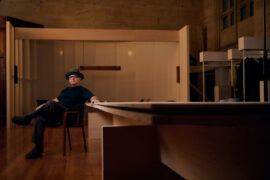
Melbourne-based architect and object maker Adam Markowitz blurs the line between design and craft, bringing a deeply considered, material-led approach to his work. As both a practising architect and furniture designer, Markowitz explores how objects can respond to space, light and human use.
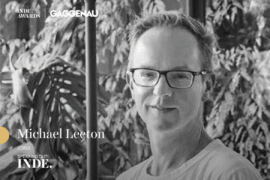
In this interview, Michael Leeton reflects on his philosophy of placemaking, connection to landscape and the importance of designing homes that balance intimacy with scale, using his award-winning project House on a Hill as a central reference point.
The internet never sleeps! Here's the stuff you might have missed

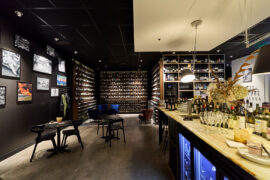
Held at Vini Divini Wine Lab in Sydney, the event brought together designers, operators and project leaders for an evening of lesser-known wines and conversation.
A recent Design Talk Series event presented by Royal Oak Floors saw Melbourne-based interior designer, and founder and principal of Mim Design, Miriam Fanning in live conversation with our editor.
At Hornsby Park, AJC Architects’ Southern Lookout marks the first architectural intervention in the transformation of a former quarry into a major public landscape.
Scheduled to open later this year on the banks of the Parramatta River, the 30,000-square-metre Powerhouse museum — designed by Moreau Kusunoki in collaboration with Genton — represents a major shift in the geography of Sydney’s cultural infrastructure.