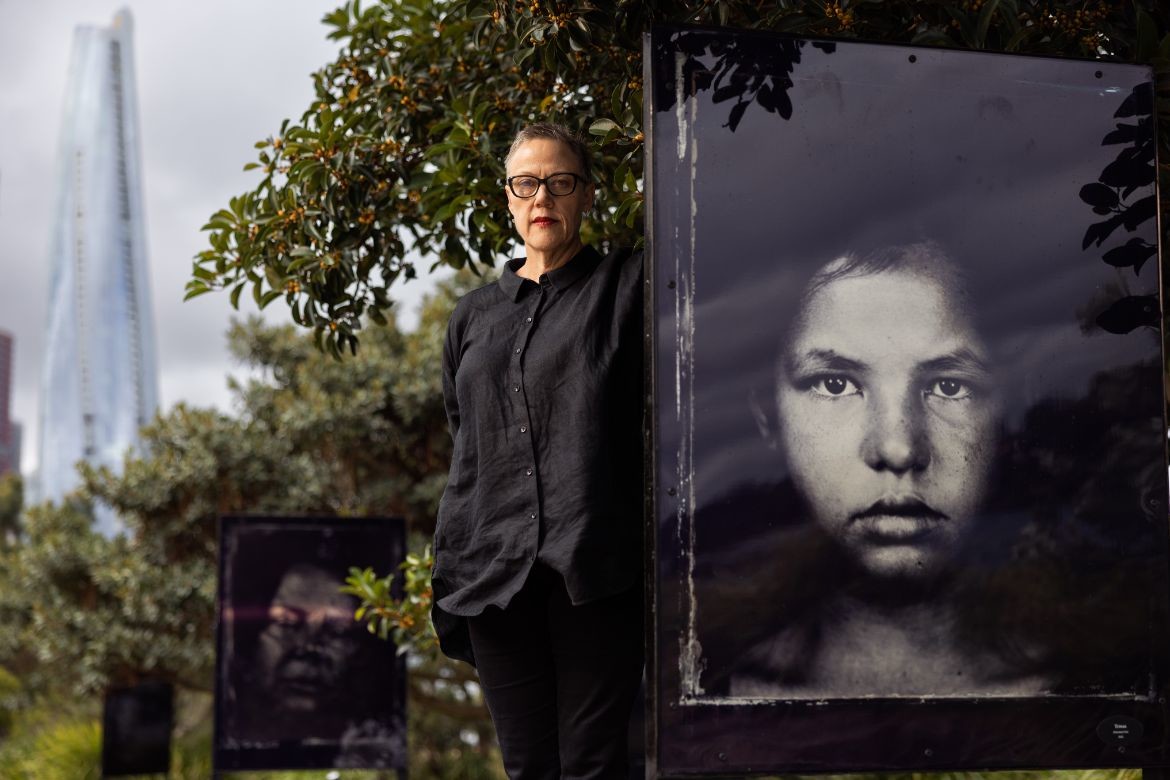
Gurindji/Malngin/Mudburra artist, Brenda L. Croft, has used the medium of photography – combined with some very deliberate material and textual choices – to make a statement first and foremost about the history of the site. On investigating the story of Barangaroo, the Cammeraygal woman who lived and died on her traditional homelands during a peak period of colonial violence, Croft says: “It was a great joy to go into the archives and do as much historical background research as I could.”
Engaging with this biographical history was a way to honour the memory of Barangaroo, the person. In portraying dozens of contemporary subjects, Croft seeks to carry those past links through to the present in a way that is meaningful and relevant.
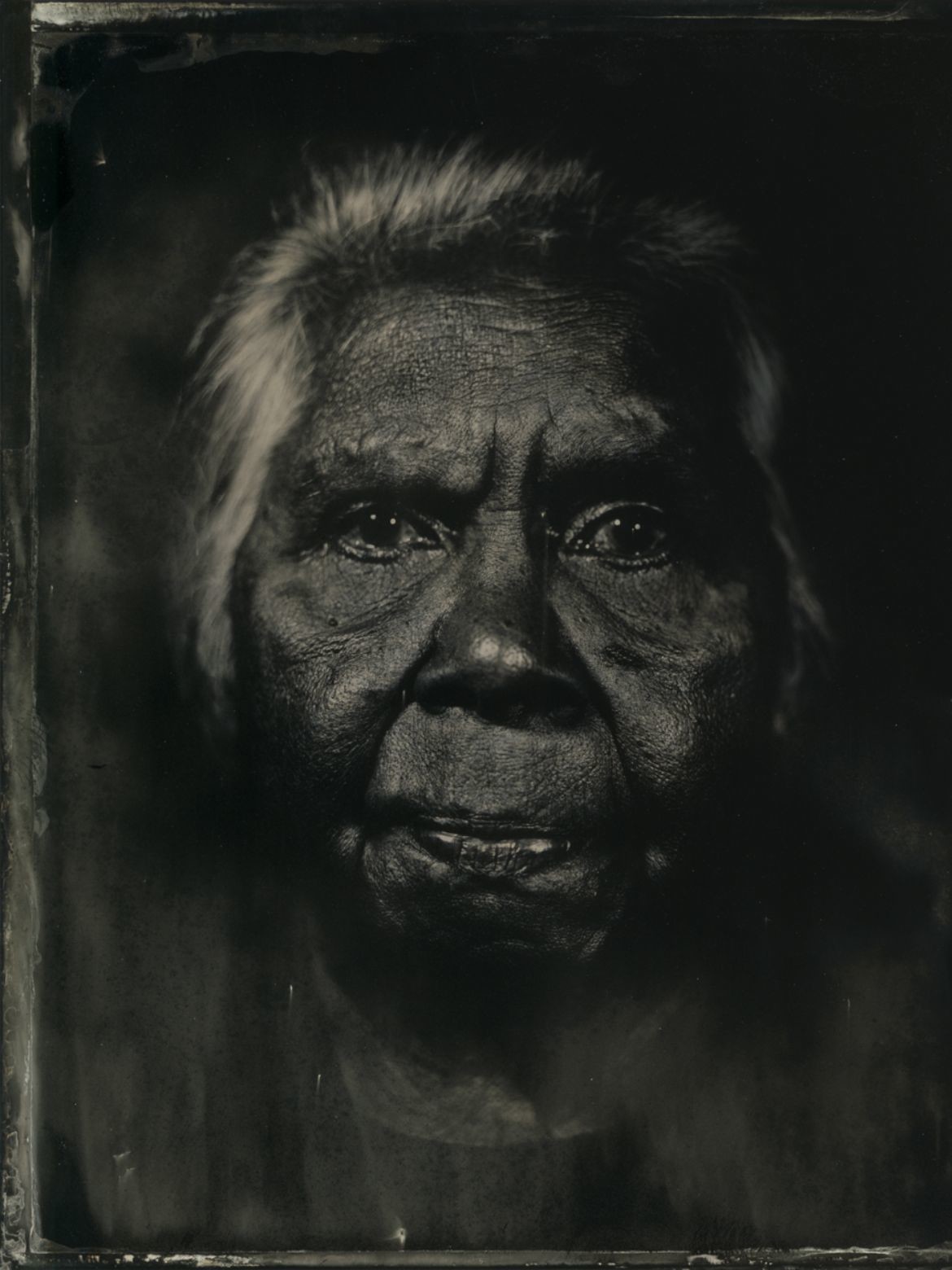
“It’s very much a call to arms. It’s not just about the historical context but looking at the contemporary representation of First Nations women and girls in the Sydney region now,” explains Croft.
The sense of a call to arms is present in the title alone. Naabami (thou shall/will see) is more than intriguing: bilingual, the English has imperative connotations – you will see, you had better see! – as well as suggesting future revelation and a hint of the archaic. Most obviously, it’s addressed directly to the viewer: “The portraits are meant to suggest other things and make people think about why person has been photographed in this way,” says Croft.
Related: The Ghost Net Collective

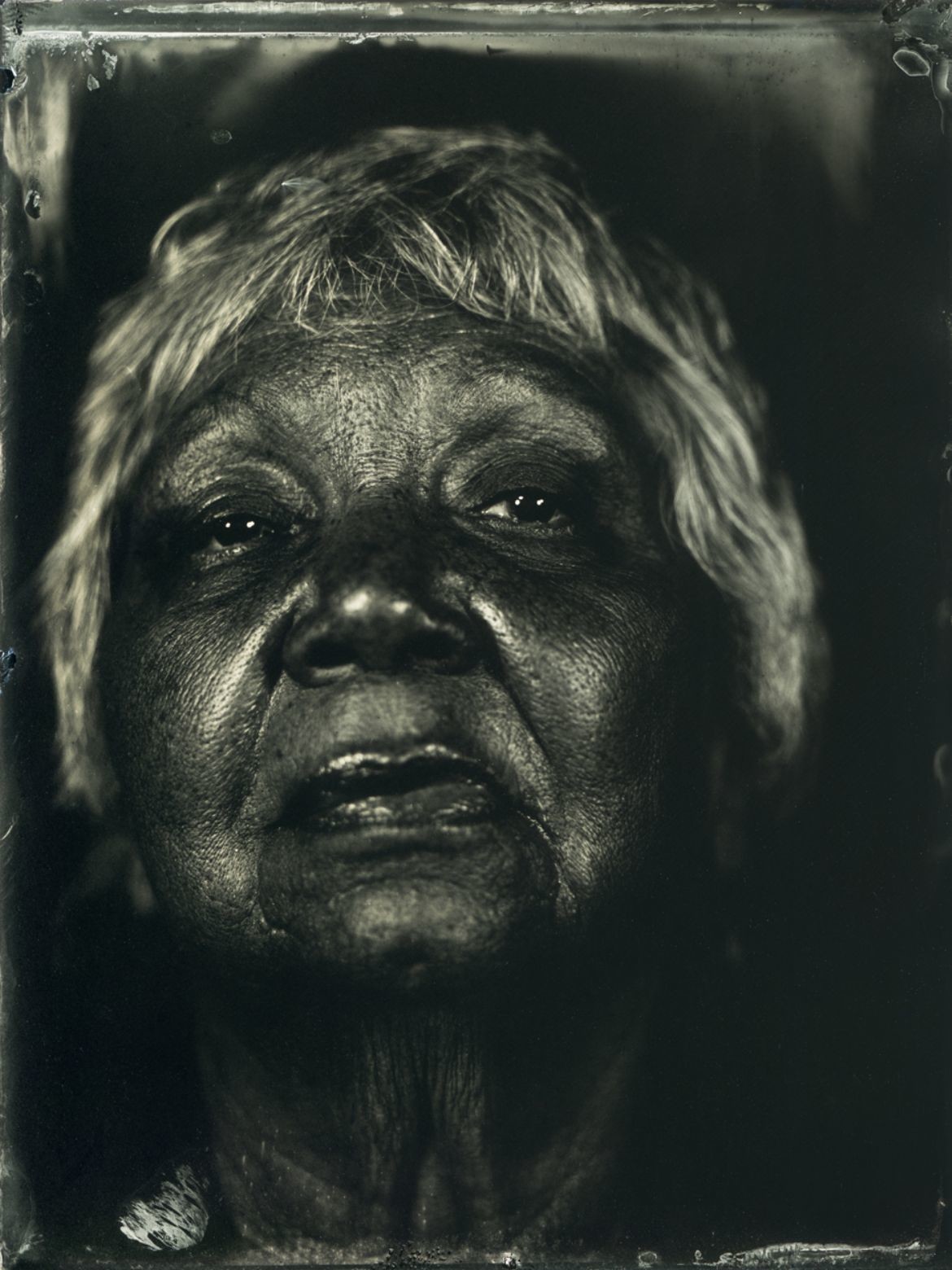
The subjects depicted are steadfast and defiant. The artist’s interpretation of Barangaroo’s character, as someone whose way of resisting colonisation was to make herself heard, forms the link here. It’s a way of stating in no uncertain terms that First Nations people, women and girls here in particular, are present.
“The location of the work is a very specific statement: you can build over the top of us and change the landscape, but we are still here,” Croft says emphatically.
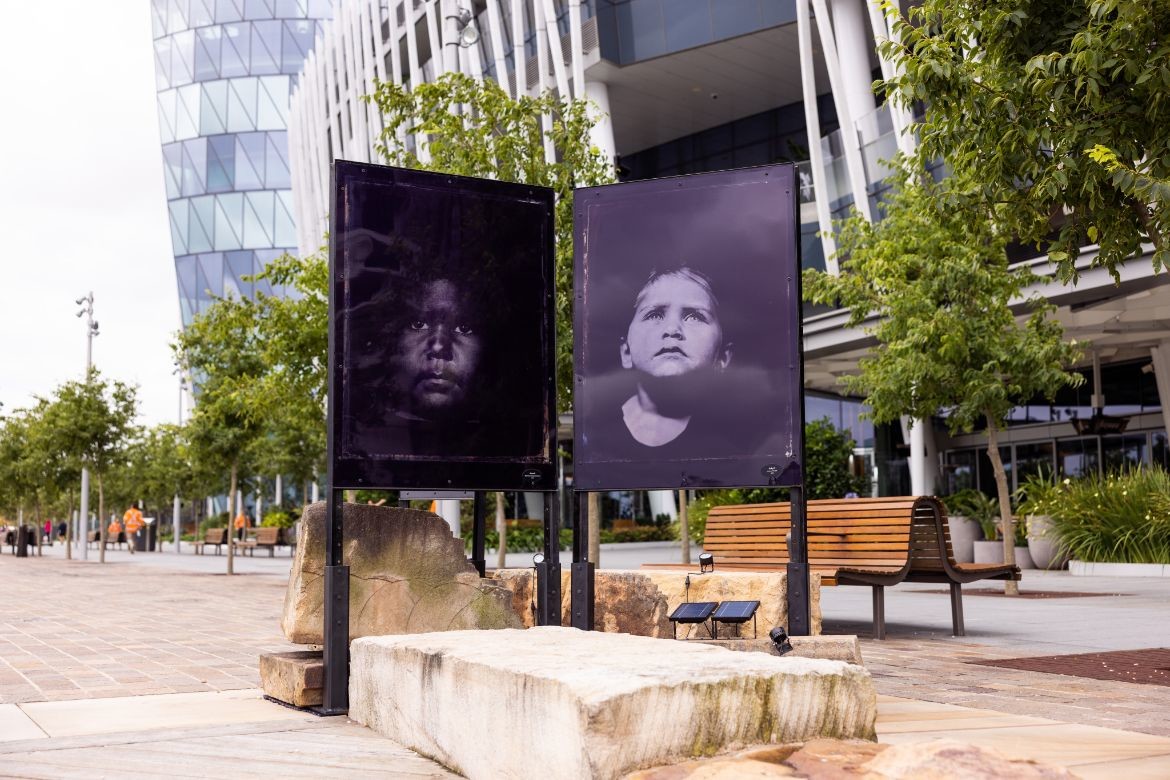
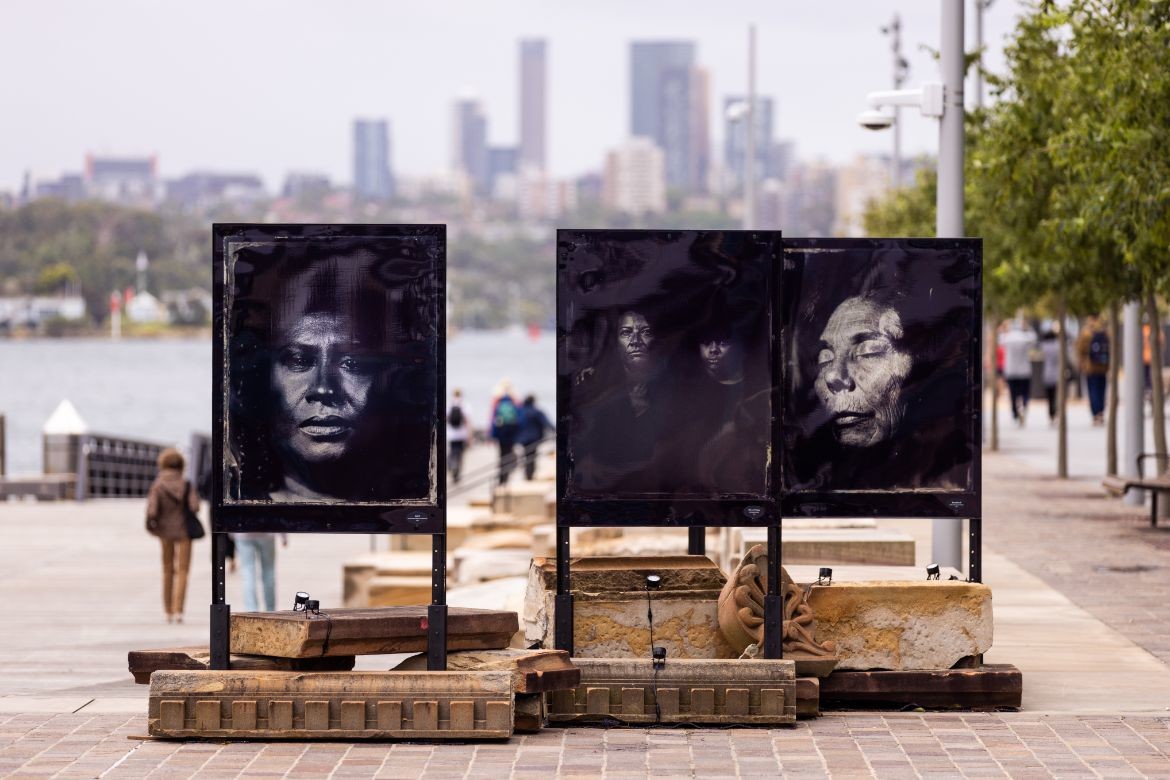
The works of art jump out of their frames to go behind and indeed around the images. The technical process of producing the photographs was specifically done in an archaic fashion, creating the otherworldly effect of blurred edges and imperfection. They originally involved a wet plate collodion process onto tin, then digitally scanned and printed onto metal.

Meanwhile, the sandstone blocks were reclaimed cast-off pieces from colonial buildings in a symbolic and tangible act drawing attention to the original sources of the material on Country. Croft explains: “It’s almost as if the work is rising up out of this reclaimed sandstone, which is a completely different look to architecturally designed sandstone blocks.”
Forming part of an outdoor public space and stretching along the waterfront, Naabami (thou shall/will see) provides visitors with an opportunity to thoughtfully engage and reflect in a timely manner on a process that was clearly time-consuming. The project has been commissioned by Lendlease as part of the precinct’s broader $40 million Barangaroo Public Art and Cultural Development Contribution and was co-funded by Infrastructure NSW. Lendlease has previously delivered two major permanent artworks in Barangaroo South including shellwall by Esme Timbery with Jonathan Jones in 2015.
Naabami (thou shall/will see): Barangaroo (army of me) temporary exhibition begins on January 5th 2023 along Barangaroo waterfront, Sydney.



We think you might like this story about 2019 Sydney Festival.