The home of architecture and design in the Asia-Pacific
Get the latest design news direct to your inbox!

Get the latest design news direct to your inbox!
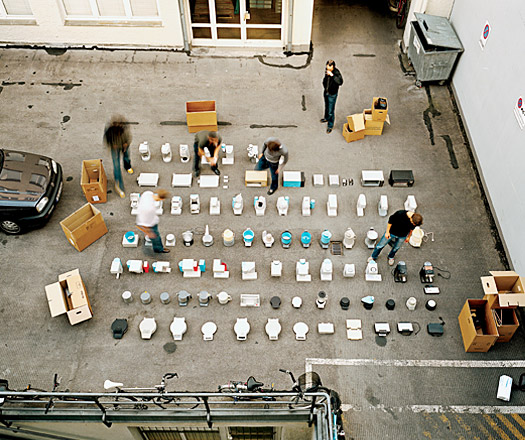
Held recently by Kiwi appliance house, Fisher & Paykel at their new Experience Centre Sydney, The Future Design Workshop demonstrated the value of breaking down the barriers between designer and manufacturer.


“We are curious about people. How they live, where they live, what they do and how they use things.” The Fisher & Paykel culture is one of open innovation, which allows people to work collaboratively to find insights and ideas that connect with customers and respect our planet. “Our belief in innovation and creativity isn’t limited to our design teams,” says Fisher & Paykel’s General Manager of Design Integration, Mark Elmore. “We foster resourceful and imaginative thinking across the company. Even from way back in the early days, we have always maintained this egalitarian approach to ideas.”
This is a uniquely valuable and advantageous feature for us architects and designers, who – for once – are given the opportunity to influence product direction based on what we are experiencing in our own projects; the challenges, the trends, the briefs, overall functionality and so on.
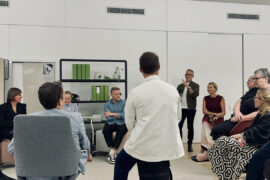
Recently, Fisher & Paykel held the Future Design Workshop; an interactive, hands-on forum, giving a select group of Australia’s top architects and designers an exclusive, first-hand look at the brand’s planned product offering as well as the opportunity to shape the future design of their appliances.
Hosted at the magnificent new Fisher & Paykel Experience Centre in Sydney’s Alexandria, the half-day workshop featured insights from key figures including Auckland-based industrial designer, Jamie McLellan, General Manager of Industrial Design Mike Jensen, Chief Designer for Cooking and Dishwashing Products Lauren Palmer, and Chief Designer of Laundry and Refrigeration Mark Haydon. Broken up into smaller groups of around eight architects and designers, the Fisher & Paykel team created a series of stationed workshops where they invited designers could ask questions, give critical feedback, offer suggestions for future developments and generally provide insight on current market expectations on the Australian lifestyle design category.
As architects and designers working on the front lines, no one is more clued-in about the needs of the market than us. So it is a source of perpetual frustration when many of the European appliance houses for example, design their products a) without much industry consultation and b) exclusively for the needs of the European market.
This investment in local feedback and experience truly sets Fisher & Paykel apart, and the collective experience of the 20+ designers at the recent Future Design Workshop is a real testament to that. In fact, many of those present consistently expressed their appreciation for the opportunity to share their frustrations and wish lists alike with Fisher & Paykel, particularly around the areas of multi-residential and commercial projects.
What is really exceptional here is that the Future Design Workshop isn’t a one-off occurrence, but an on-going commitment to design curiosity and discovery. This culture of collaboration – both internal and external – is a hallmark of the Fisher & Paykel brand, where “hidden insights are waiting to be uncovered,” says Elmore. “For us, design is not a self-serving goal; it is a human endeavour to make life better. Continuous innovation is part of the Fisher & Paykel design philosophy.”
The results of the Future Design Workshop will see the release of some major product innovations in 2017, so stay tuned!
INDESIGN is on instagram
Follow @indesignlive
A searchable and comprehensive guide for specifying leading products and their suppliers
Keep up to date with the latest and greatest from our industry BFF's!
The internet never sleeps! Here's the stuff you might have missed