The home of architecture and design in the Asia-Pacific
Get the latest design news direct to your inbox!

Get the latest design news direct to your inbox!
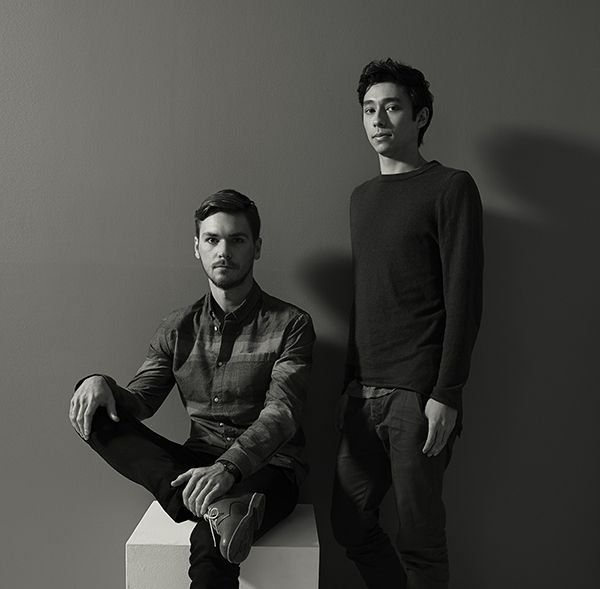
Meet Andrew Southwood-Jones and Alexander Kashin, the driven and innovative designers behind daast, a Sydney-based design studio creating conceptual and experimental furniture, lighting, and architectural objects. Rebecca Gross reports.

May 4th, 2016
Andrew Southwood-Jones and Alexander Kashin are the driven and innovative designers behind daast, a Sydney-based design studio creating experimental furniture, lighting, and architectural objects. The pair met while studying architecture at University of Technology Sydney, and their desire to exercise their creative license, without client restrictions, provided the stimulus for the transition from architecture to industrial design.
Andrew and Alex design objects to test their ideas and explore materials and production processes, supporting their industrial design endeavours with their primary business Kink Studio, which specialises in architectural model making and fabrication services. “Through the model making, we try to experiment with clients and their jobs; we can also work with a lot of different material and test a variety of techniques to try and apply that to our design work,” says Andrew. “It helps having an architecture and fabrication background for us to actually resolve things,” Alex explains.
The designers are drawn to materials that perform well and their designs are driven by conceptual explorations, well-engineered and innovative details, and diligent prototyping. This is certainly evident in daast’s elegant Harpoon Stool, which showcases their Harpoon Joint, a universal joint that holds the stool together in compression without any glue.
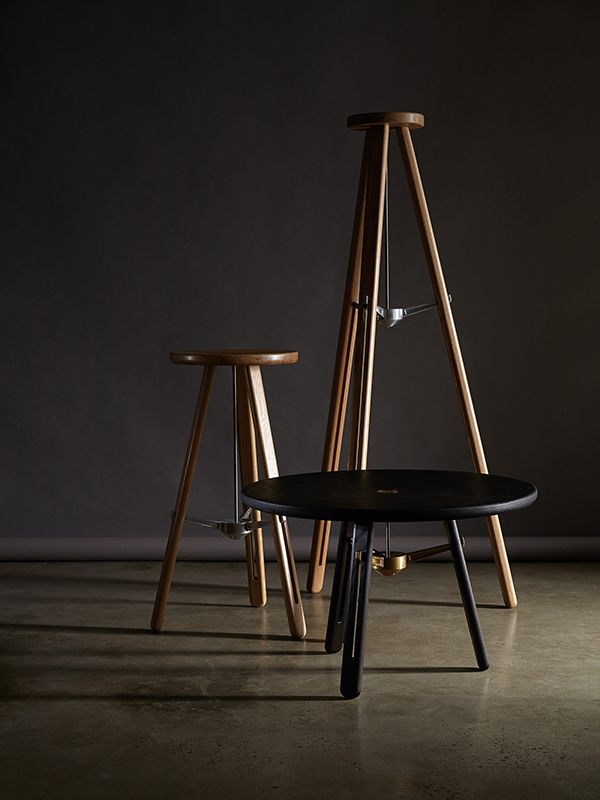
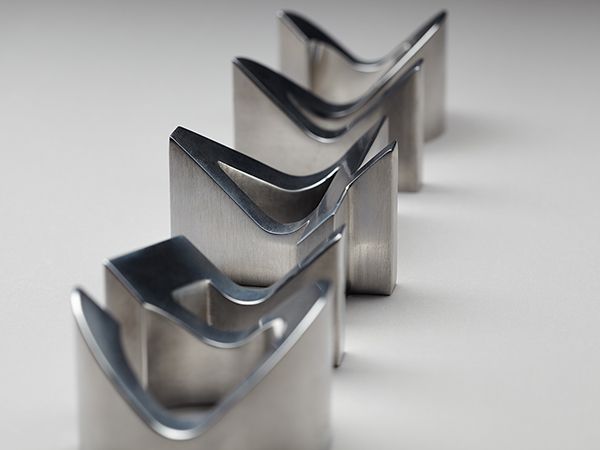
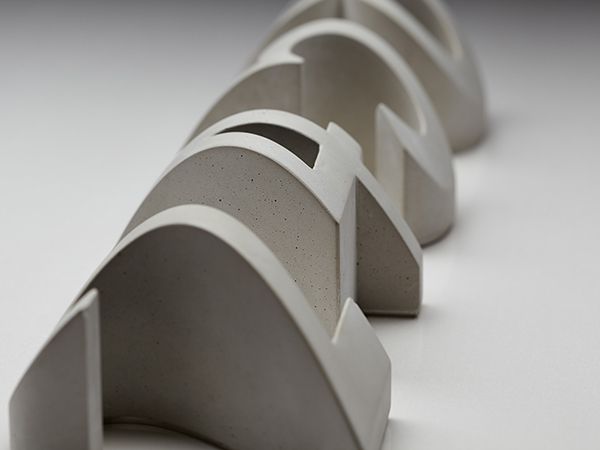
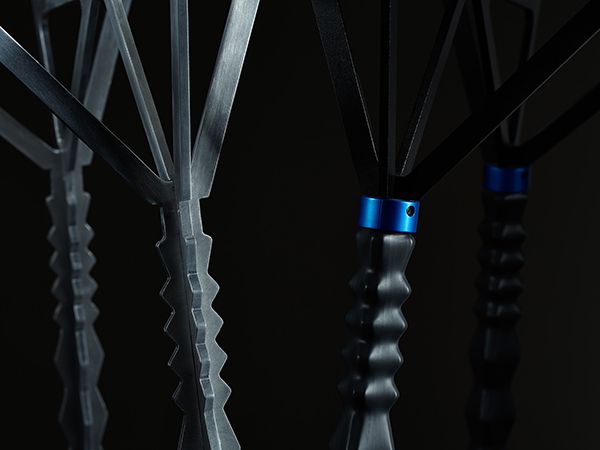
Other conceptual explorations include the Shrink Chair, a contemporary reinterpretation of the traditional turned-leg chair. “The idea was to reinterpret a turned leg chair through creating a two-dimensional silhouette framework,” says Andrew. “Then we shrunk a sheath of industrial rubber tubing over the frame to create a ghost, rubberised effect.” Andrew and Alex applied the same thinking to a series that includes lamps, mirrors, a lounge chair, rocker and cabinet. “The more we do of this type of design and production the more we learn about materials and construction,” says Alex. The same applies to their ‘Numeral’ House Numbers, three-dimensional and sculptural objects rendered in concrete, aluminium and rubber. “The idea was to play around with the properties of the materials for the design,” the pair explains. “Concrete has very nice smooth feel; the metal has much sharper edges, which you can’t achieve with stone; and the rubber numbers are soft and flexible.”
The designers have recently moved their studio to a warehouse in Marrickville and invested in additional tools and machinery to aid their craft. “Now we can do more prototyping ourselves and learn more of the production process so we can design much better for production in the future. It’s a good exercise for us,” says Andrew.
Daast exhibited at London Design Festival in 2015 and were part of Australia’s Local Design exhibition at Milan Design Week this year. They have received great interest in their cutting-edge designs and the duo has deservedly high ambitions for their work. “We want to make the highest quality we can in very limited editions,” says Alex. “We don’t want to mass produce; we want to produce pieces that people hold on to.” Andrew agrees, citing ‘art collectors’ as their ultimate dream market. “We want clients and customers to see there is more value to our work than just the materials they are made with,” he explains. “It’s more about the idea and the concepts behind it. We want to design what we find interesting and to produce products that other people find interesting as well.”
Object photography: Rodrick Bond
Portrait: Mick Bruzzese
daast
daast.com.au

INDESIGN is on instagram
Follow @indesignlive
A searchable and comprehensive guide for specifying leading products and their suppliers
Keep up to date with the latest and greatest from our industry BFF's!
The internet never sleeps! Here's the stuff you might have missed