The home of architecture and design in the Asia-Pacific
Get the latest design news direct to your inbox!

Get the latest design news direct to your inbox!
Mikal Hallstrup tells us why a user-centric approach to design that embraces technology and improves lives makes good business sense.

February 21st, 2012
With globalisation and advancements in technology, companies increasingly have to rethink the way they do business in order to stay relevant and competitive.
Who are the ones that are likely to succeed? If you were to ask Mikal Hallstrup, co-founder and Chief Visionary Officer of European design consultancy Designit, it would be those that have people-led innovation woven into their DNA.
Hallstrup, who is also the new Chairman of the Jury for Index: – a Danish-based non-profit organisation that promotes “Design to Improve Life” – was recently in Singapore to speak at an Index: forum on “Design for Enterprises”.
We took the opportunity for a quick chat!
On ‘the business of designing to improve life’, which is what you’re in town to talk about, what are the mega trends that you see?
Design is basically about improving the lives we live. One mega trend is to use design and strategic creativity as a tool. Not only to beautify the world, but make it better by creating more meaningful products and services.
Another massive trend is digitalisation. We live in the digital age meaning that a lot of the stuff we used to create and manufacture to improve life will go digital. Just take mobile apps that somehow give us digital quality of life and empower us to do things we never thought of. Part of all this is a new use of data. We have been discussing a better use of data to create change. For example, data on health, on energy consumption, and all these big topics that can help us live and consume more responsibly. What I’m saying is, products won’t die, they’ll just go digital. It means more services will ride on the back of fewer products.

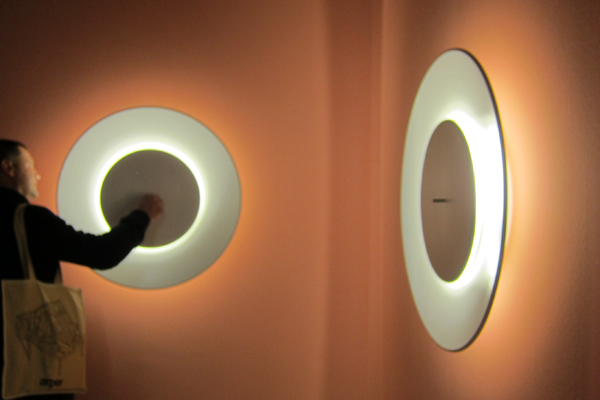
Speakers for Libratone
Last megatrend would be ’technology with focus on user experience’. That is another key driver I think. Applying technology basically means always going back to the starting point asking ’Why would I want this?’, ’What can this stuff do for me?’, ’How can I make it usable and useful?’. We create this for people, so technology should help us and we shouldn’t become slaves to bad technology. That’s what design is about.

How well are companies today effectively and strategically utilising technology in their business?
I think a lot of companies, and even very successful companies, keep forgetting the focus on the end user. So they focus sometimes more on bringing new products to the market instead of focusing on solving problems. Eventually, that results in a less meaningful or even a broken relationship with customers. Customers are not stupid and go for real value.
You could say that what the world needs is not more products or services but better and more useful ones. Many companies are too ’tech happy’, too naively optimistic about it. They’re good at developing new technology but a lot of the companies are not so good at deploying it and bringing the technology back to people in a useful form.

Navigational device for Becker
I don’t think one should mention Apple all the time, but still, Apple has been good at taking technology and giving the user control instead of the technology being in control.
But I think the key is this: it’s really the user-centric approach that matters. A lot of companies claim to have a strong user-focus [but] I don’t think so. What they have is a strong consumer focus and that’s something different.

The Pump or the Plug app aims that helping people understand the benefits of using electric cars.
Do you think companies in Singapore are on the right track?
What I like about being here… is to see the enthusiasm around using technology… I think it’s inspiring to see how a country like Singapore is embracing new technology and is optimistic about technology.
I think the sweet spot is somewhere in between being optimistic and having sound scepticism.


Headphones and packaging for AKG. It recently bagged 4 iF Awards (2012).
Which countries or regions are leading the way?
You’ll see that in different regions there are different leaders, and my advise to companies would be to investigate what areas they could develop even further. So find out what are your strong areas, what are your weak sides. I think some areas in Asia and even in Singapore businesses would be the user driven-ness. That potential is not fully utilised, I’d say.
If I were an Asian company, I would really focus on getting better at understanding users and their expectations before I make the product… I wouldn’t base it on market studies or statistics. I would base it on a more in-depth understanding of what the users really need in their daily lives.
Designit
designit.com
INDESIGN is on instagram
Follow @indesignlive
A searchable and comprehensive guide for specifying leading products and their suppliers
Keep up to date with the latest and greatest from our industry BFF's!
The internet never sleeps! Here's the stuff you might have missed