The home of architecture and design in the Asia-Pacific
Get the latest design news direct to your inbox!

Get the latest design news direct to your inbox!
Elana Castle happens upon a gem of an interior in an inner city Melbourne lane-way.
April 4th, 2012
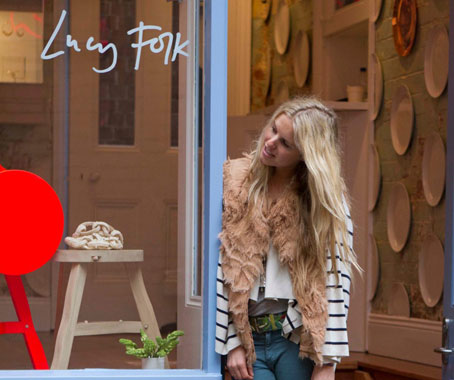
Lucy Folk’s jewellery designs are quirky, irreverent and undeniably novel.
Inspired by everyday objects, in particular edible delights, Folk literally turns food items like pasta shells, tortillas and pretzels into beautifully crafted pieces of art. So when she embarked on the design of her flagship Melbourne store, she knew that she wanted to create something a little bit different.
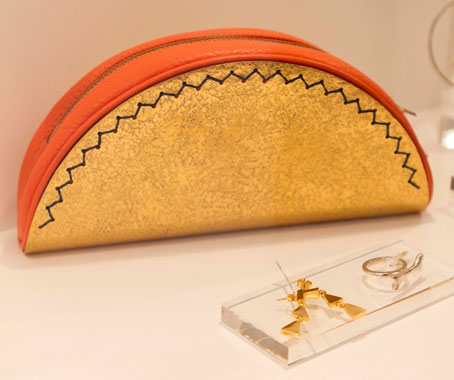
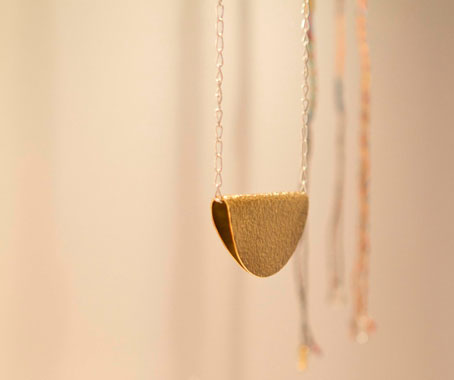
Folk turned to Charlie Inglis of Inglis Architects to develop her vision .
“My main goal was to create a space that would define Lucy’s own sense of style,” explains Inglis. “One that wouldn’t be a reflection of current Melbourne trends and styles but rather a very personal representation of Lucy’s brand.”
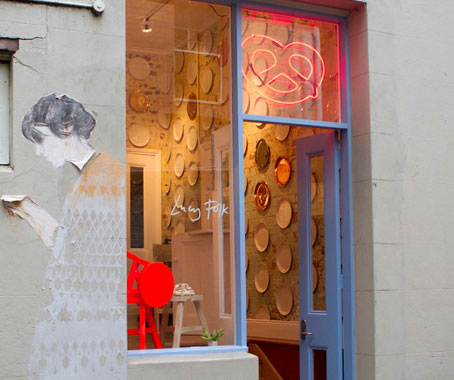
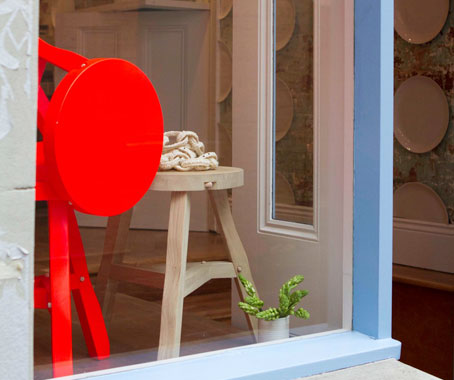
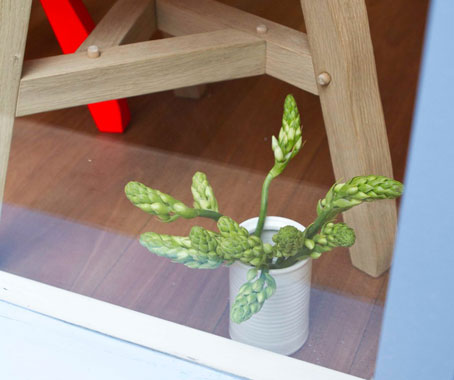
Given the spatial restrictions, a roughly 10 sqm space, Inglis’ strategy was to conceptualise the whole store as display unit as opposed to creating various zones within the store, avoiding potentially cutting people off from the space as a whole.
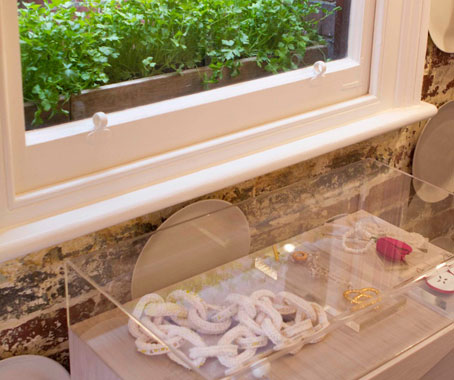
The backdrop is an exposed brick wall, one that reveals its many historical paint layers.
“The landlord wanted to retain the wall in its current state so we used it to contrast with the luxurious jewellery by adorning the walls with a three dimensional “wall paper” of highly polished precious metal plates.”
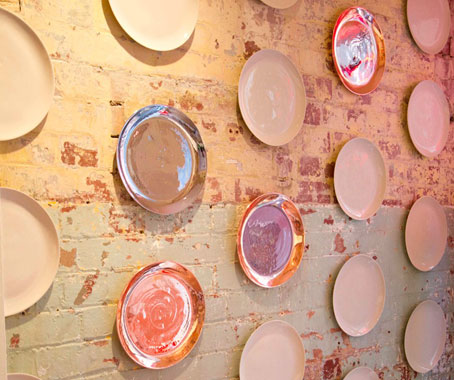
The pair also decided to keep the jewellery display simple to avoid unnecessary distraction.
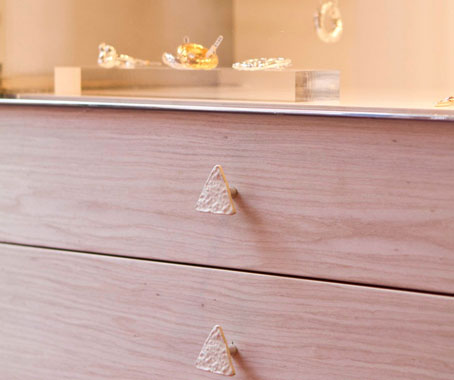
“The cabinets are pared back and float off the wall at eye level, immediately drawing attention, ” Inglis explains.
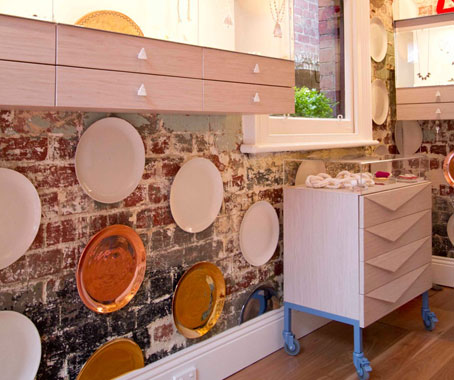
“Chrome steel reveals allowed for a thin profile and reflectivity that gives them a lightness and reduces their visual bulk and dominance in the room, allowing the jewellery to be the focus.”
The new space certainly embodies Folk’s irreverent approach. It has been imbued with texture and character and in turn draws potential buyers to the space and to the delightful pieces on show.
Inglis Architects
inglisarchitects.com
Lucy Folk
lucyfolk.com
INDESIGN is on instagram
Follow @indesignlive
A searchable and comprehensive guide for specifying leading products and their suppliers
Keep up to date with the latest and greatest from our industry BFF's!
The internet never sleeps! Here's the stuff you might have missed