The home of architecture and design in the Asia-Pacific
Get the latest design news direct to your inbox!

Get the latest design news direct to your inbox!
While the redevelopment of a shopping centre probably sounds unimportant right now for renowned Architectural firm Hames Sharley it is important work for the future.
April 16th, 2020
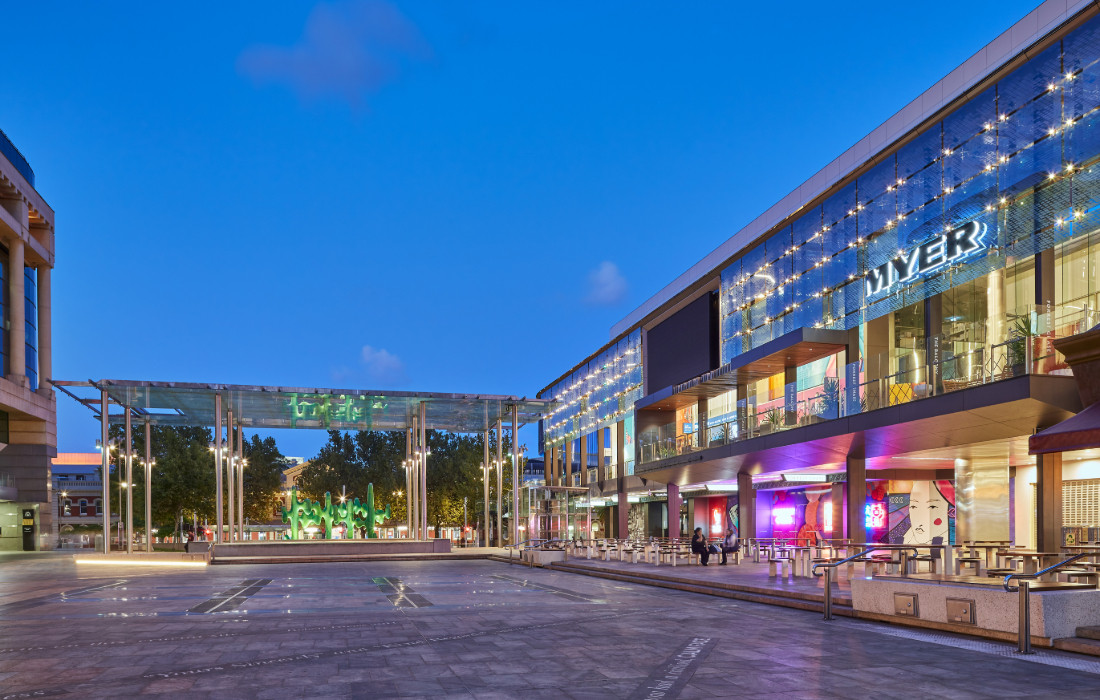
With the world growing used to the new social distanced reality and the feeling that this new normal is going to last forever going strong it does seem like a redevelopment of a shopping centre looks like the ultimate indulgement in wishful thinking. For Hames Sharley, the lead architects on the redevelopment of Forrest Chase, this is a project of revitalisation that will give commuters, shoppers and diners in Australia’s Perth an enlivened gathering space to look forward to when all this passes.

Director Derek Hays says that though the design was conceived ahead of the COVID-19 pandemic, their approach was rigorously future-focused. “Retail environments have been evolving for some time, as shoppers look to these hubs for much more than a retail experience,” Derek says.
Hames Sharley looked to elevate the precincts appeal overall, the idea was to improve connectivity between each site allowing for additional dining opportunities and facilitate greater engagement between the locations, it all sounds like a bit of a joke right now but a welcome return to normalcy when the isolation period passes for the people of Perth.

For Padbury Walk, Hames Sharley’s redesign focuses on the removal of previously existing visual and physical obstructions in the public realm, and replacing it with the a thin veil of stepping and layered fritted glass that improve sightlines to the retail shopfronts and the adjacent Forrest Place, whilst still providing protection for pedestrians.


Heavy steel columns replace the old concrete ones creating a contrast to the masonry construction of the adjacent historic buildings whilst maintaining the civic scale surrounding Forrest Place. High aluminium clad soffits, with glass skylights, create a grand scale and natural light for shoppers to enjoy. By night, integrated and programmable LED lighting and a large events LED screen allow the walkway to contribute to the vibrancy of the city after hours and during events. Two balconies located on the west and south elevations of the walkway provide future opportunities for retail outlets and pedestrians to break away from the main walkway to seamlessly observe city life.

Hames Sharley’s strategy for the Murray Street overpass was to redesign the bridge and canopy to invert the old structural design by locating the structural elements in the roof space. This approach allowed for the introduction of delicate steel rods to suspend the thin concrete walkway and open sightlines to the city environs, Forrest Chase building and retail located within. A simple plane of the polished stainless steel was introduced to the soffit of the bridge with the intent to reflect the city’s activities to passers-by.
The perimeter retail offerings in Forrest Chase were replanned to provide more appealing sized spaces in line with current retail requirements. Double-height shopfronts were designed to allow for retailers to fit out and revive Forrest Chase as a premier retail offering in Perth’s CBD.

It’s nice to know that there is a plan for the future past this pandemic and director Derek Hays is in full agreement “The desire to not only shop but to gather together for other recreational and/or dining experiences was evident long before the pandemic — and that pattern looks set to continue, long after the pandemic passes.”.
INDESIGN is on instagram
Follow @indesignlive
A searchable and comprehensive guide for specifying leading products and their suppliers
Keep up to date with the latest and greatest from our industry BFF's!
The internet never sleeps! Here's the stuff you might have missed