The home of architecture and design in the Asia-Pacific
Get the latest design news direct to your inbox!

Get the latest design news direct to your inbox!
Nendo develops seven innovative door designs for wooden door manufacturer Abe Kogyo. Christie Lee writes.

February 24th, 2016
To fete its 70th anniversary, Japanese wooden door manufacturer Abe Kogyo has enlisted Nendo to create a series of whimsical new door designs. With each inspired by a different code word, the seven doors prompt us to look beyond the usual functionality of a common household fixture and think about accessibility – both physical and psychological – geometry and aesthetics.
Harking back to the sliding shoji doors in traditional Japanese architecture, Slide allows a greater sense of connectivity between rooms. Fling it wide open for grand soirees, or slide it open just an inch to allow the cool breeze to flood in on a winter morning.
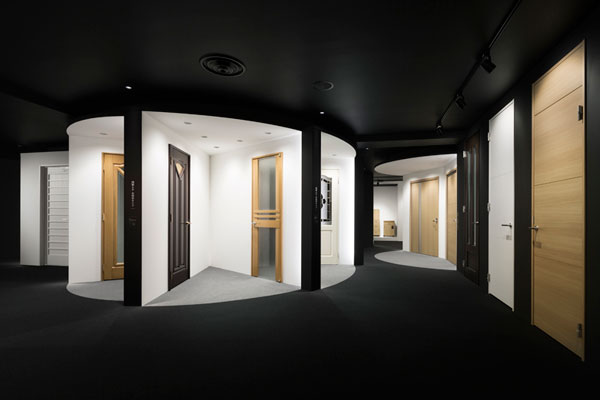
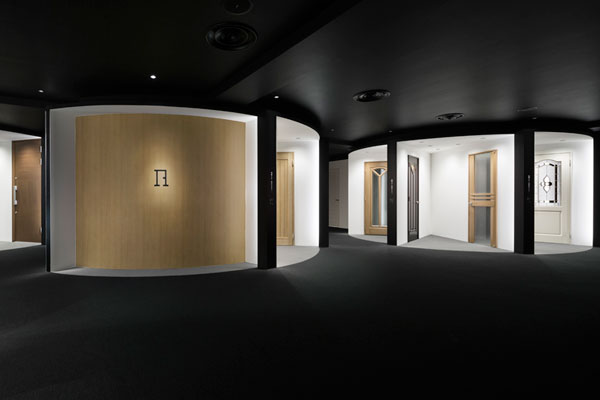
Aside from designing a new door collection for Abe Kogyo, Nendo also created a showroom to display the company’s products, with the doors set in walls that have been built in a radial pattern
Passing through a door measuring 2 metres in height can be intimidating for toddlers and young kids; Baby was conceived to remedy the situation, allowing adults and children to walk through doors that match their respective heights.
Making use of the wiring technique used in electronic locks, Lamp allows a lighting fixture to be attached to the door.
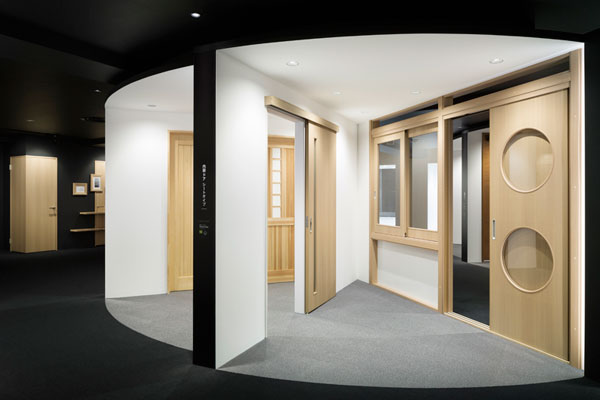
Enabling it to go beyond its usual function, Hang is a door fitted with a 2.5mm magnet sheet, allowing various accessories, be it trays, flower pots or letterboxes to be latched onto it.
Wall is another design defying presumptions that one has of doors. Employing a V-cut technique usually used in finishing the edges of flush doors, shelves, picture frames and the like are attached to doors to great visual effect.
Corner comes at a time when greater attention is being paid to handicapped friendly designs. A door that allows one to enter and exit through the corners of a room, Corner provokes discussion about room layouts, but perhaps more importantly, is wheelchair friendly.
Kumiko is a technique whereby wooden interior lattices are assembled without nails. Here, it is deftly applied to create door fixtures for traditional Japanese tatami rooms.
Nendo
nendo.jp
INDESIGN is on instagram
Follow @indesignlive
A searchable and comprehensive guide for specifying leading products and their suppliers
Keep up to date with the latest and greatest from our industry BFF's!
The internet never sleeps! Here's the stuff you might have missed