The home of architecture and design in the Asia-Pacific
Get the latest design news direct to your inbox!

Get the latest design news direct to your inbox!
Bringing colonial design flavours in a thoroughly modern execution, John Anthony restaurant by Linehouse is a feast for the eyes.


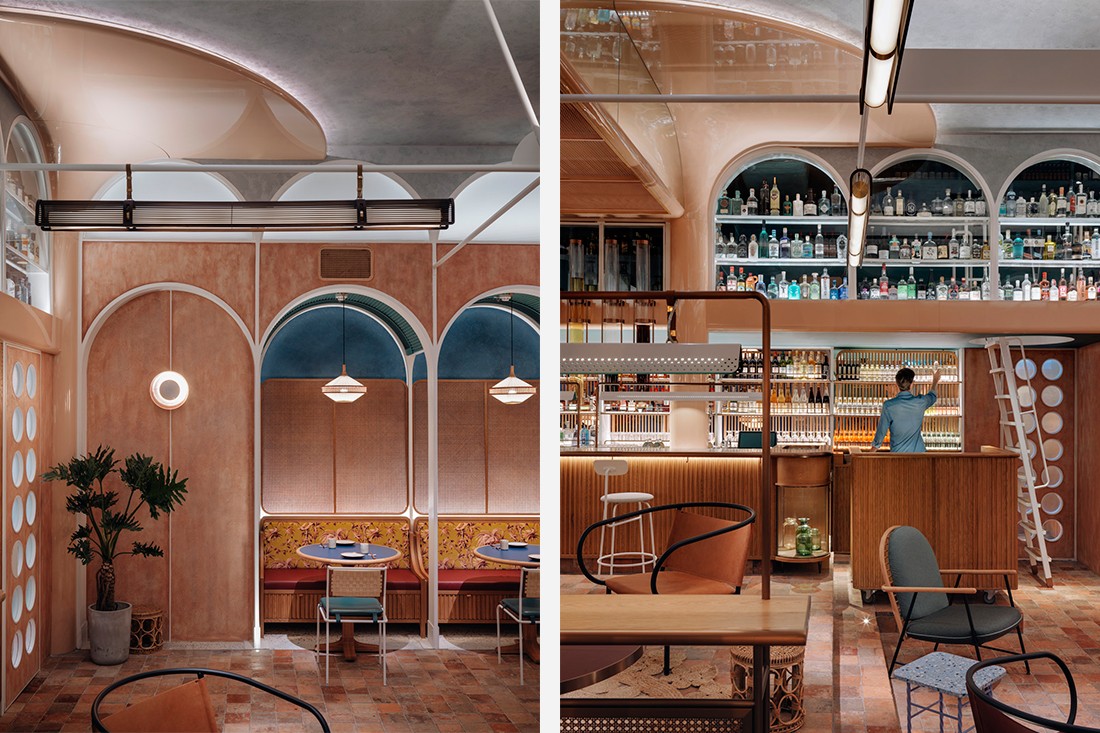


John Anthony is not only a feast for the taste buds, but also for the other senses. The textures, patterns, shapes and colours fused together by Linehouse create a sensory potpourri that makes the eyes wander and entices touch.
The contemporary dim sum restaurant, opened by Maximal Concepts, is named after the first Chinese man to be naturalised as a British citizen in 1805. The employee of the East India Company sojourned from the East to London’s docklands to take care of lodging and food for arriving Chinese sailors in Limehouse’s Chinatown.
The restaurant’s design is a spatial representation of his journey, hence the eclectic styles with hints of colonial architecture and Eastern detailing – or what the studio describes as “British tea hall turned Chinese canteen.” As such, formal elements meld with more quotidian components.
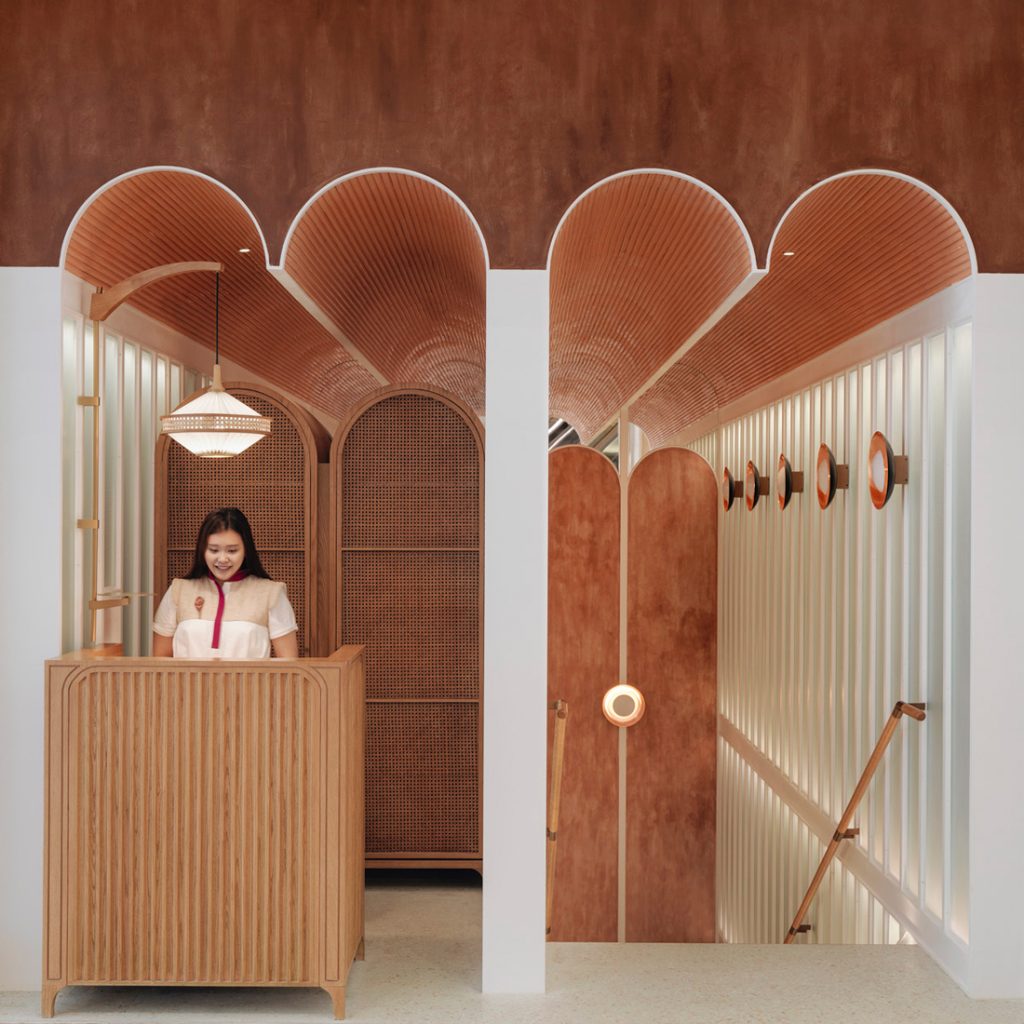
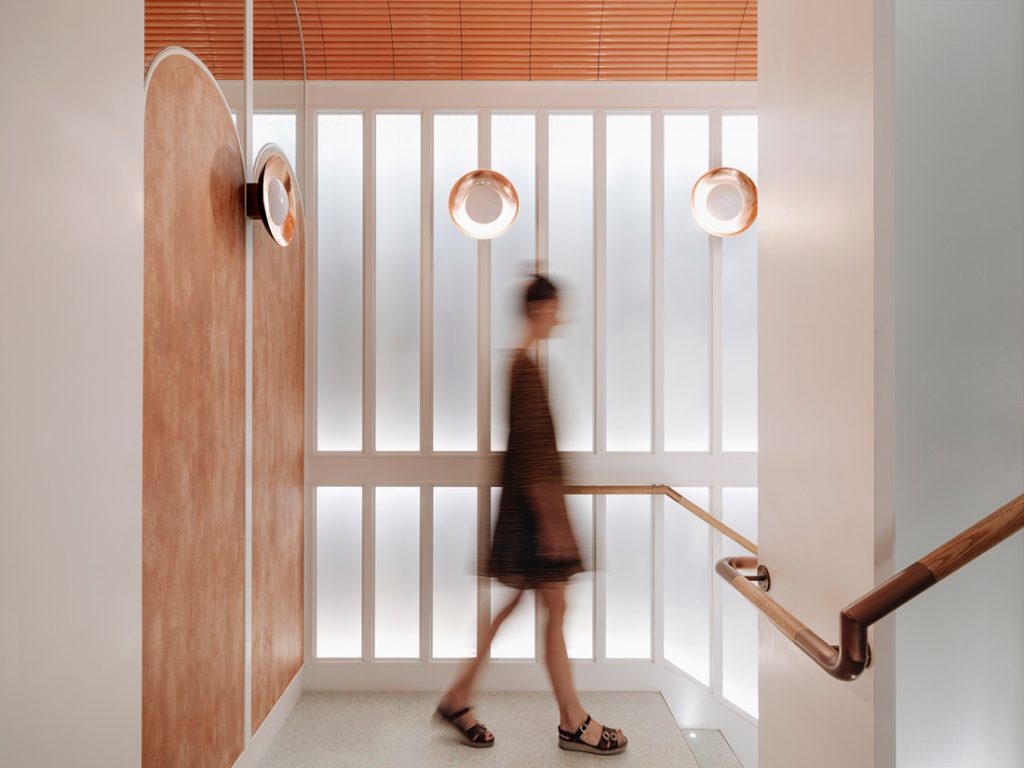
The restaurant is situated in a basement. Guests walk down a flight of stairs wrapped in white metal and diffused glass lit from behind. A motif of curves (applied throughout the restaurant) begins here, where arches define the reception area and stairwell entry, and circular lighting sconces act as focal points on the walls. Honey-toned terracotta rendered walls continue into the restaurant, where pink tiles clad the triple-height arched ceiling and lime-green terrazzo covers the floor.
“The main dining hall is an interpretation of storehouses in the docklands. The modern vaulted space plays on verticality, lightness and has a sense of whimsy with circular canopy columns in a dusty pink lacquer, and white metal arches surrounded by terracotta render,” describes the design team at Linehouse.
These ceiling details, with the diffused glass arches backlit, create the illusion of daytime so the space doesn’t feel claustrophobic even though there are no windows. They also help to define zones. For instance, domed cubicles above the bar highlight its expansive gin collection infused with blends of botanicals found along the Spice Route.
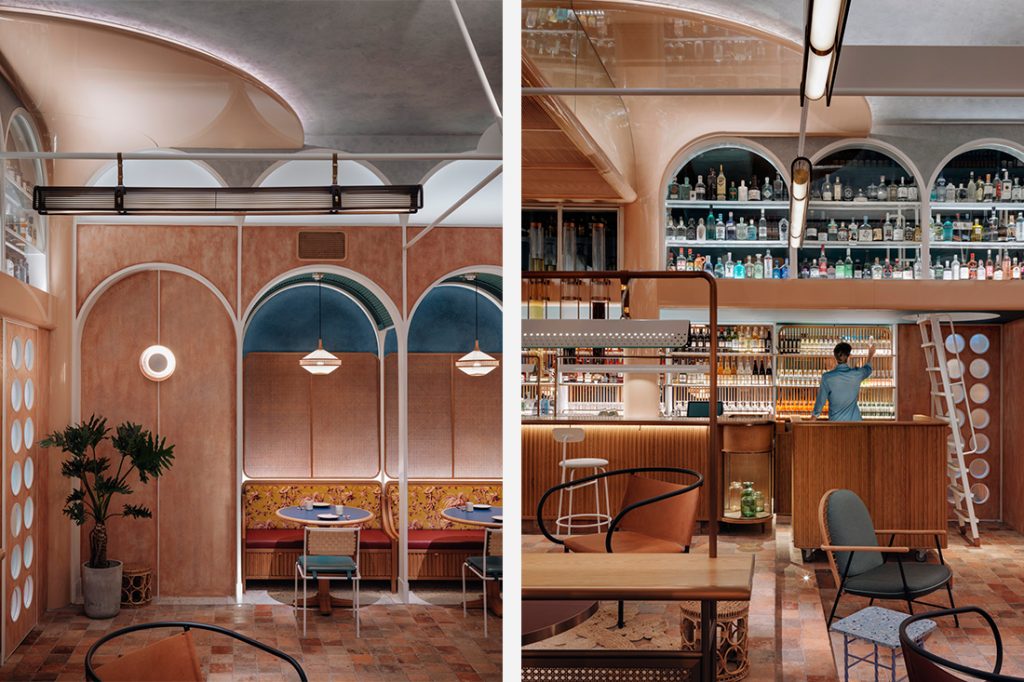
Another area is delineated by a steady rhythm of arches clad in green handmade tiles. These dip down at the booth seating to create alcoves. Billowing hand-dyed indigo linen enveloping the ceiling references nautical imagery and lends softness to the space while the moodier tone enhances the sense of intimacy.
Throughout, wicker, translucent glass and floral fabrics on the furniture and joinery recreate the relaxed mood of colonial interiors. Lending a graphic touch and a sense of old-world romance to the private dining rooms are large-scale illustrations on hand-painted tiles featuring commodities traded between the British and Chinese in the eighteenth century, such as medicinal poppies and exotic animals.
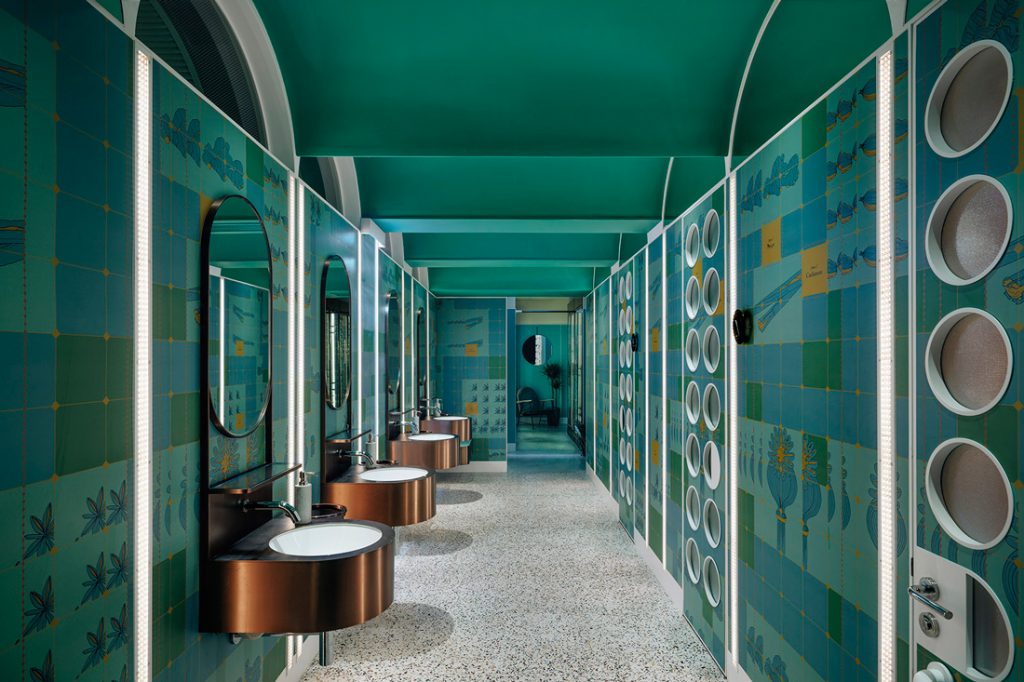
These lively encounters continue into the bathrooms, where green, mustard and turquoise pictorial laminates, custom-mounted vanities, a green, arched ceiling and recycled plastic tubes (lining the ceiling of the toilet stalls) reference the spice trade. The latter is part of the project’s sustainability agenda. It accompanies waste plastic and paper upcycled into coasters and menus, floors tiled with reclaimed terracotta from abandoned houses in rural China, as well as eco rattan. Similarly, the restaurant’s ingredients are sustainably sourced.
With so much going on, it may have been easy for the space to end up a confused spectacle. Under the deft hands of Linehouse, the restaurant is a delectable, idiosyncratic dish layered with history and topped with playfulness, excitement and mystery.
INDESIGN is on instagram
Follow @indesignlive
A searchable and comprehensive guide for specifying leading products and their suppliers
Keep up to date with the latest and greatest from our industry BFF's!
The internet never sleeps! Here's the stuff you might have missed