The home of architecture and design in the Asia-Pacific
Get the latest design news direct to your inbox!

Get the latest design news direct to your inbox!
Herman Miller’s annual Liveable Office Awards have fast become a highlight of the design calendar – and once again the winning entrants set new heights for workspace design. Let’s take a look…

The third annual Liveable Office Awards saw finalists coming from Japan, India, Hong Kong, Singapore, Australia and the Philippines, all of who demonstrated and shared innovative new approaches to workplace design with their shortlisted projects.
The Liveable Office Awards started in 2013, organised by Herman Miller Asia to raise awareness around the importance of good workspace design, while also leveraging broader organisational goals in the Asia Pacific region.
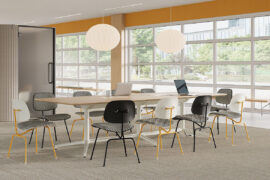
Herman Miller’s role is to help its clients and designers to promote and celebrate great achievements in design. In the past, workspace design revolved around how to accommodate technology and power rather than focusing on the user. Now, however, the approach to workspaces has changed: offices need to provide individuals with healthy, high-performance ergonomic environments, as well as encouraging a range of collaborative activities.
The Liveable Office Awards recognise companies that are investing in workspace design, while inspiring and guiding the next generation of workers and designers to come.
Daimler Greater China Beijing headquarters, Mi2 Interior, Design & Project Co., China
“We were able to get Daimler the largest Gold WELL certification in Asia,” says Desmond Tan of Mi2 “Where WELL differs from LEED is that it introduces the human aspect into sustainable design. Employees at Daimler have access to nursing rooms, to fruit and vegetables in the pantry, to equipment in the exercise area. We also had to consider sound: what’s the reverberation like, and what about glare control?”


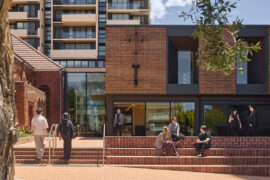
Architectus Melbourne Studio, Architectus, Australia
“This year’s award was the opportunity to bring our latest work and have it judged against the best work in Australasia,” says Andrew Schunke of Architectus “For us, it was a great opportunity to see how our new thinking and new ideas around workplace design sit in what is becoming a global market.”


DSP Design Associates, India
“When one is talking so much about technology in the post-industrial revolution, what is really important is: how are you really taking care of human beings in the workspace?” remarked Bimal Desai of DSP Design Associates. “We were looking into how that human element has been taken care of. How a space can really inspire people to work, how flexible is the whole environment you are creating, what materials are you using? How are you reflecting the company’s philosophy in the workspace? Those are some of the softer aspects we considered.”
Microsoft Corporation, Mumbai, DSP Design Associates, India


–
“One of the strong trends we saw in the entries this year was an understanding that hospitality themes and approaches to design needed to be incorporated into liveable spaces because people live where they work these days,” said Award Judge Claire Beale (FDIA, National President, Design Institute of Australia).
“Resolving lighting, understanding flexibility, and thinking about how people now live in workspaces was a really key focus for all the entrants.”
INDESIGN is on instagram
Follow @indesignlive
A searchable and comprehensive guide for specifying leading products and their suppliers
Keep up to date with the latest and greatest from our industry BFF's!
The internet never sleeps! Here's the stuff you might have missed