The home of architecture and design in the Asia-Pacific
Get the latest design news direct to your inbox!

Get the latest design news direct to your inbox!
Collins and Turner have fashioned a rather spectacular new centre for the local community in Sydney’s Waterloo

August 14th, 2012
Revitalising an existing services block, the new-look building is designed to house the disadvantaged youth and family counseling service WEAVE, a not for profit organization.
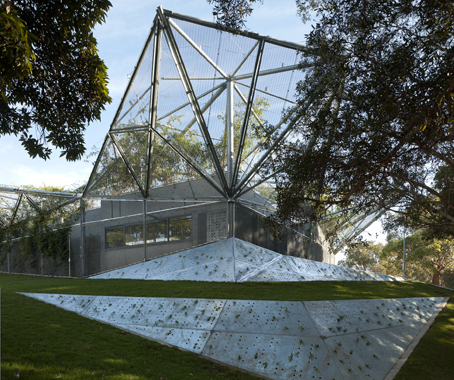
Collins and Turner’s $3.5 million dollar construction was largely funded by a $2 million grant from the Federal Government’s Community Infrastructure Program.

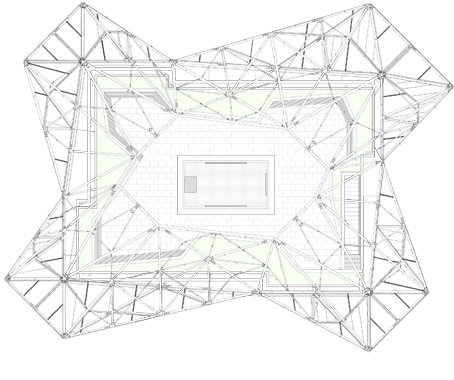
Commissioned by the City of Sydney and this week opened by Lord Mayor Clover Moore MP and Federal Member for Sydney The Hon. Tanya Plibersek MP, the development mirrors the urban environment it services, with the striking canopies and trellises forming a framework for the growth of foliage, embedding the building in it’s immediate environment.


“As the plants mature and grow across the canopy the resulting landscape form will gradually merge with its park setting, becoming an abstract and sculptural green form punctuating the park boundary and visually merging with the adjacent tree canopies.” says architect Penny Collins.
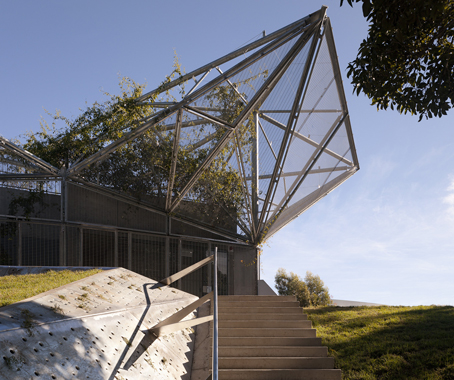
A series of interlocking, but self-supporting elements – the canopy structure has been designed to allow for future demounting and relocating – allowing the retention of the existing slab and wall structures of the site.

Internally, the space is arranged in what Collins and Turner describe as a “pin wheel” plan that radiates from a central courtyard.
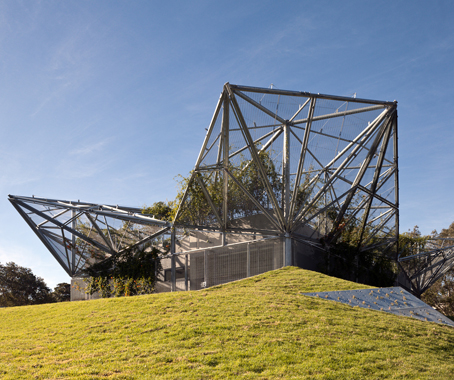
Housing over 14 staff, the facility incorporates meeting rooms, workspaces, chillout room, counseling and consulting facilities.
Drawing inspiration from the grass covered iron-age forts of Celtic Wales, as well as the Cedric Price designed aviary at London Zoo, Collins and Turner have cast the net wide in producing a contemporary and engaging safe-space.
Collins and Turner
INDESIGN is on instagram
Follow @indesignlive
A searchable and comprehensive guide for specifying leading products and their suppliers
Keep up to date with the latest and greatest from our industry BFF's!
The internet never sleeps! Here's the stuff you might have missed