The home of architecture and design in the Asia-Pacific
Get the latest design news direct to your inbox!

Get the latest design news direct to your inbox!
Introducing the team from Blok Furniture.
August 7th, 2009
What does your company supply?
Blok Furniture delivers contemporary Australian design to Interior Designers and Architects. We supply a service that allows for standard product and custom solutions to furniture requirements.
What’s the history of your company?
Blok was formed by Richard Park over four years ago as an avenue to explore his own designs and to fulfill a niche that allowed for designers to manufacture one off pieces with confidence, knowing that the process was managed by someone understanding the design intent and the manufacturing reality.
Where do you distribute?
Blok is distributed Australia wide. All enquiries and manufacturing are handled in Brisbane with our product reaching all the capital cities and places as far flung (and as hard to spell) as Kununurra and Thuringowa.
Who are your customers?
Anyone generously taking the time to read this – but mostly Interior Designers and Architects.
What sets your company apart?
Blok is a boutique business which allows for direct communication, personal interaction and a distinct lack of Chinese whispers.
Who should we speak to when specifying?
Marni if you would like a presentation of our range and to see a folio of custom work.
Richard to discuss design and pricing.
What are your client’s priorities at the moment?
These don’t change much despite the GFC, swine flu and Michael Jackson: Service. Quality. Delivery.
However there has definitely been more interest in Australian product, environmental design criteria and, to a certain extent, budgets.
What is good design to you?
Design that is so intrinsically beautiful, timeless and useful that the next generation will happily receive it.
What does the future hold?
Increased awareness in the design community of who Blok is and what we represent.
New product.
The inclusion of more external designers.
The further development of Student Blok, supporting emerging designers.
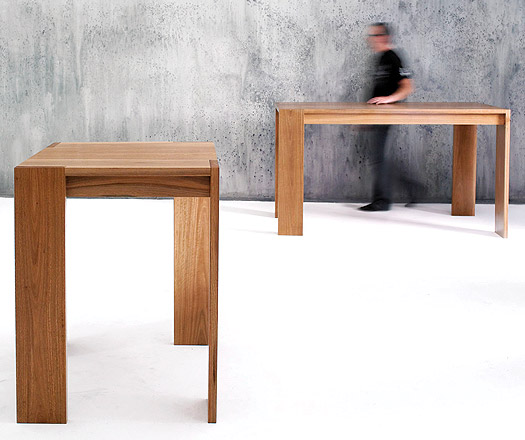
Hero Image: Interlok Tables designed by Tim Stewart. Photography by Shane Holzberger.
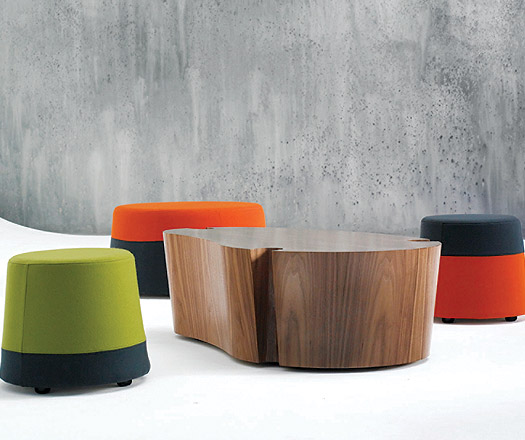
Lulu Ottomans with Aura Table. Photography by Shane Holzberger.
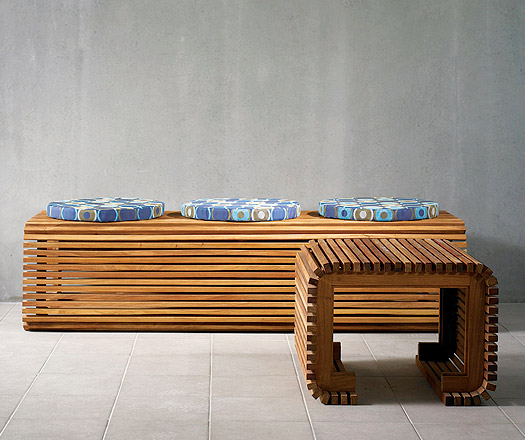
Sunni Bench. Photography by Shane Holzberger.
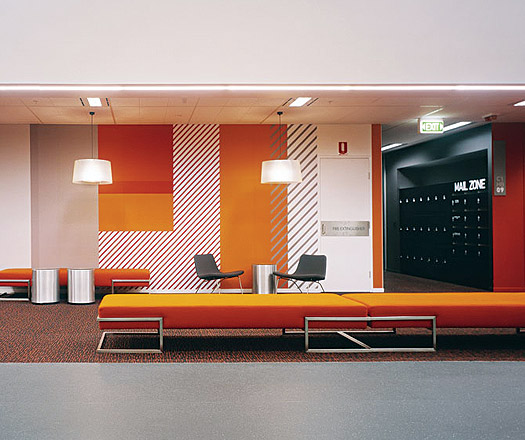
Duo ottomans at Optus Headquarters, Sydney. Interior design by Hassell, Sydney. Photography by Shannon McGrath
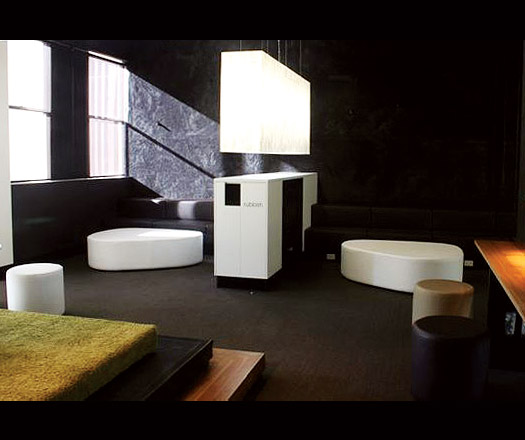
Ottomans at University of Qld. Interior design by Design Nest. Photography by Paul Jones
INDESIGN is on instagram
Follow @indesignlive
A searchable and comprehensive guide for specifying leading products and their suppliers
Keep up to date with the latest and greatest from our industry BFF's!
The internet never sleeps! Here's the stuff you might have missed