The home of architecture and design in the Asia-Pacific
Get the latest design news direct to your inbox!

Get the latest design news direct to your inbox!
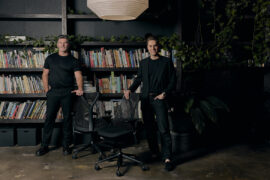
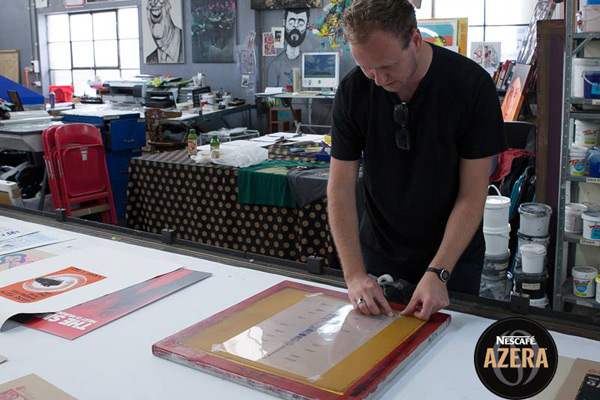
Now in the final days of the NESCAFÉ Azera Project, Sophia Watson goes behind the scenes with designer Seaton McKeon.
April 15th, 2014
In what may be the most academic interpretation of the ‘evolution’ theme for the NESCAFÉ Azera Project, industrial designer Seaton McKeon frames his entry around the concepts of Darwinism and natural selection.
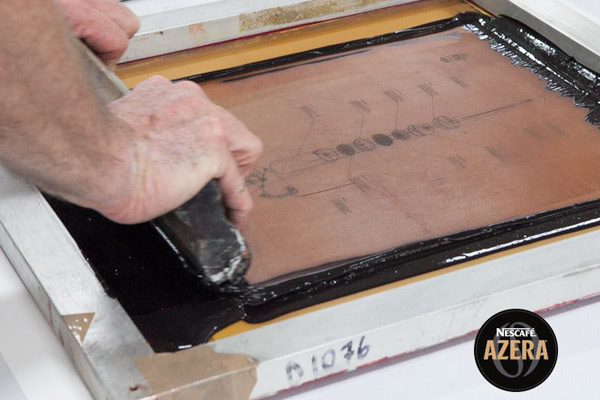
“The discipline of product design is fundamentally based on evolution in terms of functionality and a progressive visual language. So when given the theme for this project I immediately had to consider The Origin of Species by Charles Darwin – looking at how we engage with the evolutionary process and ‘natural selection’ through the lens of product design.”
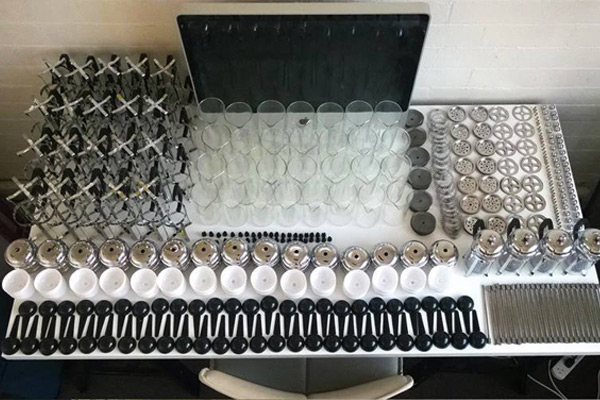
After a series of ideas, McKeon landed on what he is calling a ‘neo-mechanical flower shop’. Without giving away any specifics that would ruin the official unveiling, McKeon’s response to the theme is a collection of evolution and nature, where the four ‘species’ he created represent the way in which humans naturally adapt and evolve the functionality of a fixed item – in this case, a coffee plunger.
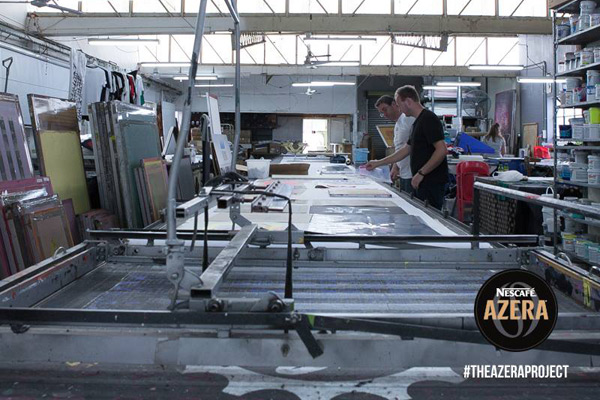
The idea is clever and ultimately thought-provoking, where the user is invited to reflect on the theme through the product itself. McKeon has succeeded in meeting the brief of ‘evolution’ and ‘reuse’ in a number of iterations. One of the most interesting results here is that there is no one correct response to the four products; there are any number of messages or meanings one could take away – all of which however, lead back to the original theme.
“The project has been interesting and certainly challenging at times, but it has pushed me to think a bit differently about meeting briefs on a short lead time, and methods of practice with unfamiliar materials.”
Tune in for the live unveiling Tuesday 15th April, and vote for the ‘People’s Choice Award’ here: facebook.com/nescafeanz
THE AZERA PROJECT
nescafe.com.au/azera-project
INDESIGN is on instagram
Follow @indesignlive
A searchable and comprehensive guide for specifying leading products and their suppliers
Keep up to date with the latest and greatest from our industry BFF's!
The internet never sleeps! Here's the stuff you might have missed