The home of architecture and design in the Asia-Pacific
Get the latest design news direct to your inbox!

Get the latest design news direct to your inbox!
Linda Cheng visits an exhibition showcasing the architectural drawings of Peter Davidson.

May 7th, 2012
What could be more simple or more poignant than a black line on a white page?
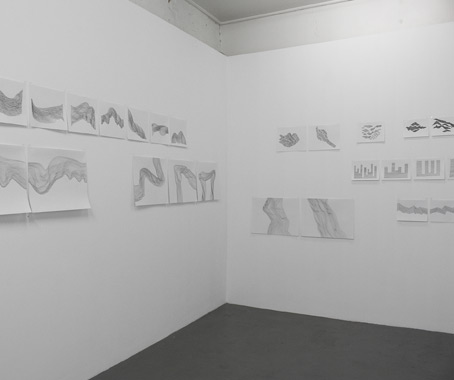
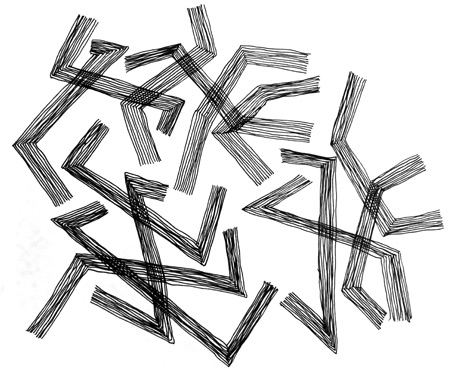
A new exhibition of veteran architect Peter Davidson’s drawings explores the primary element of line and the somewhat lost art of architectural drawing.
Peter Davidson is co-director of LAB architecture studio, whose work in architectural practice and teaching spans three decades and three continents.
He made his mark in the world architectural landscape with the competition winning design for Melbourne’s Federation Square in collaboration with partner Donald Bates.
In 2010, Davidson tragically suffered a major stroke which took away some of his speech as well as mobility in his right side – his dominant side.
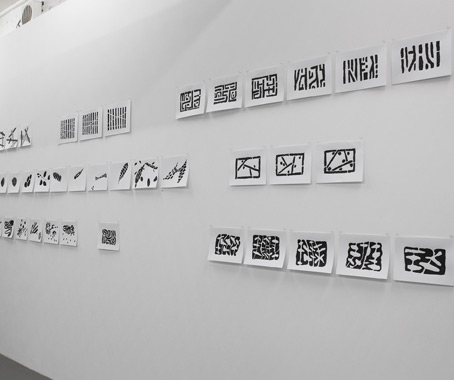
Through his rehabilitation, Davidson has produced over 1000 drawings by his non-dominant hand, some 200 of which are on exhibition at Daine Singer Gallery in Melbourne.
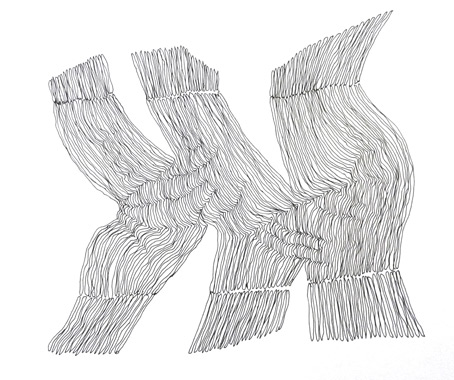
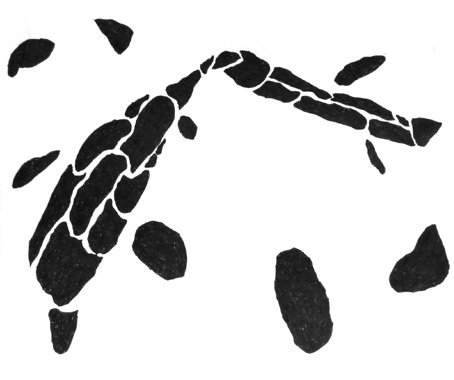
The drawings are distinctively architectural. They explore architectural concepts of spatial relationships, the figure/ground and form and they show structure, pattern and texture.
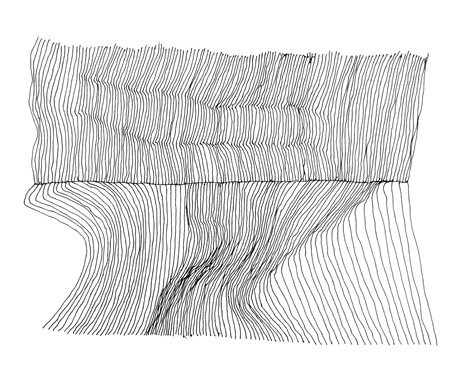
In essence, the artworks are exercises in the pure artistic expression of the architectural drawing, as distinct from architectural drawings in the practical sense which communicate a building.
The deliberateness of the line with its controlled, fluid motion, meticulously traced over and over to form patterns, lightness and shadow is, at its core, what defines a drawing at the architect’s hand.
Peter Davidson is as much a veteran practitioner who puts the spotlight on the lost art of the architectural drawing as he is a stroke victim who re-learns how to draw.
This exhibition is an incredible insight into a personal process of rehabilitation, but perhaps more so, a rare look at the process of architectural exploration.
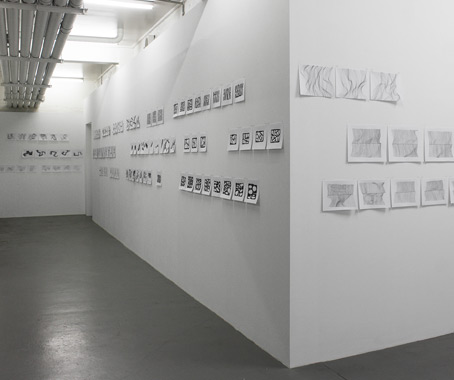
Peter Davidson: A Fine Line is on show until 19 May.
Daine Singer Gallery
dainesinger.com
INDESIGN is on instagram
Follow @indesignlive
A searchable and comprehensive guide for specifying leading products and their suppliers
Keep up to date with the latest and greatest from our industry BFF's!
Sustainability has come a long way as a concept from the early years of the three ‘R’s. Now Republic of Everyone are ‘handing’ it back to the people, with their ‘If There’s One Thing I’ve Learnt’ campaign. The inititative asks “key people in sustainability, green, ethical and design innovation industries what they’ve learned about how […]
The internet never sleeps! Here's the stuff you might have missed