The home of architecture and design in the Asia-Pacific
Get the latest design news direct to your inbox!

Get the latest design news direct to your inbox!
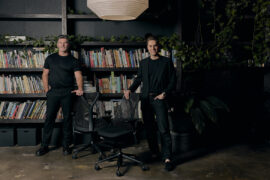
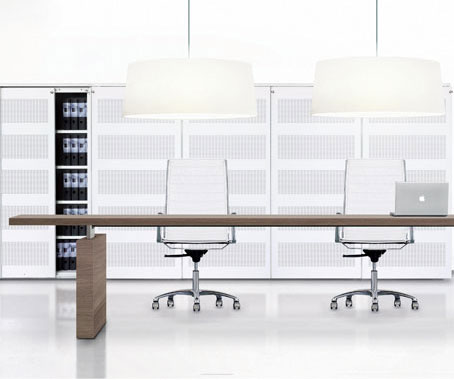
Dirk Rutten of Markant speaks to DQ Editor Alice Blackwood about the changing workplace and how new office furniture reflects these trends.
June 1st, 2011
Issue 40 of DQ magazine looked at new workplace trends and the blurring boundaries between work and play.
The idea for the feature was sparked by a chat Editor Alice Blackwood had with Dirk Rutten, Creative Director of Dutch-based office furniture manufacturer Markant.
We’re delighted to be sharing Rutten’s insights on Indesignlive this week.
DQ: What kind of major changes in society and our behaviour are affecting the workplace and office space?
We can divide our 24-hour day into three different categories:
– 8 hours of work at the office
– 8 hours of free time at home and at your favourite locations, and
– 8 hours of sleep at home.
The main difference in Western society is that these categories are not so divided anymore. Reasons are:
– Micro communication electronics
– iPhone, Palmtop, PDA etcetera…
– We can communicate and see other people on ’real’ time with video conferencing, at any time from any place… so we are not connected to our own workstation anymore, we don’t even have to be connected to the office is general!
– Another reason is more availability of social network places (gym, favourite bar, shops etc).
A result of this is that we should reconsider what the purpose and function of an office is.
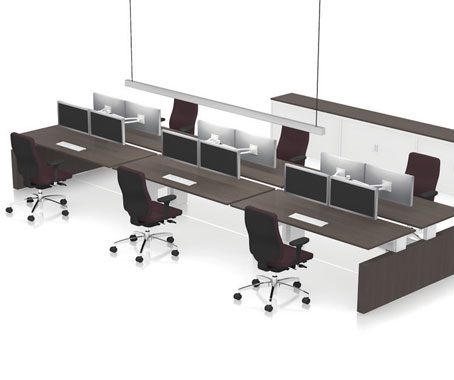
We need ’plug and play’ at all places in the office because we bring (besides our own electronics), a laptop nowadays (did you know, 2009 was the first year in history that more laptops have been sold than stationary computers?)
We can share the desks if we want to, in order to:
– Save expensive real estate costs
– Create more relax meeting places if we want to
– Improve our working environment in order to get a more convenient, inspiring and interactive life.
Also, young professionals have different standards. They want more flexibility in their life, they are better skilled with internet, and social media networking, and they are more selective regarding their needs.
DQ: In what ways are these major changes or influences affecting (a) the way people work, and (b) the way office spaces are arranged/designed?
Offices have more domestic, residential looking interiors. There’s more diversity in styling – to reflect a company’s corporate image.
There’s the added integration of hardware, cabling, technologies (video conferencing, power sockets, WIFI environment) and more dynamics in traffic (people might work from home one day, and stay back late at the office another).
DQ: How is Markant in particular responding to these changes and trends?
The philosophy of Markant is that we like to create a human interior that provides a healthy workstation, with practical solutions, for a reasonable price, made in a responsible way for our planet. In other words:
– Warm, intimate interior design
– Good mix between industrial/monotone materials/colours and natural warm materials/colours/prints
– Furniture which is symmetrical and well organised, but not sterile, cold, or abstract, ie. minimalism with a warm touch!
– Not too many bright colours that create too many triggers in the brain, but natural colours combined white soft white etcetera.
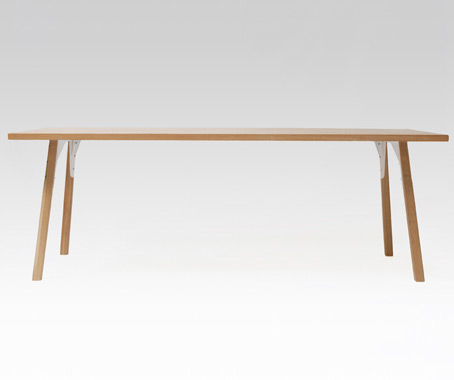
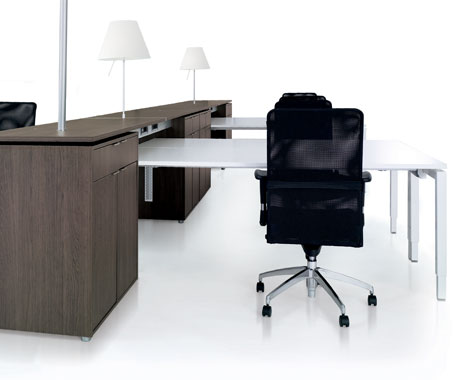
[An important innovation is] height adjustable desks and dynamic flatscreens with height adjustable monitor arms. The monitor arm is just as important as the chair (for example) for a good, ergonomic workstation.
The neck is the most fragile part of the body; people’s eyes get tired, prompting them to move their head towards the screen. We are the first generation that stays in a static body position for a long time every day. There is no knowledge of what this will do to our bodies after 30 years.
I believe a company is an organic, always-changing situation. You have to be able to add an extra workstation to an existing bench. Also, the infrastructure of the cable network (especially the part where it is connected to the infrastructure of the building) should be modular too! Scenarios and Backbone concepts provide these infrastructure solutions.
DQ: Sustainably speaking…
The modular components of MSA (Markant System Architecture) benefits the architect and the end-user, because it is a system for life. You can redesign the components in the future office, and it benefits the global environment because it is easy to disassemble the product in clean parts for recycling. You can also replace damaged parts instead of buying a new desk.
Long life guaranteed…
Markant
markantoffice.com
INDESIGN is on instagram
Follow @indesignlive
A searchable and comprehensive guide for specifying leading products and their suppliers
Keep up to date with the latest and greatest from our industry BFF's!
The internet never sleeps! Here's the stuff you might have missed