The home of architecture and design in the Asia-Pacific
Get the latest design news direct to your inbox!

Get the latest design news direct to your inbox!
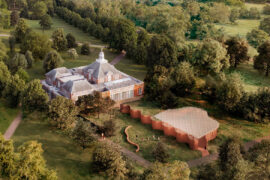
The long-running annual Serpentine Pavilion, which is commissioned to an architect with previously unbuilt work in the UK, is expanding to another country for the first time.


Beijing has been chosen as the city to host the first foreign Serpentine Pavilion, with Chinese practice JIAKUN Architects appointed as the designer.
The Serpentine Pavilion was founded in 2000 and has had temporary pavilions designed by the likes of Zaha Hadid, Bjarke Ingels, Rem Koolhaas and Sou Fujimoto to name a few. The new international iteration is modelled on the existing format.
JIAKUN Architects’ pavilion will launch in May 2018 as part of the opening of WF CENTRAL on Wangfujing in Beijing’s Dongcheng District. The site is not far from the historic Forbidden City, which holds significant cultural value dating back to the Ming Dynasty.
The structure will be open and free to the public, installed a period of six months.
The design by JIAKUN Architects, led by founder Liu Jiakun, responds to the brief calling for a response to historical and social context.
Jiakun’s designs focus on society, community and vernacular craftsmanship. The pavilion’s design has taken inspiration from Confucianism and folk wisdom, which is manifested in the figure of an Archer. A curving cantilever beam uses elasticity through stretched cables that are positioned between steel plates.
Although modern architecture in Beijing has developed a series of powerful techniques to fight the external forces of fierce winds and unpredictable earthquakes, the Pavilion’s integral structure aims – like the Tai Chi Master – to conquer the harshness of those forces with softness.
Jiakun’s work explores ideas of traditional Chinese tradition to create a relationship between public life and urban culture.
A selection committee of eight chose JIAKUN Architects’ design, including Hans Ulrich Obrist, artistic director, and Yana Peel, CEO, of the Serpentine Galleries; architect Sir David Adjaye, trustee of the Serpentine Galleries; David Glover, CEO of Intelligent Engineering and technical advisor to the Serpentine Pavilion Commission; Raymond Chow and James Robinson, executive directors of Hongkong Land; artist Wang Jianwei; and Philip Dodd, director of Made in China.

The choice of the first Serpentine Pavilion in China presents an interesting move. Could it be considered a bold statement of what has already been coined as the Asian century?
It certainly showcases the strengthening of Sino-European relationships and an appreciation of design with cultural impetus. Where does Australia fit into the dawning Asian 21st century? We are after all part of the Asia Pacific region.
INDESIGN is on instagram
Follow @indesignlive
A searchable and comprehensive guide for specifying leading products and their suppliers
Keep up to date with the latest and greatest from our industry BFF's!
The internet never sleeps! Here's the stuff you might have missed