The home of architecture and design in the Asia-Pacific
Get the latest design news direct to your inbox!

Get the latest design news direct to your inbox!
Bucking the status quo in healthcare, Coastal Neurosurgery is a home-like environment designed for patients’ wellbeing.
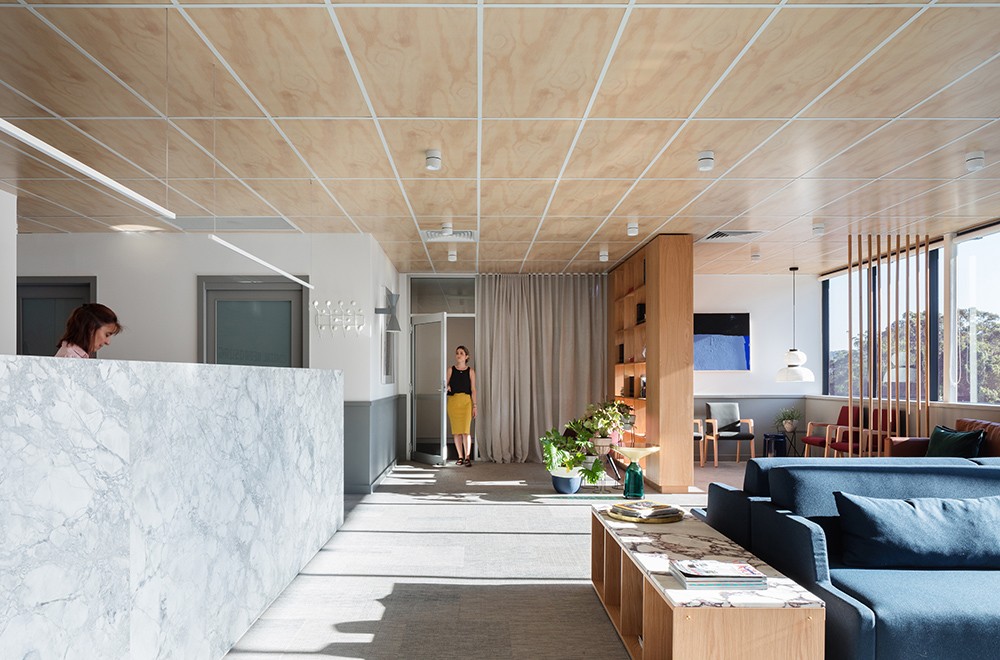
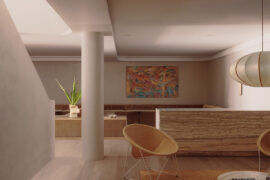
Doctor’s waiting rooms are rarely inviting or comfortable. Rather they are often impersonal, clinical environments that don’t express a sense of care or empathy. Bucking the status quo, Coastal Neurosurgery in North Gosford, designed by Ricci Bloch Architecture + Interiors, is a welcoming waiting room and workplace with the warmth and comfort of home. “We took a domestic approach to planning, materials and furniture, challenging the traditional healthcare typology to evoke nostalgia and familiarity,” Ricci explains.

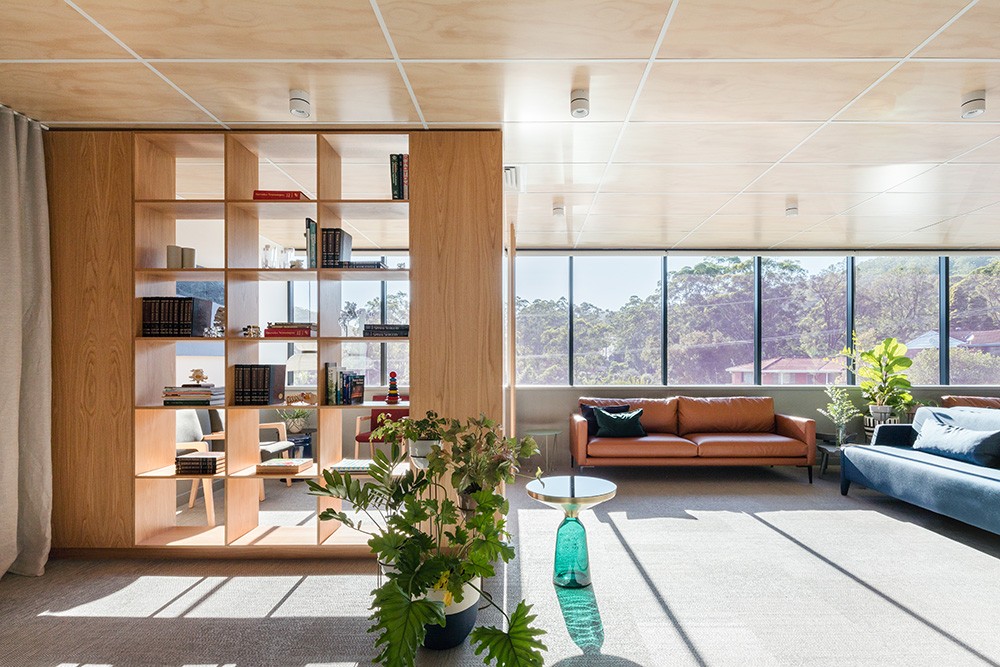
The neurosurgery is located in a new development. The building provided little personality, but large windows offered plenty of natural light and views of a gully. Ricci replaced the plasterboard ceiling with plywood for a warmer look, and enhanced the patient experience and staff operations through the use of natural materials, textured fabrics, colour, art and greenery.
Intimate spaces and lounge-like areas are created with custom-built joinery and the placement of furniture, offering a calming atmosphere and nods to the mid-century modern aesthetic.
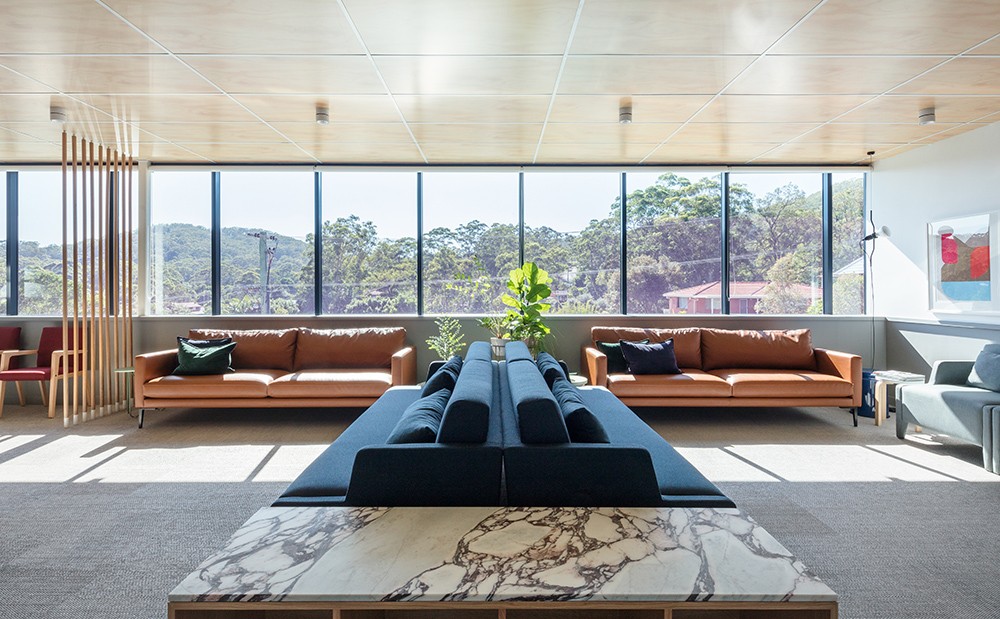
A large open bookcase establishes the entry experience, displaying books and objects relating to the spine, as well as concealing a hidden wardrobe for the doctor. The bookcase and a timber-dowel divider define a more intimate and private waiting room within the larger space.
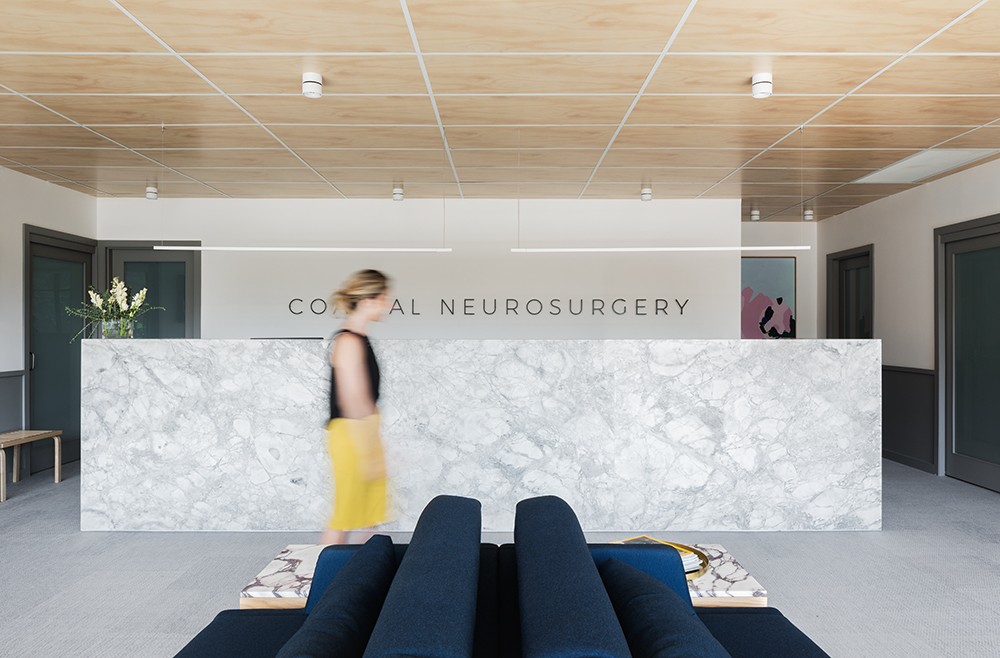
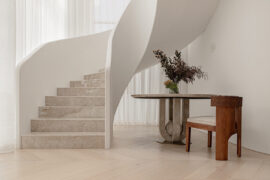
A variety of furniture makes the waiting room feel more akin to a home than a medical environment. The sofas in the back-to-back “lounge rooms” have been customised to suit the seat height and firmness required for patients with spinal injuries and impaired mobility, and side tables and magazine storage double as additional seating on busy clinic days.
Twentieth-century modern furniture, lighting and accessories feature throughout the surgery, including Artek stools and clothing racks, Eames Hang-It-All hooks, Flos Parentesi lamps, Jamie Hayon’s Formakami pendant and Le Corbusier’s Appliqué de Marseille wall light.
Artwork is also a striking a feature bringing colour, imagery and a residential touch to the environment. Ricci selected Leila Jeffrey’s Owl, displayed at the entrance, for the colour palette and “wise” subject matter. “Most patients have spinal problems and may need an invasive surgery. We wanted patients to know they were in good hands,” says Ricci.

A painting by Sally Anderson hangs in the reading room – “We wanted that room to feel very Zen and the piece felt calming,” says Ricci – while a mix of prints and paintings from Stephen Ormandy, Tom Polo, Ellie Malin and Kerry Armstrong are on the wall opposite.

Creating a sense of home has become increasingly important across workplace and hospitality design. It undoubtedly has its place in healthcare too, as Coastal Neurosurgery demonstrates, where a comfortable, appealing and welcoming environment is designed for patients’ wellbeing.
Get ready to discover the new design approaches being used across the healthcare sector, Indesign magazine #75, the ‘Health & Wellbeing’ issue is out in November.
–
Always be inspired by the latest projects from across the Indo Pacific. Sign up for our newsletter.
INDESIGN is on instagram
Follow @indesignlive
A searchable and comprehensive guide for specifying leading products and their suppliers
Keep up to date with the latest and greatest from our industry BFF's!
The internet never sleeps! Here's the stuff you might have missed