The home of architecture and design in the Asia-Pacific
Get the latest design news direct to your inbox!

Get the latest design news direct to your inbox!
Designed by Japanese retail and hospitality specialist Super Potato, the Muji Store at Jewel Changi Airport infuses delightful local elements throughout its 1,300-square-metre retail and dining space.

May 16th, 2019
The design guideline for tenants at Jewel Changi Airport requested that store and restaurant facades be made open and visually legible to attract shoppers and diners. Opened in late April, the Muji Store at Jewel Changi Airport certainly makes a grand impression with its fully open facade.
The store occupies a 1,300-square-metre duplex unit on the second floor of the retail and dining destination. Its facade appeared like one big open space punctuated by a strip of dark red bearing the company’s logo – a simple yet impactful use of the unit’s floorplate.
Muji commissioned Tokyo-based retail and hospitality interior design studio Super Potato to design the store. Known for creating warm and inviting spaces and textures made of quirky, unconventional materials, the studio is responsible for the iconic warm look and feel of Muji stores around the world. Each store is infused with its own unique local design elements. Muji dubs this design DNA as a ‘fusion of local culture and Muji’.
“Super Potato has completed a number of projects in Singapore including Muji, so we can find a sense of familiarity with Singapore,” says Shinya Maeda, Chief Designer at Super Potato. “We were very interested in the project itself since it was located in the airport facility of a country that we are close with,” he adds.
“Considering the fact that this project was not for a store on the street, but located in a facility adjacent to Changi Airport – which connects with all parts of the world – the key challenge for this project was to determine how the concept and significance of Muji can be incorporated into the unique environment and what could be offered and experience by the visitors through the store design,” shared Naoki Kadoike, Managing Director of Muji Singapore and Muji Malaysia.
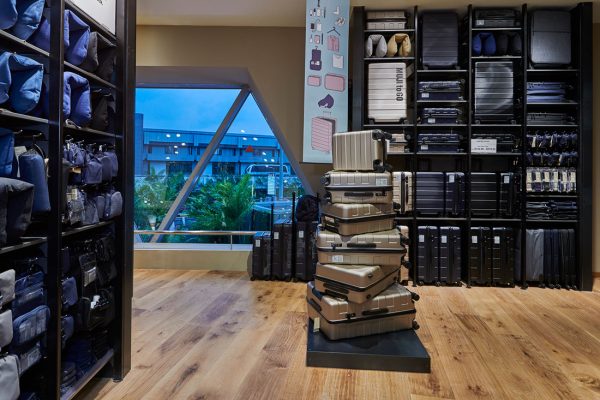
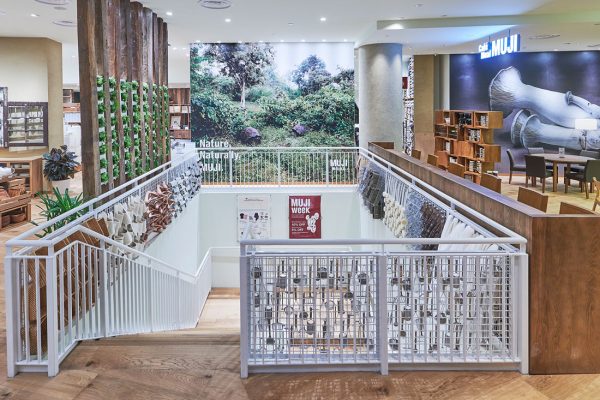
The Muji Store at Jewel Changi Airport retails more than 4,000 products that include apparel, furniture, kitchen wares, toiletries, stationery and food items. It also offers a counter for interior design consultation on the first level and an 88-seat Muji Cafe on the second level.
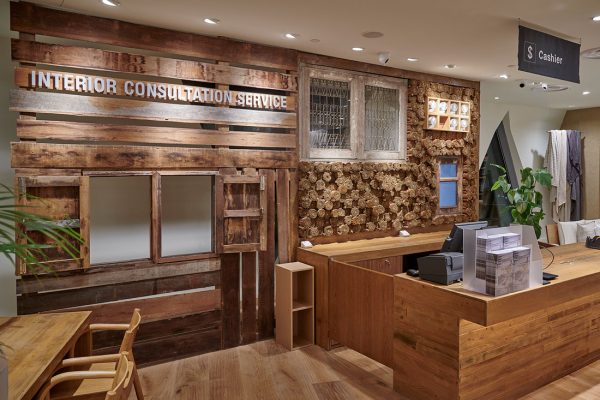
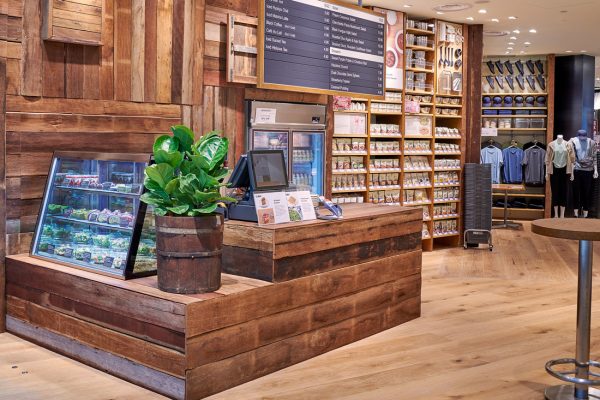
This extensive offering makes for a dense retail space. Super Potato balances the high density of the store’s retail portion with a minimal material palette comprising three materials: wood, steel and earth.
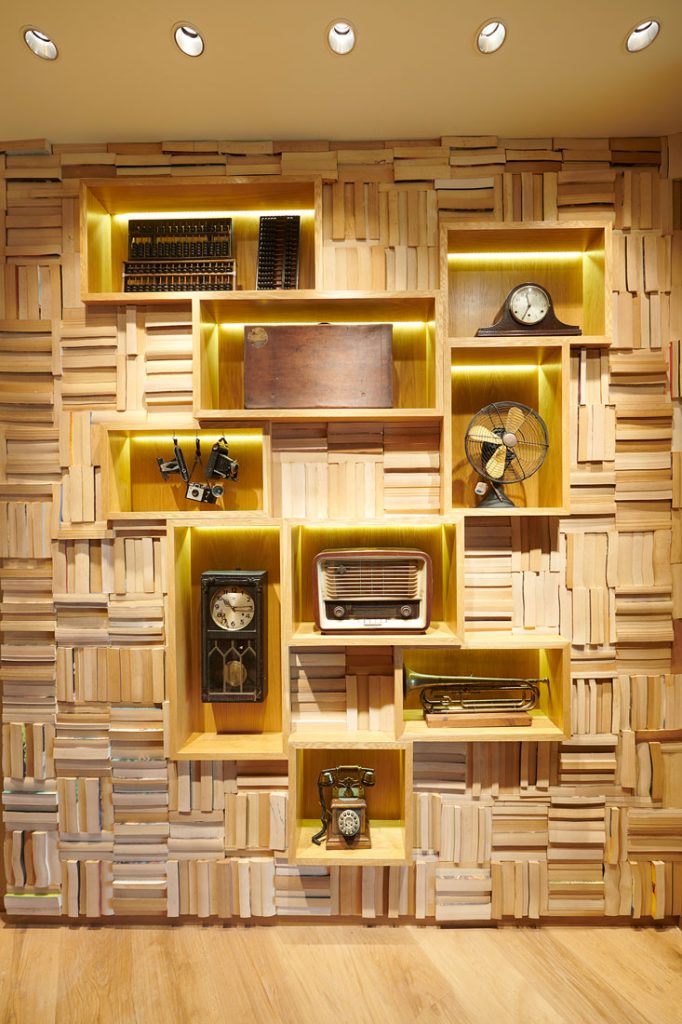
At the store, Super Potato translates Muji’s ‘fusion of local culture’ concept through a series of delightful old-fashioned household items such as vintage window grills, an antique rotary phone, a steel table fan, film cameras and more.
The timber planks used for the interior of the store are recycled timber sourced from old houses that were demolished in the Southeast Asian region. These planks bear traces of their previous lives – scratches, nail marks and carvings – that add a layer of local flavour to the store.
The Muji cafe on the second level of the store is one big open space illuminated by a chandelier comprised of hundreds of Muji glass jars
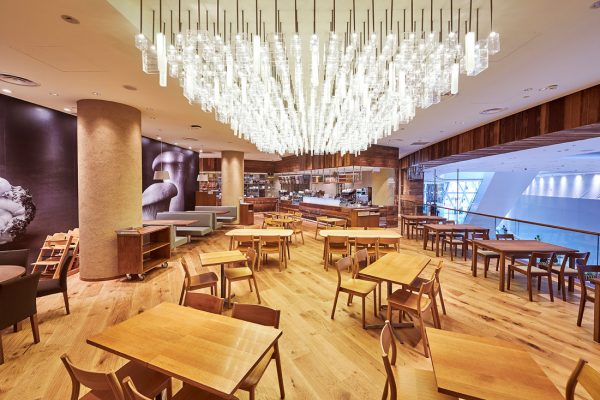
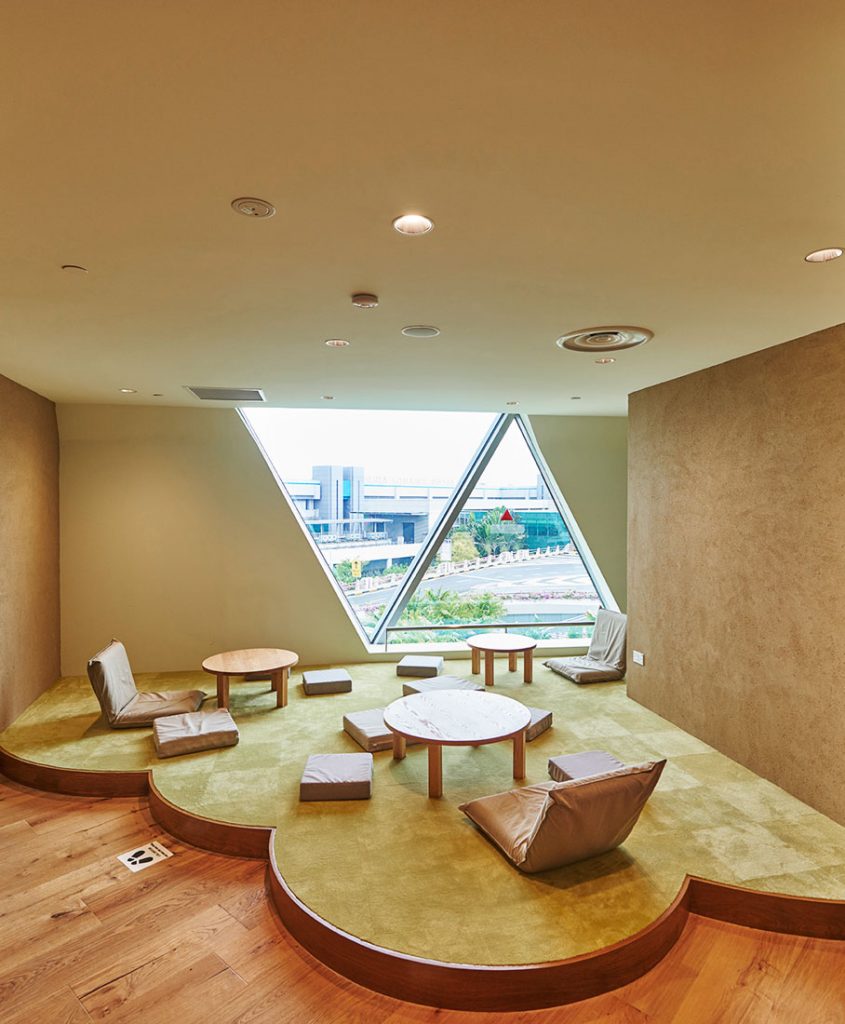
Super Potato envisioned the Muji cafe as one large balcony where customers can dine while viewing the hustle and bustle of Jewel. On one side, the wall is finished with enlarged photographs of local produce used for Muji’s food, and on another is a window to Jewel, through which one can witness the Sky Train making its way through the tunnel that bypasses the mall part of the architectural wonder.
“This is truly an experience of unspeakable joy,” says Maeda.
INDESIGN is on instagram
Follow @indesignlive
A searchable and comprehensive guide for specifying leading products and their suppliers
Keep up to date with the latest and greatest from our industry BFF's!
The internet never sleeps! Here's the stuff you might have missed