The home of architecture and design in the Asia-Pacific
Get the latest design news direct to your inbox!

Get the latest design news direct to your inbox!
We pick out three projects from the region that beautifully incorporate both aesthetics and high functionality into their façades.

January 15th, 2015
#1 Gran Rubina Tower, Indonesia by AG5 Architects
Built atop one of the last remaining green sites in Jakarta city, the office complex occupies a sprawling 180,000 square-metre plot of land and stands 22 floors above ground.
Staggered vertically, the buildings are oriented in a way to maximise solar gain so as to save energy. In addition to double-glazed windows, the vertical screening system provides solar shading and also forms an unusual pattern on the building’s façade.
It’s estimated that the complex will use 30 per cent less energy than your typical skyscraper here in the region when completed. Read more.
#2 Wind and Water Bar, Vietnam by Vo Trong Nghia Architects

Rising from a lake situated amongst dense bamboo forests, Wind and Water bar is deceptively simple when seen from the exterior.
For this thatched dome structure, Vo Trong Nghia Architects have designed a bamboo arch system spanning 10 metres high and 15 metres wide. The main frame is made up of 48 prefabricated units, each of which were assembled from various lengths of bamboo, then bound together and bent into arches.
The building uses natural wind energy together with the cool water from the lake to create ventilation. A circular skylight with a diameter of 1.5 metres allows hot air to escape and thus draws cool air in from the base of the building. These passive design methods reduce the energy consumption of the building greatly. Read more.
#3 Sunray Headquarters, Singapore by DP Architects
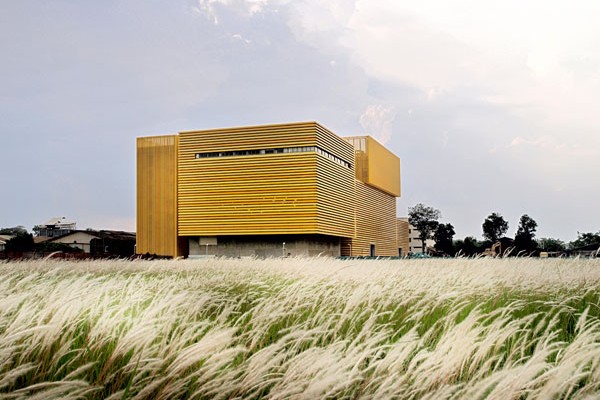
One of oldest industrial neighbourhoods in Singapore, Sungei Kadut is currently undergoing rejuvenation, thanks to government initiatives to champion the growth of the furniture industry here. And as one of the first developments in the estate, the Sunray headquarters is setting the standard for other upcoming developments in the area.
The building’s stacked box design is an expression of the client’s trade – woodcraft and furniture making – with each box reflecting the different stages of production. Factory production and warehouse space are almost completely clad in striking yellow horizontal aluminium louvres. These help bring a maximum amount of natural ventilation and light into the space while keeping it shaded and protected from the rain. Read more.
INDESIGN is on instagram
Follow @indesignlive
A searchable and comprehensive guide for specifying leading products and their suppliers
Keep up to date with the latest and greatest from our industry BFF's!
The internet never sleeps! Here's the stuff you might have missed