“Questions about how people live and work are getting more complex and we realised solutions don’t lie in a specific domain,” says Selwyn Low. Together with fellow directors Peter Sim and Nan Chyuan Tiah, Low is telling us about the genesis of FARMACY, a research and experience design consultancy their studio FARM now offers.
FARMACY is based on explorative research and consultative engagement with external experts across professional domains. The directors say this is a new and necessary way of thinking and working for FARM. The methodology allows their core design team, which undertakes a broad range of architecture, interior, and branding projects, to deep dive into particular subject matter while harnessing cross-sector knowledge and synergies.
.
“We were working on a few projects that straddled different spatial and project types and that did not have precedents. We realised we needed a certain process at that front end, before we went into project delivery.”
– Nan Chyuan Tiah, FARM
.
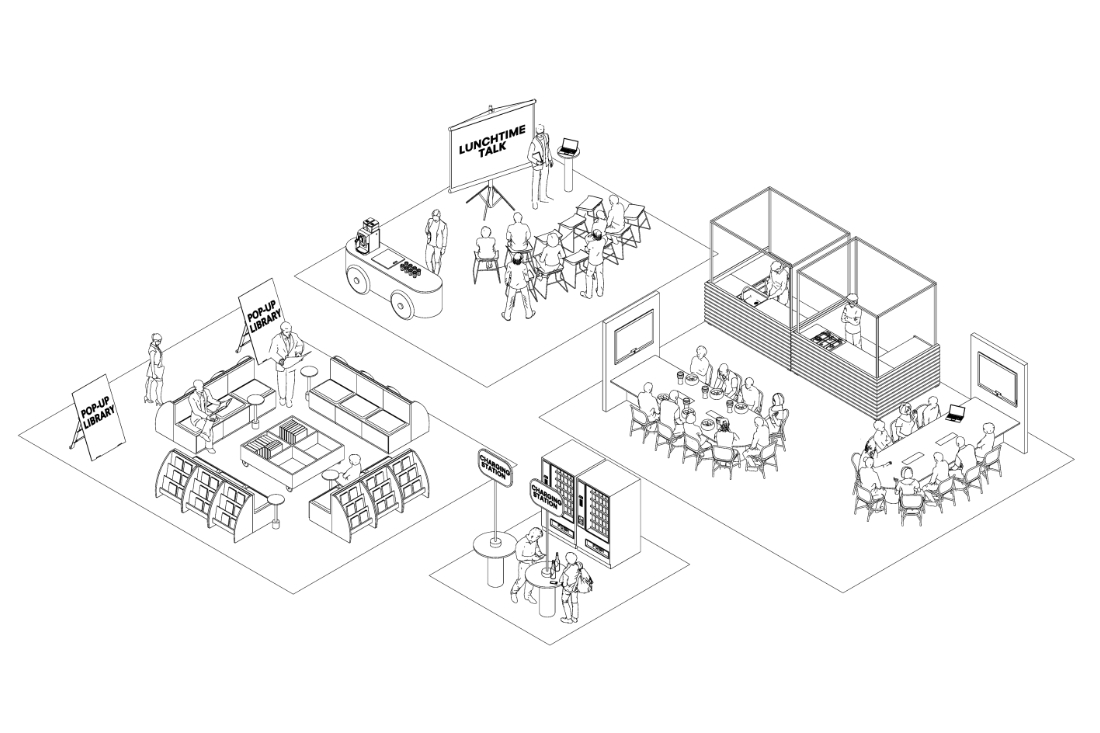
Preliminary ideas on decentralised learning (that extend learning beyond the physical boundaries of a campus). Illustration by FARM.
The studio began working this way around 2018 when it found itself facing projects that required new definitions. Tiah recalls, “We were working on a few projects that straddled different spatial and project types and that did not have precedents. We realised we needed a certain process at that front end, before we went into project delivery.”
A particular trend at that time was the mushrooming of co-work and co-live spaces. “There were a lot of businesses that were trying to pivot or looking at the potential of that,” says Low, citing the example of Core Collective, a fitness and wellness space FARM designed for a multi-practitioner shared use. “It was healthcare but based on a co-work model. We find this kind of projects interesting because they were borrowing templates from each other and going into new business models.”
Industry disruptions, paradigm shifts, and design innovation come hand in hand, and often with each influencing the other. As business and spatial concepts continue to evolve, hybridise, and blend, Sim thinks it is critical that we probe the fundamentals of typologies. He says, “What determines a hotel? Why even build a hotel? We realised this kind of questioning, even before the brief is formed, is where there is space to work with.”
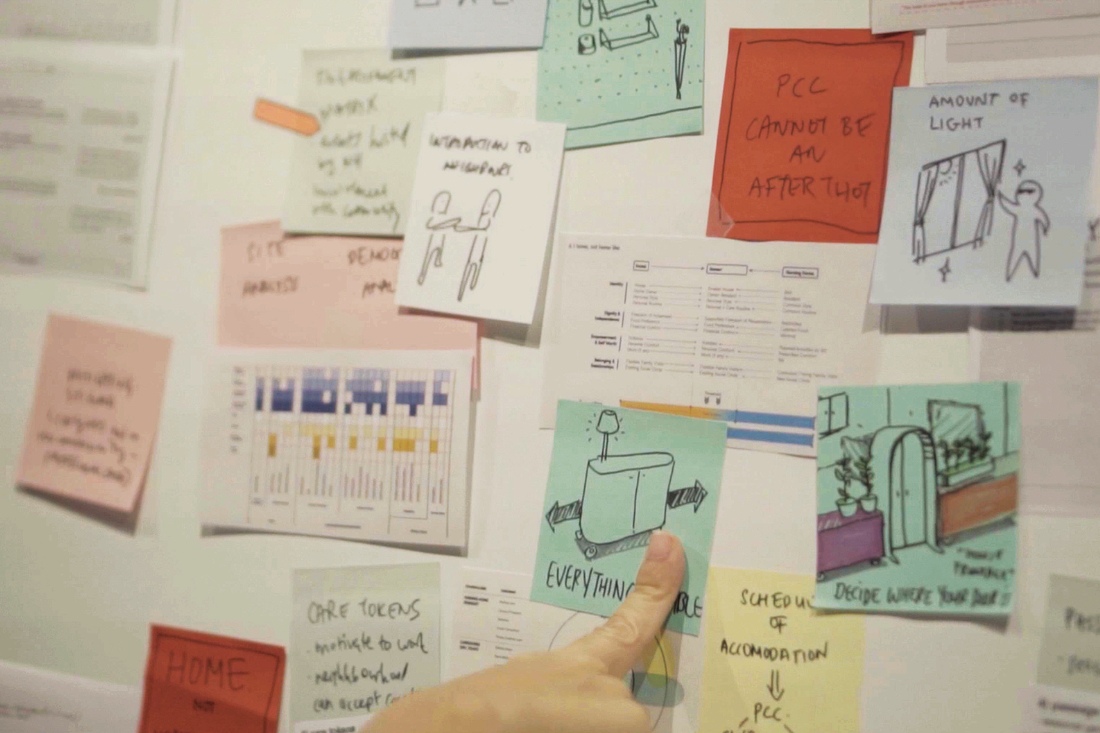
An ideation process seeking to define the sense of home. Photo courtesy of FARM.
The COVID-19 pandemic has been a significant reset causing projects to become even more open-ended today. Low says, “People are a bit unsure of what to create because of the climate today. We are all looking for discussion and answers.” As a result of that, the role of the designer is shifting, as Tiah points out: “We can have very meaningful conversations if we can be involved in the visioning part, wherein the clients see us as partners and not vendors.”
They undergo various levels of research and engagement with stakeholders, including clients, end-users, and experts. This is reflected in the documentation under the FARMACY section of FARM’s website. It offers three layers of information: bite-sized field notes, deeper reports, and recorded conversations and interviews. The topics range from considerations for a post-pandemic home and building resilient community spaces to guides on book binding and wayfinding font sizes.
Recent and upcoming FARMACY projects include a campus for OCBC Bank group, a nursing home for Singapore’s Ministry of Health, a foreign workers’ dormitory for MES Group, and a project with Keppel Land to explore the future of work at their Keppel Tower.
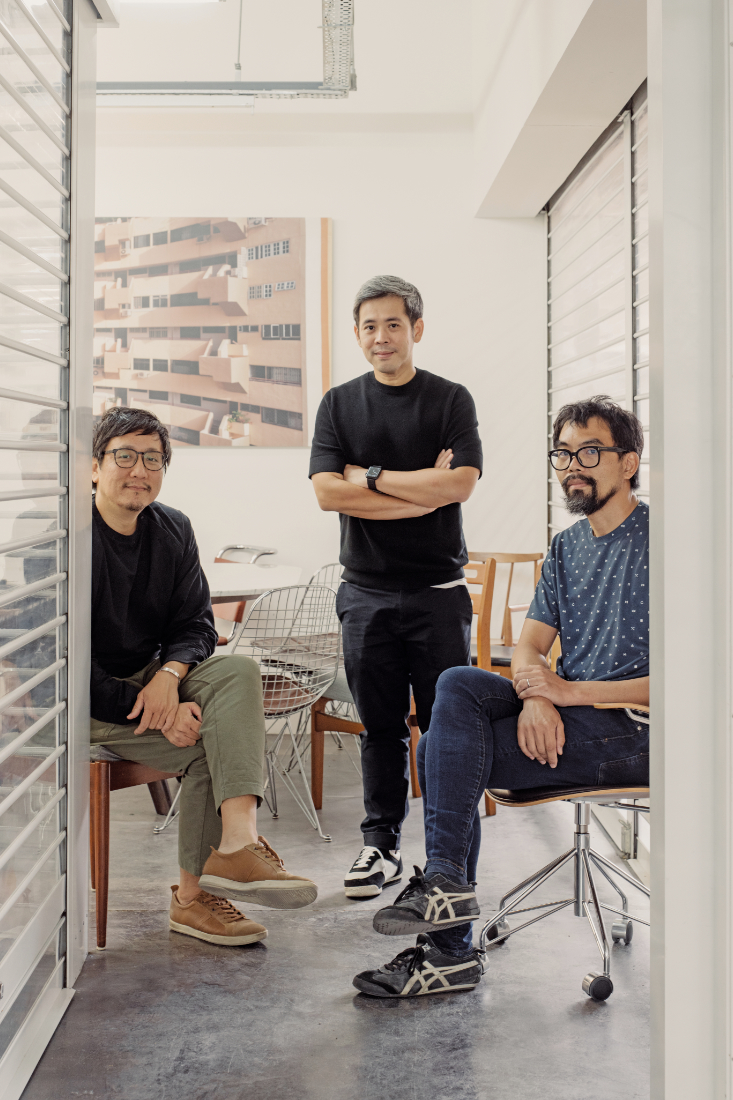
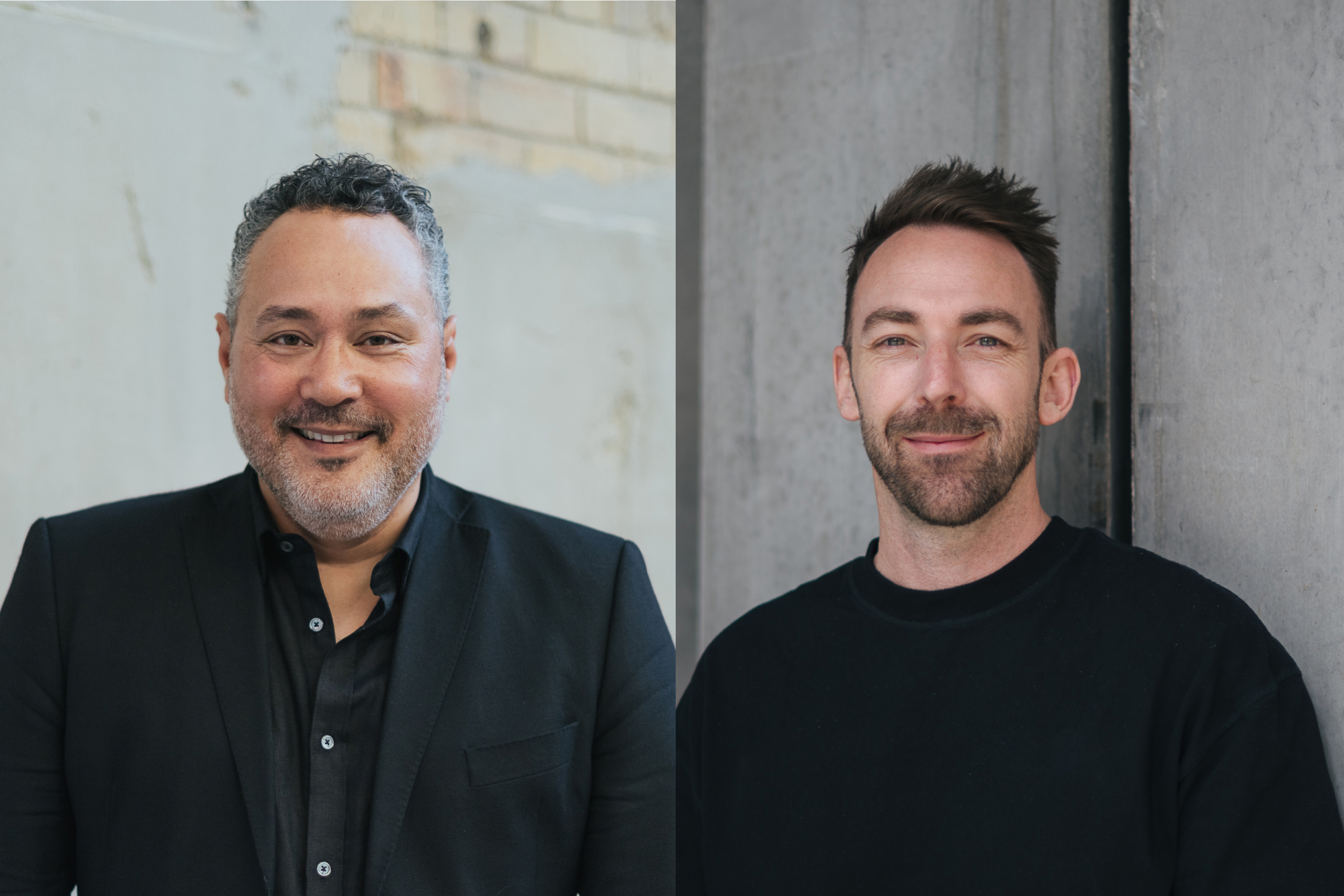
FARM is helmed by directors Nan Chyuan Tiah, Selwyn Low and Peter Sim (left to right) and Torrance Goh (not pictured). Photography by Khoo Guo Jie.
.
“We can have very meaningful conversations if we can be involved in the visioning part, wherein the clients see us as partners and not vendors.”
– Nan Chyuan Tiah, FARM
.
The studio is also working on developing a framework for an expert panel where participants would be able to connect and engage with one another—extending bilateral project-based partnerships with FARM into a multilateral network and platform.
With this expert panel, it is suggested that FARMACY will be looked at as an evolved version of Rojak—a popular series of sharing sessions FARM organised in its early days for designers and artists to present their work. Held at pop-up venues, Rojak was a popular platform at a time (circa 2003) before the smartphone or social media was common. FARM’s longstanding interest in building community and culture, and its values of inclusivity, exchange, and openness, are perhaps nowhere more strongly reflected than in its own space at Waterloo Centre where a 185-square-mtre unit is given to meetings today. The set up—large, open, and flexible—notably can accommodate several group meetings and conversations at the same time.
“The spirit of FARMACY is the same as Rojak’s—but it is more mature,” says Sim. Tiah suggests that the kind of creative exchange today goes beyond sharing one’s own work: “It is about everybody thinking about problems together”.