The home of architecture and design in the Asia-Pacific
Get the latest design news direct to your inbox!

Get the latest design news direct to your inbox!
Japanese architecture firm Kengo Kuma & Associates have designed a cultural complex in the city of Iiyama that’s closely informed by its snowy landscape. Joanna Kawecki writes.

April 18th, 2016
Coinciding with the construction of the Hokuriku Shinkansen high-speed railway line, the Iiyama City Cultural Exchange Centre was built to foster greater connection amongst members of the local community.
As a renowned snow and ski region, the city’s historical significance dates back as a 17th century trade town supporting new tourism, yet bearing rigorous winters, with winter snowfalls reaching up to 3 metres, and annual snowfall of 10 metres.
The design of the Iiyama City Cultural Exchange Centre is inspired by traditional Japanese snow folk dwellings dating back to the Edo Period. Its dramatic, geometric roofing references gang dukuri, which is typically found in medium-rise housing developments as a traditional method to protect homes from snow and secure local passages in winter.
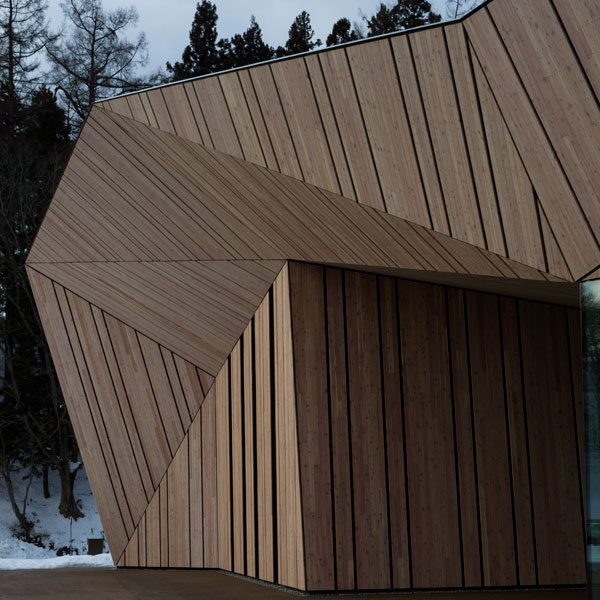
The building’s striking wooden structure forms a geometric silhouette while complementing the natural surrounding landscape. Inside, high ceilings and wide glass window panels invite generous natural light into the open space.
Created over a six-year design process and an 18-month construction period, the cultural complex contains a theatre, auditorium, cafe and community centre held over three floors and spanning a total area of 4,000 square metres.
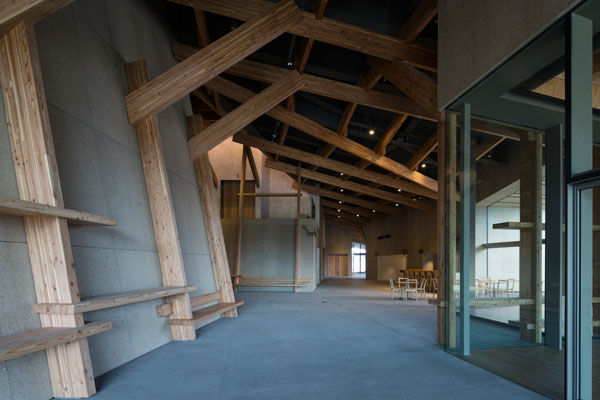
Utilising locally-sourced materials and local craftsmen to assist in construction, the building’s dominant wooden structure uses Iiyama timber while traditional Japanese washi paper can be found in the interior detailing.
Various waterproofing elements were considered and integrated into the building’s architecture, including waterproof paint, water-resistant steel sheets, and an external asphalt waterproof roof with protection concrete. Galvanised steel plates and TATEHAZE-metal were also used for the roofing.
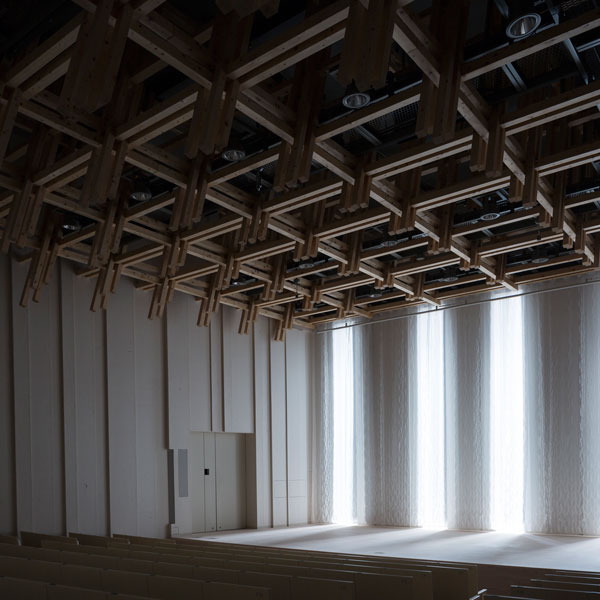
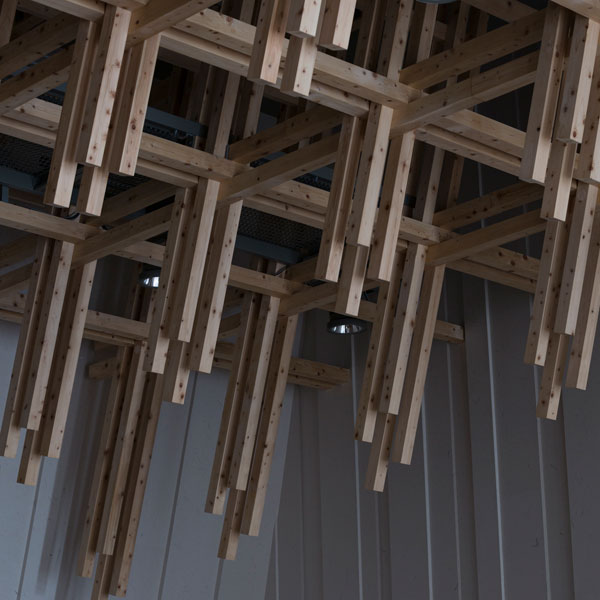
The building’s wooden and steel interior was inspired by ‘Nakamichi’ passage design, seamlessly connecting each room and space and encouraging a diverse and flexible use of each location. Unlike most independent public spaces, the Iiyama City Cultural Exchange Centre is meant to be a social space, encouraging interaction, cultural engagement and connection.
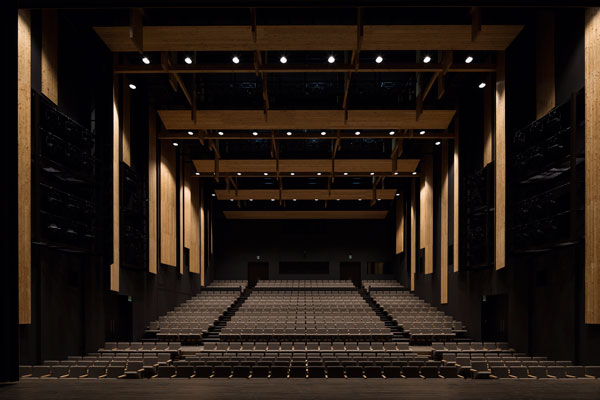
For afar, the building’s silhouette integrates into the landscape as a hill itself, yet provides a complementary contrast to the new railway station running parallel. Its wood and steel interior and exterior is a marriage of modernity and tradition, while the design supports the area’s harsh winters and the need of the locals for a public space that promotes community and connection.

Kengo Kuma & Associates
kkaa.co.jp
INDESIGN is on instagram
Follow @indesignlive
A searchable and comprehensive guide for specifying leading products and their suppliers
Keep up to date with the latest and greatest from our industry BFF's!
The internet never sleeps! Here's the stuff you might have missed