The home of architecture and design in the Asia-Pacific
Get the latest design news direct to your inbox!

Get the latest design news direct to your inbox!
Walking meetings and escape nooks – designed for both connection and disconnection – are key to wellness and productivity in two new workspaces at Paya Lebar Quarter.

October 23rd, 2019
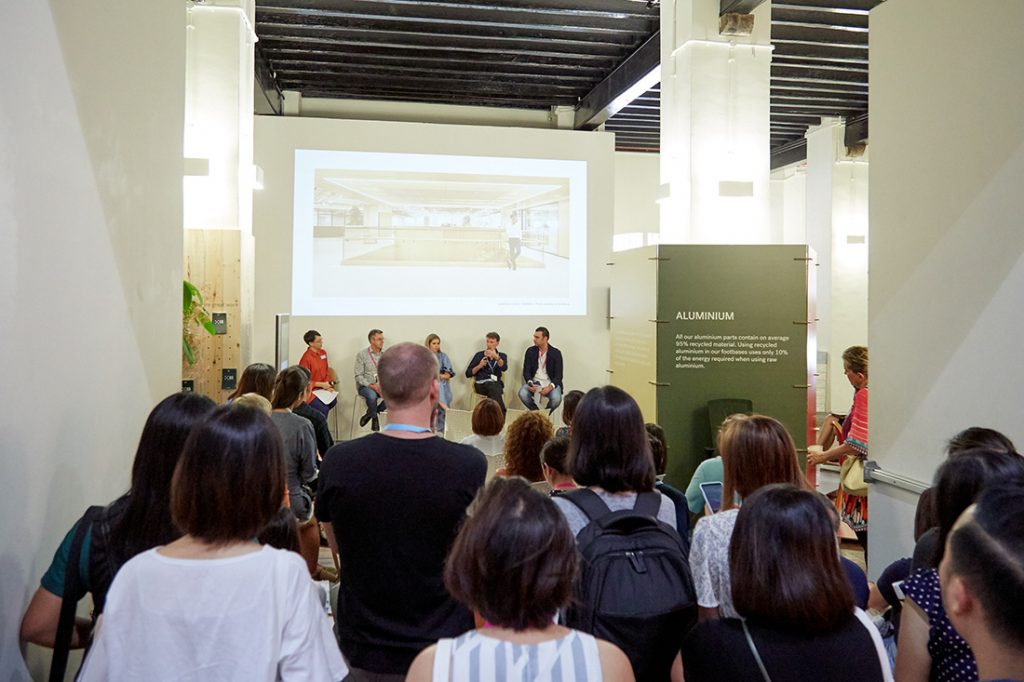
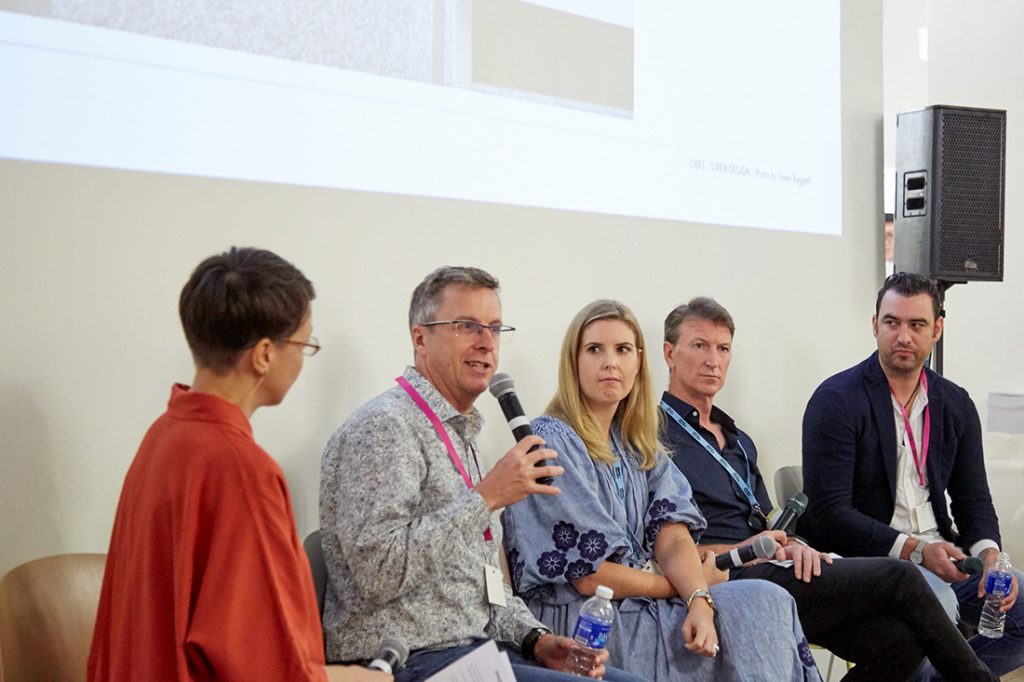
Two new offices at the Paya Lebar Quarter (PLQ) development have set high benchmarks for wellness and productivity at work. What are the strategies for optimal human experience used by HASSELL and Lendlease at csuites, and by Siren Design and CBRE at CBRE’s own workplace? Narelle Yabuka, Editor of Cubes magazine, Indesignlive.sg and Indesignlive.hk, and the Asia Co-Editor of Habitus sought to find out from their leadership and designers at Saturday In Design Design Conversations held earlier this month.
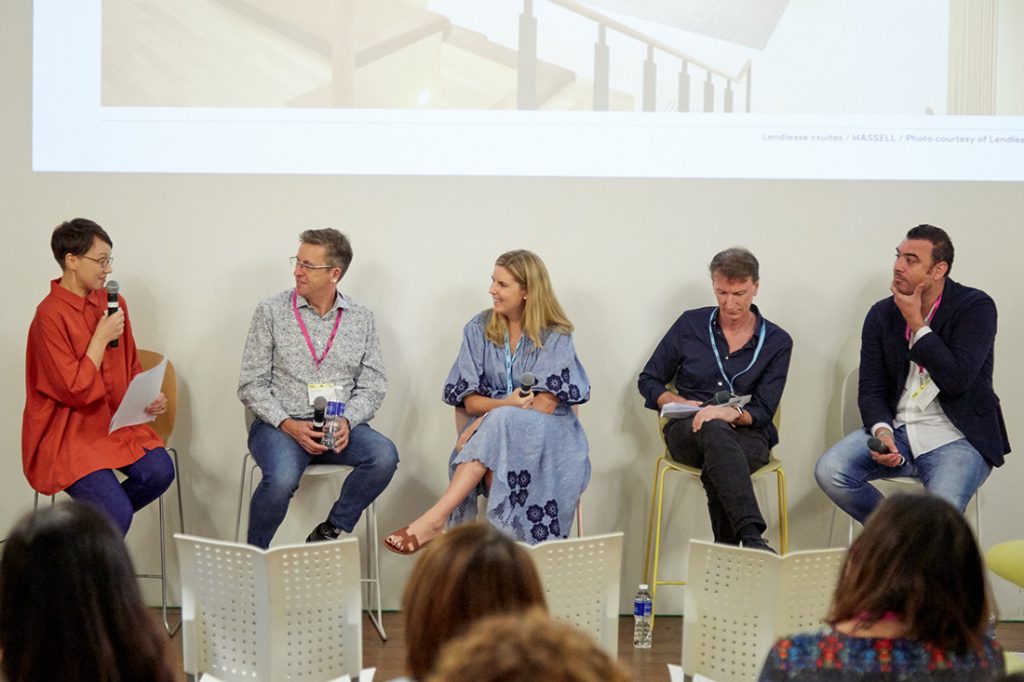
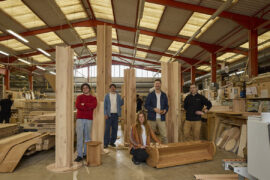
From left: Narelle Yabuka (Moderator), Peter Andrew, Penny Sloane, Richard Paine, Tamagin Blake-Smith
In describing the approach for the work spaces at PLQ, which is set amid greenery and designed (by DP Architects) to encourage active mobility, Richard Paine, Managing Director of Paya Lebar Quarter, Lendlease, said, “We certainly wanted to look at a work environment not just as the office space. We wanted to consider all the things you could do in the precinct rather than all the things you could do within the office environment.”
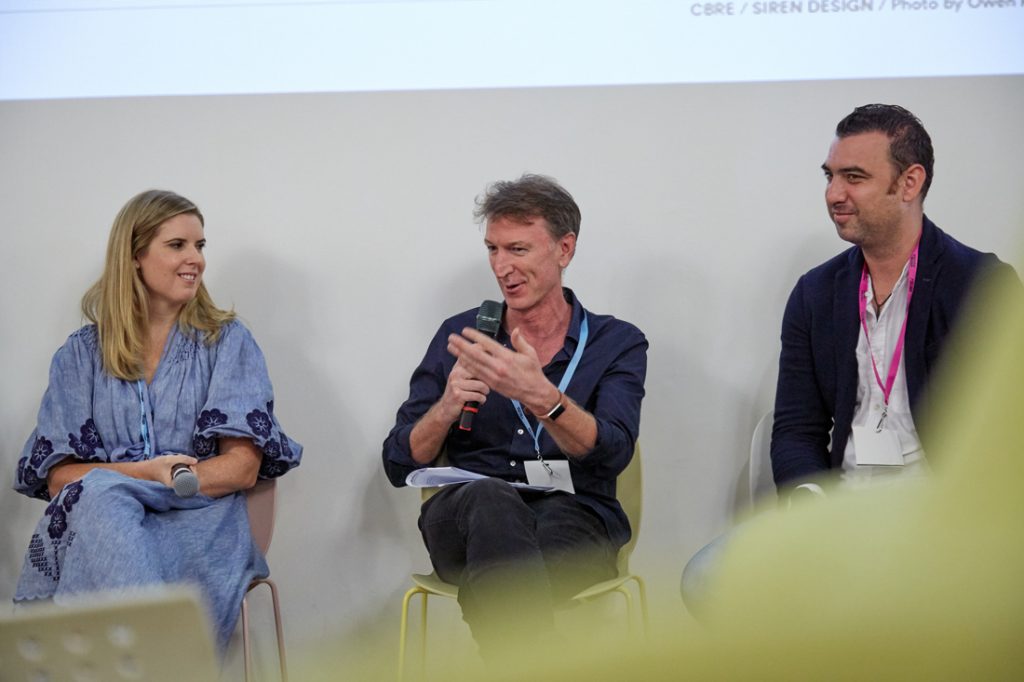
“To that regard, we contemplated the things that you may want to do like going for a walking meeting as opposed to a scheduled [in-office] meeting. We created an environment that’s comfortable to get outside – so you could design a fifteen-minute, thirty-minute, or a forty five-minute walking meeting. You can go with two or three people and have a very productive conversation because you’ve got no device and no distraction.” Paine suggested the out-of-office setting and the activity of walking may facilitate the discussion of issues that may be more difficult to confront in face-to-face meetings.
Within the office, Penny Sloane, Managing Director of Siren Design Singapore, said that wellness “comes down to creating environments that are human-centric – in giving a space for everyone for every activity, so what you need is available”.
Occupant comfort is a key design objective in CBRE’s office too, Sloane said. “It is very stressful being in an open environment where there is constant noise, so it is important that there are nooks you can escape to. We spent a lot on acoustics to make sure the space is comfortable to be in.”
For Peter Andrew, Executive Director of Workplace Strategies Asia Pacific at CBRE, wellness is about two key ideas – to “connect” and to “disconnect”. As technology gets more pervasive, the level of awareness around health and wellbeing increases too. He said, “We can get more feedback on health through devices like Fitbit. Our buildings can measure how healthy they are as well, so there’s real-time feedback.”
The panel agreed that measurable indicators for wellness and productivity are important in the corporate world. “There are also intangibles around that,” said Tamagin Blake-Smith, Principal at HASSELL, suggesting that part of wellness is being motivated to come into the workplace. This comes with “providing great conducive work spaces that actually pull people into the workplace, and getting that fun back,” he said.
His interest in learning is an important aspect of how he approaches designing for wellness at work. He emphasised the social dynamic of spaces – creating the right conditions for people to be able to share space and solve problems together – as a crucial element of wellness.
INDESIGN is on instagram
Follow @indesignlive
A searchable and comprehensive guide for specifying leading products and their suppliers
Keep up to date with the latest and greatest from our industry BFF's!
The internet never sleeps! Here's the stuff you might have missed