The home of architecture and design in the Asia-Pacific
Get the latest design news direct to your inbox!

Get the latest design news direct to your inbox!
Red Dot Design collaborates with the Hong Kong Design Institute on an exhibition that considers how deeply data and technology are entwined with our lives.

Homo Ex Data – The Natural of the Artificial is a Red Dot Design exhibition presented by the Hong Kong Design Institute (HKDI) Gallery
December 8th, 2017
Truth is stranger than science fiction – that is certainly the impression visitors will get when they visit Homo Ex Data, if they look below the surface, even just a little. Homo Ex Data – The Natural of the Artificial is a Red Dot Design exhibition presented by the Hong Kong Design Institute (HKDI) Gallery, and it looks at how Red Dot Award-winning, technology-enabled designs have influenced the way we live, leading to the evolution of humans into a new species: Homo Ex Data.
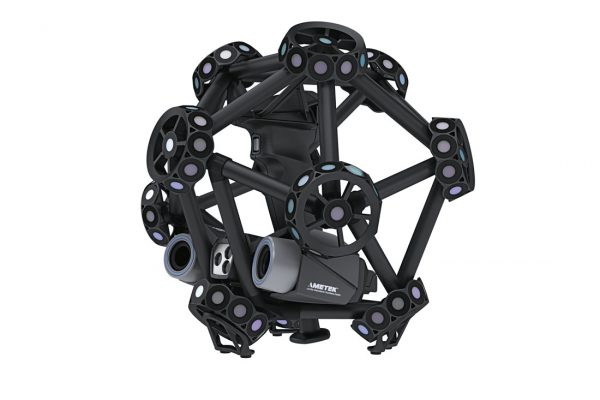
Dreamt up by Red Dot, the company behind one of the world’s leading good design awards, the exhibition encompasses some 150 technology-driven products, all of which use data in some way, in order to improve our lives. First, the exhibition looks at those products that bring data into the system. Covering categories like Monitoring, Self-tracking, Analysing and Measuring, it includes items like MetraSCAN 3D, which helps engineers take three-dimensional building measurements with incredible accuracy.
Also in this section is the Dräger Babyleo TN500 IncuWarmer, a product Professor Dr Peter Zec, Founder and CEO of Red Dot, chooses to single out. “Incubators such as this provide premature babies with an optimal microclimate, using highly sensitive sensors to facilitate constant monitoring of vital functions as well as of environmental data,” he says. “The still-fragile life of a premature-born child depends on this stream of data, while the continuous transfer of data links the natural with the artificial, thus ensuring survival.”
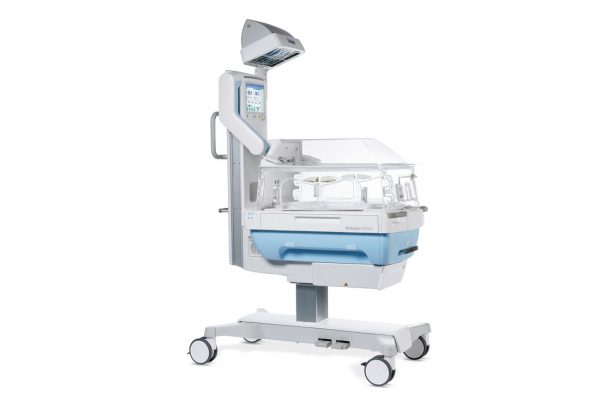
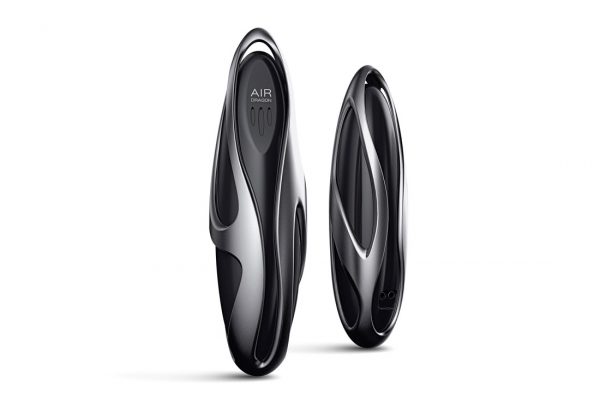
Perhaps more than any other product in the exhibition, this incubator shows how, in some cases, humans literally depend on technology in order to live. In the case of some of the other products on show, however, the message is more about how technology enhances our day-to-day lives. Take, for example, the Air Dragon: it’s a mobile air quality monitor no bigger than your thumb.
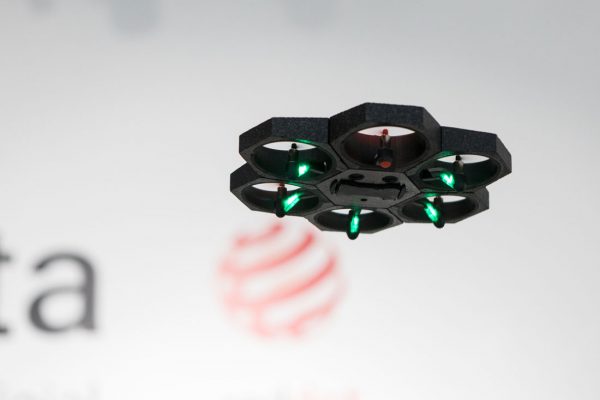
The second section of the exhibition relates to products that process data, such as computers and microprocessors, including a Mac G4 microprocessor from 2005. Lastly, the exhibition looks at products that output data in order to enhance our experiences, to tell us where disease lies in the body, to clean our floors, or to show us the world from a bird’s eye view. The modular, educational Airblock drone is one of a number of drones on show at Homo Ex Data.
Whatever their purpose, these devices all have one thing in common: they are attractive, and increasingly so. The exhibition demonstrates this, showing how products have become sleeker and now have more curves.
This reference to organic forms is no doubt intended to make us more comfortable with technology, which is not always a comfortable topic. “I’m well aware of the mixed feelings people have about what the future might bring with regard to a fusion of technology and the human body,” says Zec. “But there are already many cyborgs among us. Think for example of deaf people – today, it is already possible to fit at least some of them with cochlear implants. And those are nothing other than sensor-equipped microcomputers that enable them to hear again … If technology enables us to no longer have to accept this kind of biological weakness as simply God-given, I myself would try to make use of it.”
No matter which side of the fence you stand on, this exhibition will make you realise how ever-present technology is in our lives, and how complex a relationship we have with it.
INDESIGN is on instagram
Follow @indesignlive
A searchable and comprehensive guide for specifying leading products and their suppliers
Keep up to date with the latest and greatest from our industry BFF's!
The internet never sleeps! Here's the stuff you might have missed

Presented by Stormtech