The home of architecture and design in the Asia-Pacific
Get the latest design news direct to your inbox!

Get the latest design news direct to your inbox!
We look at British designer Matthew Hilton and his work for De La Espada.

June 1st, 2012
Matthew Hilton enjoys the learning process with each new project, be it an exploration of a new material, forging a relationship with a new manufacturer, or embarking on fresh stylistic experimentations; he says each work is “personal” and “loaded with meaning and memory”.
Hilton always had an interest in painting, sculpture and architecture, but the idea of being a ‘designer’ only occurred to him when a tutor at Portsmouth College of Art made the suggestion. He entered the renowned Furniture and Design course at England’s Kingston Polytechnic, and following graduation, worked as an industrial designer and model maker until 1984 when he opened his own design studio/workshop.
2 years later, Hilton launched his Bow shelves at the Milan Furniture Fair, and this was followed with such seminal pieces as the Balzac Armchair, Flipper Coffee Table and Antelope Table.
These days, Hilton is less preoccupied with style and more focussed on functional pieces for daily use, updating and reinventing long-established furniture forms with an eye on the future. He is recognised for pushing the boundaries with solid wood, and for his sense of proportion, scale and functionality. In every piece, he designs with the end user in mind, creating easily adaptable solutions to fit the interiors of today.

Since 2008, Matthew Hilton has worked with De La Espada, a leading manufacturer of solid wood furniture, to produce his design collection. Here we highlight some of them.

Different Trains Cabinet
While the unit displays a certainly constructional complexity, it offers, as is typical of Hilton’s work with its consideration and emphasis on the well-made, an immediate sense of reassurance.
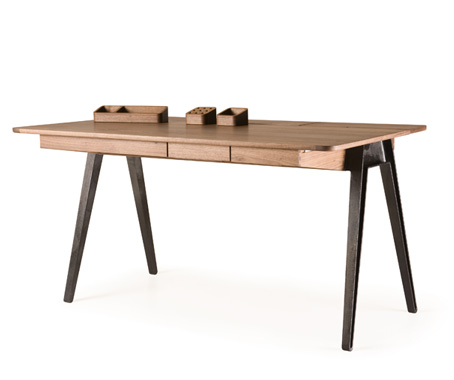
Orson desk
Not just beautiful to look at, the Orson Desk also offers loads of functionality including 3 solid wood drawers, featuring dovetailed joints, which are large enough to tuck away the laptop, and 3 hidden rear compartments that conceal and manage all the necessary cables.
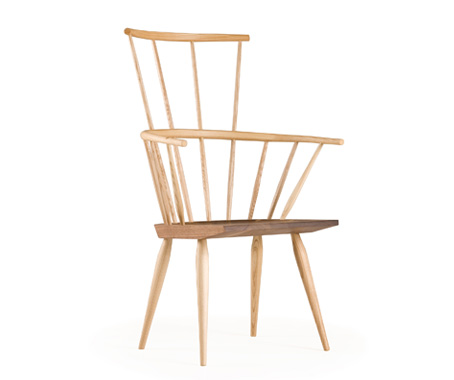
Windsor Chair, Kimble
The chair is made of ash and walnut using exclusively traditional Windsor chair making techniques.
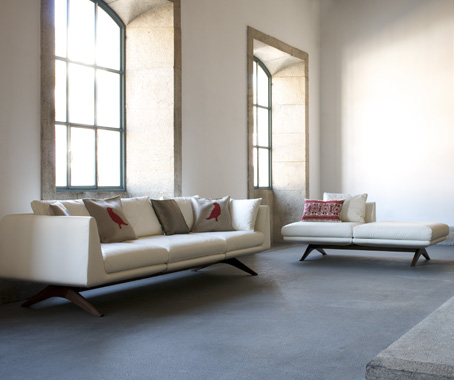
Hepburn sofa
Hepburn is the first of its kind to offer a complete modular system with each module fitting onto a central beam. As a result, an almost limitless variety of configurations can be produced, making Hepburn well suited for use in domestic or contract applications.
The Matthew Hilton range for De La Espada is available in Singapore at Dream Interiors.
INDESIGN is on instagram
Follow @indesignlive
A searchable and comprehensive guide for specifying leading products and their suppliers
Keep up to date with the latest and greatest from our industry BFF's!
The internet never sleeps! Here's the stuff you might have missed







![[Don’t] Lose yourself at the Qantas First Lounge Singapore](https://cdn.indesignlive.com/wp-content/uploads/6-CAON-AKIN-ATELIER-QANTAS-6000PX-SPACE-164-270x180.jpg "[Don’t] Lose yourself at the Qantas First Lounge Singapore")