The home of architecture and design in the Asia-Pacific
Get the latest design news direct to your inbox!

Get the latest design news direct to your inbox!
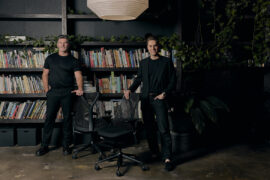
Dario Reicherl, Fritz Hansen’s Vice President Asia Pacific, tells us how the opening of the Danish company’s first flagship store in Singapore is a sign of greater things to come.

March 26th, 2015
Top image: Dario Reicherl. Photography: Luo Jingmei
With a distributorship plan in Singapore, and four more new showrooms coming up in Southeast Asia all within a span of two months, Fritz Hansen is taking its business in this region very seriously. Leading the charge is Fritz Hansen’s newly appointed Vice President Asia Pacific Dario Reicherl, who kicked it all off with the launch of Fritz Hansen’s first Singapore monobrand shop-in-shop at W. Atelier late last year. With a glowing track record for launching furniture and kitchen brands in Asia, the Italian Reicherl now turns his efforts to making Fritz Hansen a force to be reckoned with in this part of the world.
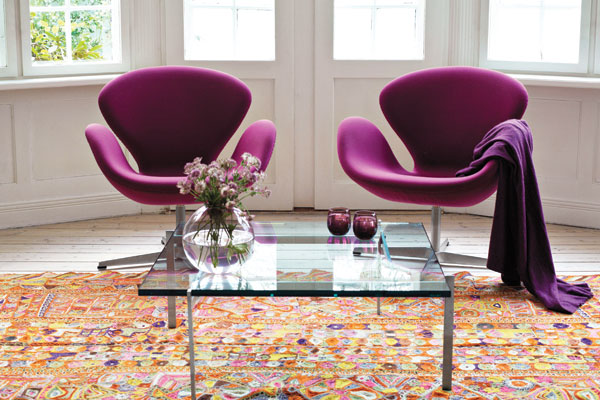
Swan chair by Arne Jacobsen and PK61 coffee table by Poul Kjaerholm
What was the reason for having a monobrand store in Singapore?
My way of seeing the business of furniture in Asia is by focusing on monobrand shop-in-shops. I’ve proven in the past 10 years that it really works, especially in Asia. You build brand awareness, but most importantly, you let people understand the values of the brand – for us, that is “Crafting Timeless Design”. You can’t do that with only a few pieces in a store mixed in with many other brands. You get confused.
But the shop-in-shop at W. Atelier collaborates with other brands too…
Yes, but only with complementary brands. We basically work with two brands: Fritz Hansen and Novamobili (wardrobe systems) – both are from different worlds. They live together in the same space, but Fritz Hansen has nothing to say about fixtures and vice versa. Then we have four or five other accessory brands for rugs, lights, etc.
What do you hope to achieve with the new showroom?
We hope… no, we will let people understand that Fritz Hansen is not just the Egg chair. Fritz Hansen is a big world – that’s why it’s called Republic of Fritz Hansen. I like to divide the collection into three parts: the classics by Arne Jacobsen, the collectibles by Poul Kjaerholm – very exclusive and related to museums, collectors, art – and the contemporary range. These are made by contemporary designers like Piero Lissoni, Jaime Hayon, Jehs+Laub, Hiromichi Konno, Cecilie Manz, Kasper Salto, etc.
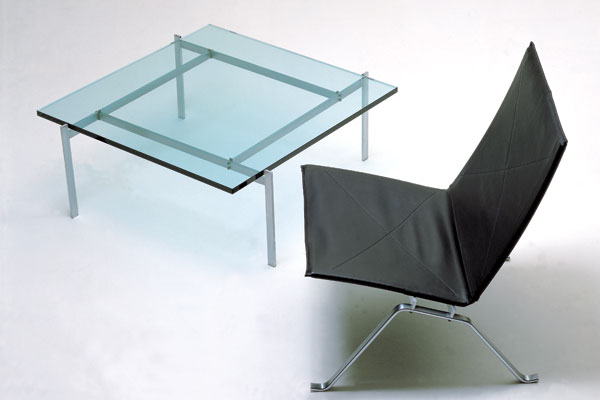
Pk61 coffee table and Pk 22 lounge chair by Poul Kjaerholm
What proportion of the collection do the three different categories make up?
Fifteen years ago, the classics made up a good 80 per cent, almost 100 per cent. Today, 40 per cent are the classics, 40 per cent the contemporary collection and 20 per cent the Poul Kjaerholm collection.
Tell us a bit more about the Poul Kjaerholm collection.
The Poul Kjaerholm collection is relatively new (about the last five years) because we didn’t have the rights to the old Poul Kjaerholm pieces. The story of Poul Kjaerholm is that he started with Fritz Hansen but had an argument because he was jealous of Arne Jaconbsen – it’s recorded in books. Fritz Hansen was deciding between a chair from Jacobsen or Kjaerholm and decided to go with Jacobsen. Kjaerholm got upset and left the company without a producer. But today, the family has given Fritz Hansen the rights for the entire Poul Kjaerholm collection.
It’s still very limited right now and we still have many pieces to add. But this is not a commercial range. It’s art. So every year, we just add one or two pieces, no more than that, until it’s finished.
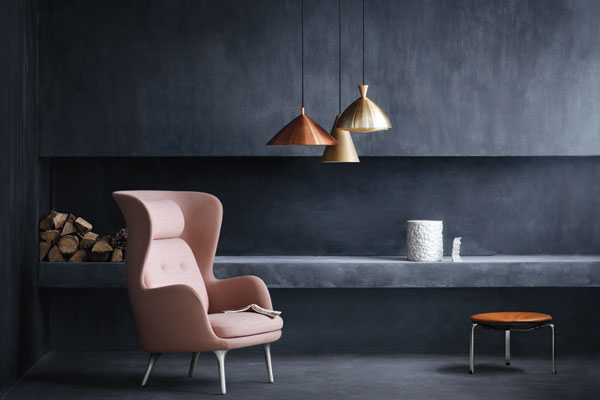
Ro chair by Jaime Hayon
It sounds expensive…
A Poul Kjaerholm piece can range from $5,000 to $40,000. It’s not expensive if you consider how it’s made. For example, the PK61 coffee table. Kjaerholm wanted the glass top to be a specific green colour and the only manufacturer who can do this is in Belgium. The best place to sand the glass is in Italy. So from Belgium we send it to Italy. And then from Italy we send to Denmark to assemble. That’s a full triangle just for a glass top!
But the rest are more affordable.
Yes, that’s right. But an important point is that we have substantially reduced and realigned prices for all collections with the rest of Asia Pacific. For a long while, prices in Singapore were significantly higher than the rest of Asia Pacific. But now, if you go to Hong Kong or Japan, you’ll find that the price is exactly the same. This is important. Our goal is to be as close as possible to Europe pricing.
And it’s only fair to your distributors too.
Absolutely. For example, there is no discount policy in Singapore. Everybody’s doing the same price policy. W. Atelier is the main store with the biggest collection and there are sub-dealers. P5 will focus on the Poul Kjaerholm collection, Danish Design will focus on the contemporary collection. We are also working with BW Furniture who will take care of the contract, office business.
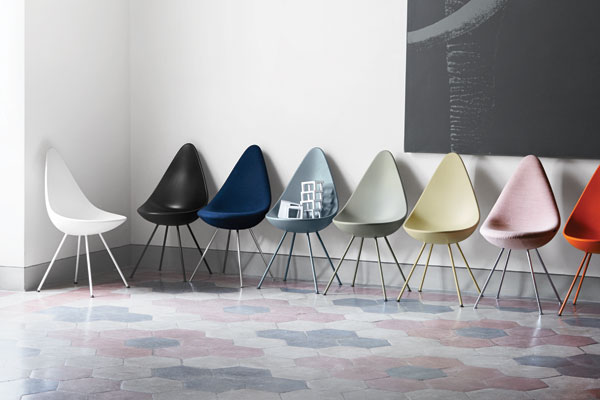
Drop chair by Arne Jacobsen
In relation to the classics and the collectible pieces from Arne Jacobsen and Poul Kjaerholm respectively, how important is the contemporary collection?
The contemporary collection helps the younger generation start their own Fritz Hansen collection, because it’s more accessible in terms of price. In another way, for example, those who have an Egg chair at home – and there are many in Singapore – can extend their collection with the Drop.
Speaking of the Drop chair, how has the response been, seeing that it’s a relaunch of Arne Jacobsen’s work after 50 years?
There was a huge order for the chair when we launched in Milan, so we had to be very fast with the Drop [production-wise]. In five months, it was ready, which is a big change considering what normally happens at Milan – [people usually wait a year for pieces to be produced]. Now, we have stores that sell one Drop chair a day.
Where else is Fritz Hansen expanding to in the region?
We have plans for two showrooms in Yangon, Myanmar, one in Jakarta, one in Manila. By the end of December 2014, everything will be open. I signed the contracts with [the distributors] within two months! I didn’t expect it to be so fast, but I guess it’s because of the [tradition and heritage] of the Fritz Hansen brand.
* This article first appeared in Cubes Indesign issue 71.
INDESIGN is on instagram
Follow @indesignlive
A searchable and comprehensive guide for specifying leading products and their suppliers
Keep up to date with the latest and greatest from our industry BFF's!
The internet never sleeps! Here's the stuff you might have missed