The home of architecture and design in the Asia-Pacific
Get the latest design news direct to your inbox!

Get the latest design news direct to your inbox!
4 years in the making, the ongoing project of global art collective WE-ARE-FAMILIA culminated late last year with the help of Fritz Hansen.
January 12th, 2012
In 2007, WE-ARE-FAMILIA co-founder Jennifer Garcia put out the call to creatives worldwide to take part in what was then a personal art project. The response was huge, with over 50 collaborators taking part over the 4 years that the collective’s main initiative has been in progress.
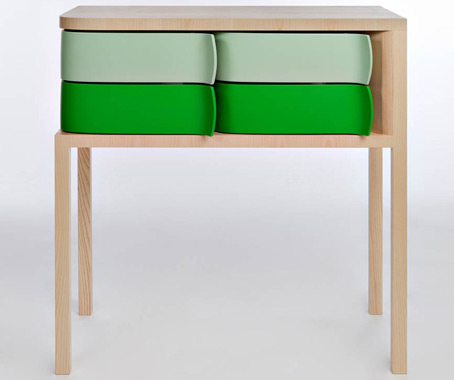
The project consists of 25 keepsake boxes, in various guises and made of a range of materials, each housing up to 40 mementos created by WE-ARE-FAMILIA artists and designers – from photographs and drawings to videos, sculptures and even music.
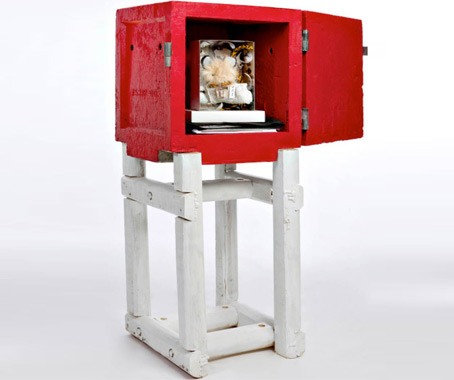
Brick by Chen Chen and Kai Williams, incorporating deconstructed base and logo from ’Little Friend’ table designed by Kasper Salto.

UMBOX by UM Project, incorporating damaged Arne Jacobsen ’Series 7’ chairs, powdercoated steel and carpenter’s ash woodscraps.
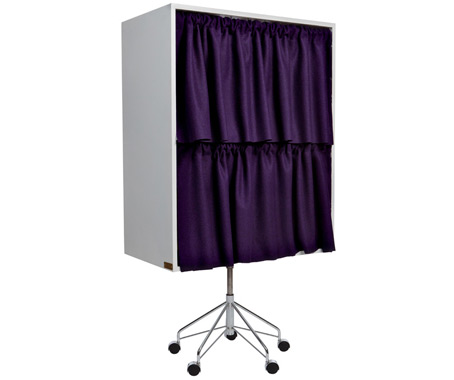
Moving Time by Kiel Mead, incorporating reclaimed Arne Jacobsen ’Series 7’ swivel chair base, repurposed Fritz Hansen fabric.
The most fascinating aspect of the project is the keepsake boxes themselves, each one an assemblage of found and reused objects, creating an element of surprise and nostalgia and showing ordinary objects in a new light.
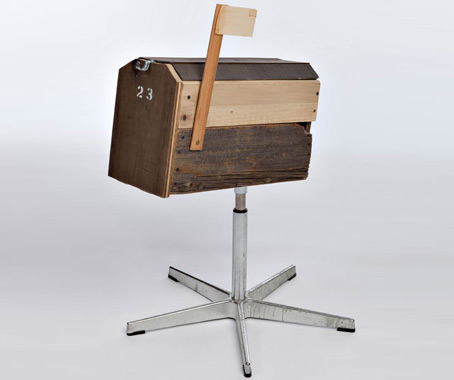
Mailed It by Nightwood, incorporating orphaned ’Oxford’ chair base by Arne Jacobsen and reclaimed wood.
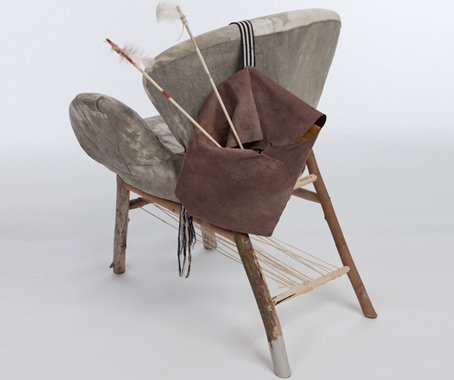
Hunter-Gatherer Chair by Nightwood, incorporating Arne Jacobsen chair and scavenged driftwood from Long Island, NY.
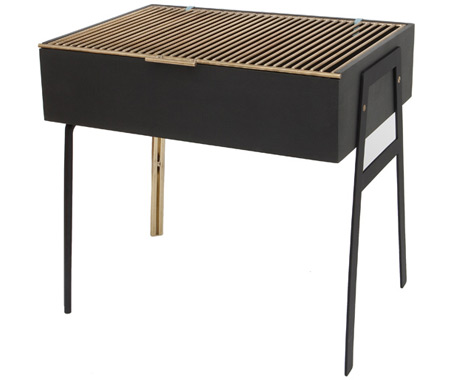
Grill Master by Iacoli & McAllister, incorporating legs from a Fritz Hansen ’Nap’ chair by Kasper Salto.
The most recent set of boxes, 12-25 have garnered the most attention for their connection with Danish design company Fritz Hansen, who donated damaged, rejected or otherwise unusable objects and materials from its collections.

Beskytte Blomstre by David Weeks, incorporating reconstructed Poul Kjaerholm PK8 resin chair shells, bungy cord and toggles.
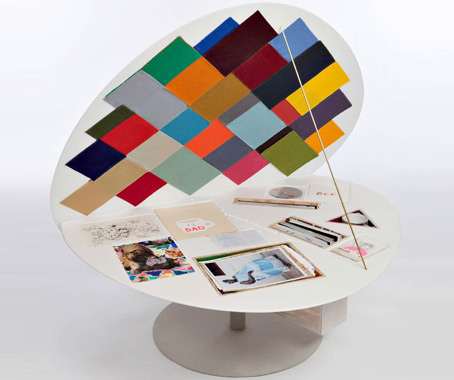
Moh by Silva Bradshaw, incorporating a discontinued Fritz Hansen ’Attitude’ table by Morten Voss and scraps of Fritz Hansen fabric.
Remnants of Arne Jacobsen pieces, for example, find a new use and a new life, reimagined in a way that seems at once new and familiar.
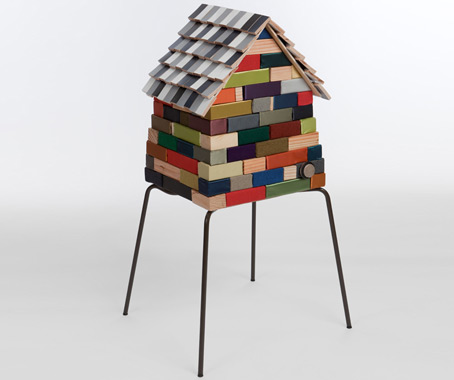
House Hold by Steph Mantis, incorporating Kasper Salto ’Map’ chair base, tiles created from a damaged Arne Jacobsen ’Series 7’ chair and Fritz Hansen fabrics.
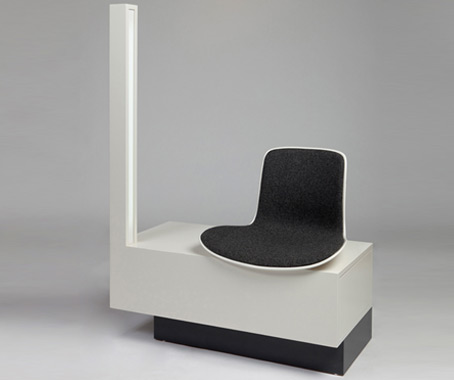
Wunderkammer by Joe Doucet, incorporating an upholstered Poul Kjaerholm PK8 resin chair shell and an eco MDF cupboard.
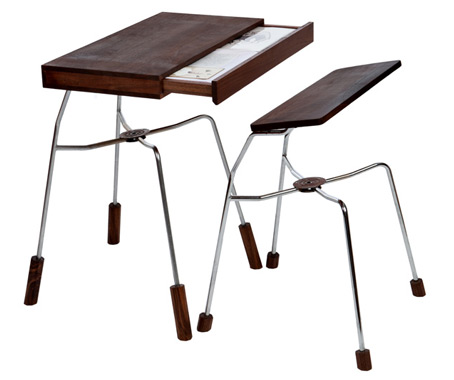
We Are Familiar by Fort Standard, incorporating repurposed Fritz Hansen upholstery fabric, an altered Arne Jacobsen Series 7 chair and walnut woodshop scraps.
WE-ARE-FAMILIA
we-are-familia.com
Fritz Hansen
fritzhansen.com
INDESIGN is on instagram
Follow @indesignlive
A searchable and comprehensive guide for specifying leading products and their suppliers
Keep up to date with the latest and greatest from our industry BFF's!
The internet never sleeps! Here's the stuff you might have missed