The home of architecture and design in the Asia-Pacific
Get the latest design news direct to your inbox!

Get the latest design news direct to your inbox!
Emergency Architects Australia (EAA) have been busy laying the foundations for a host of exciting new projects.
May 21st, 2012
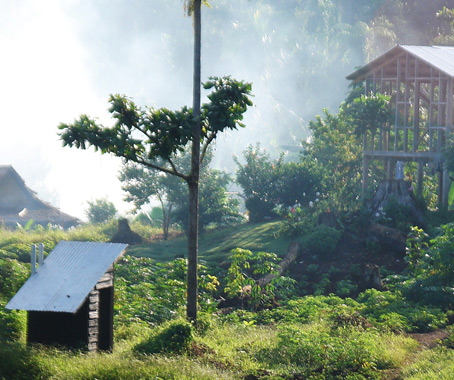
Fresh from a research trip to Timor-Leste, EAA Director Richard Briggs sees an important year ahead in 2012 for the not for profit organisation.
In late 2011, Briggs and EAA Chairman David Chesterman travelled to the town of Maliana to look into existing water sanitation facilities in 13 public schools across the region.
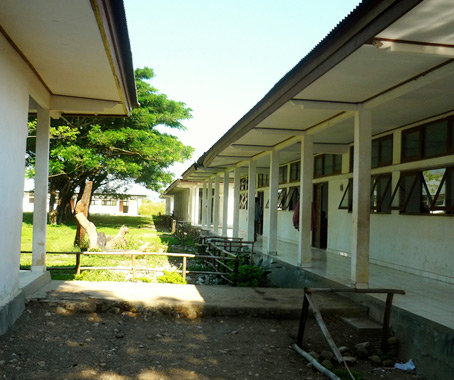
The visit was a timely one in regards to the United Nations’ Millenium Development Goals, in which “according to latest reports, Timor-Leste are a little bit behind I certain areas, and water and sanitation is one of those areas,” Briggs explains.
“So there’s really need there for an improvement in water and sanitation especially in schools where students can start to learn about the importance of having such simple facilities.”
The EAA is now looking to develop a program to address these issues, helping to promote better health and hygiene in the area, improving infrastructure and water supply.
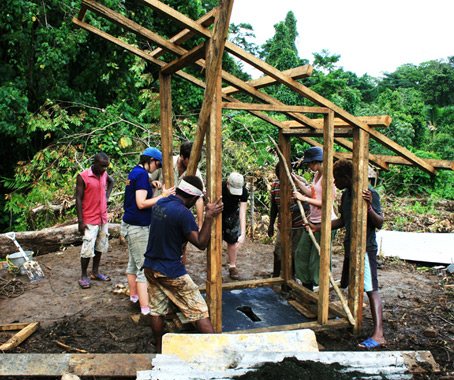
“Ultimately as an organisation we strive to train and build capacity of local communities in such a way that they can improve their built environment under their own steam. We are really on site as facilitators in most projects we do – that’s our aim,” says Briggs.
“We’re hoping that the water and sanitation project that is presently under construction will allow communities to see that the design and details can be applied to suit the needs and location at any school across the region. The funding has come from Rotary and it’s really a pilot project and a pre cursor to any future programs in the region.”
The EAA’s recent work in the Solomon Islands, which saw them construct prototype school buildings that were then replicated across the area, is an example of this approach.
EAA’s designs were used for new buildings at over 100 schools, all built by the communities themselves. Also in the Solomon Islands, a program to build new latrines commenced 3 years ago, which sees regular visits from teams of EAA leaders and a mixture of students and construction professionals to help a village build new toilets.
During this time over 100 latrines have been built, mostly by the communities themselves.
Briggs sees the organisation’s work as “bridging the gap between a short and long term solution,” taking small steps that work toward disaster mitigation and the rehabilitation of communities.
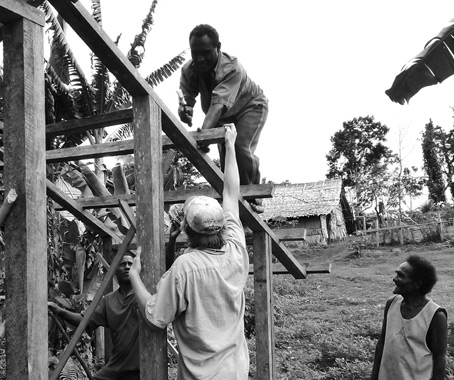
“We had a team over in Papua New Guinea and as mentioned Timor Leste late last year; this year we’ve had a team in India doing initial assessments and a team in the Solomon Islands doing a 2-week snapshot of the latrine project.
“That’s why this year is important – we’re hoping that what we’ve got lined up will enable members and people interested in becoming members to become more involved in what we are doing as an organisation.”
Being out in the field on such projects allows for a two way learning experience.
“There’s so much you can learn from communities,” he explains.
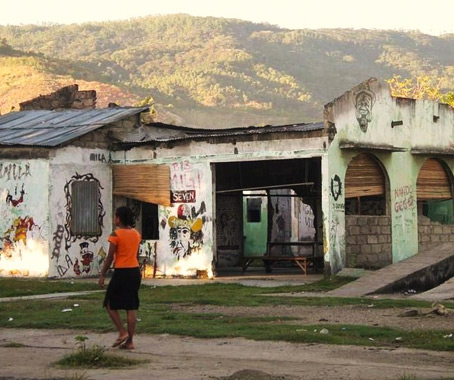
“In the developed world if something’s broken we just go and get a replacement, whereas a lot of people in the countries where EAA work don’t have those opportunities.
“Communities have to be amazingly creative to think of ways of fixing things and be resourceful with what they have.
“There’s always a solution and it’s usually low tech and can be found within the community. And that’s something to be encouraged here in Australia, in terms of moving forward, being more ethical with our use of materials, recycling and offering foresight in terms of design.”
Emergency Architects Australia
emergencyarchitects.org.au
INDESIGN is on instagram
Follow @indesignlive
A searchable and comprehensive guide for specifying leading products and their suppliers
Keep up to date with the latest and greatest from our industry BFF's!
The internet never sleeps! Here's the stuff you might have missed