The home of architecture and design in the Asia-Pacific
Get the latest design news direct to your inbox!

Get the latest design news direct to your inbox!
As album sales drop in the digital age of freely downloadable music, it’s taking more than just a pretty cover to sell a record, writes Ola Bednarczuk.

May 12th, 2011
Bands and record companies are becoming increasingly creative and crazy in the design and packaging of albums, for the physical product to once more become a desirable object.
Michael Carney, Art Director for The Black Keys, has always created striking album artwork for the band, but went one step further for the deluxe bundle of their latest album Brothers by using thermo-ink on the print-side of the CD, so that the design on the CD changes when heat is applied – reminiscent of everyone’s favourite 1990s technology, hypercolour.
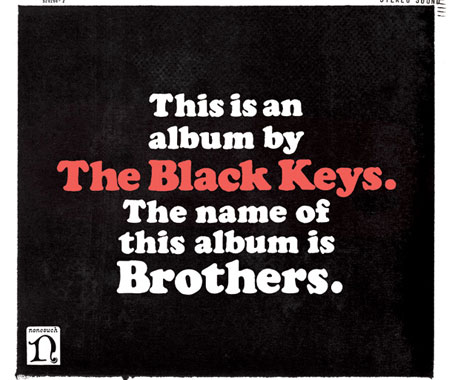
“When I first started, you kinda had to fight to get even little things like matte paper, but now labels are willing to go the extra mile in order to make a product that people will want to buy,” Carney said in a recent interview.
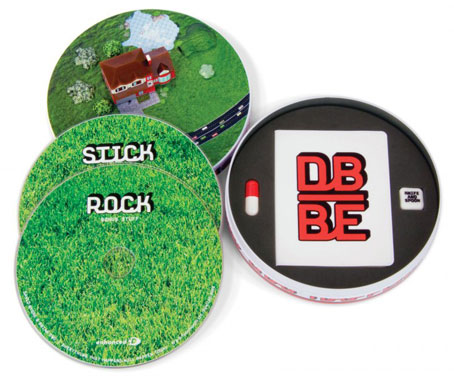
The album artwork for David Byrne and Brian Eno’s collaboration Everything That Happens Will Happen Today was created by designer Stefan Sagmeister.

The deluxe CD package features an unfolding light-activated diorama with sound effects and even a small “pharmaceutical pill of uncertain content” to accompany what Sagmeister describes as an “exuberant and positive” album which alludes to a sinister story and reveals a darker edge on repeated listens.
Some bands are challenging audiences’ notions of how music is consumed in the bid to sell albums.
New York City indie band The Pains of Being Pure at Heart released their latest album Belong on CD, vinyl – and a wearable button that doubles as an mp3 player.
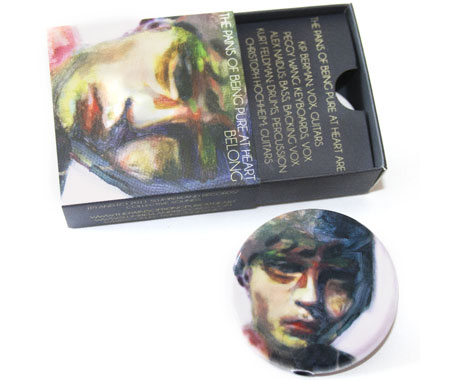
The Playbutton, as it’s called, lets listeners plug their headphones in and listen to the album straight from their lapel, in a delightful combination of gadgetry and fan badge, the quintessential sign of band geekdom.
But the award for most inventive recent record-selling venture goes to The Flaming Lips, who packaged an EP of 4 new songs on a USB stick encased in a huge candy skull.
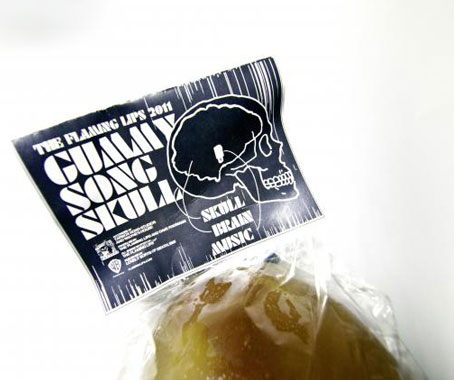
“It’s a life-sized human skull completely made out of edible gummy bear stuff. It also has a gummy brain inside of it and, inside of that, there’s a USB flash drive that has new songs on it. It’s pretty outrageous,” lead singer Wayne Coyne told Pitchfork Media.
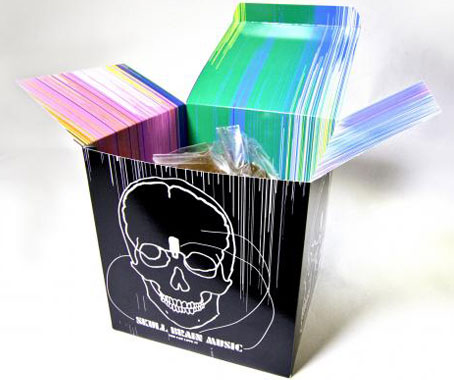
Retailing at $150 per skull, the first limited edition sold out within days, showing not only that music fans are willing to eat their way through gummy brains to hear new music, but that they are also willing to buy albums that embrace new technology and demonstrate design innovation.
INDESIGN is on instagram
Follow @indesignlive
A searchable and comprehensive guide for specifying leading products and their suppliers
Keep up to date with the latest and greatest from our industry BFF's!
The internet never sleeps! Here's the stuff you might have missed