The home of architecture and design in the Asia-Pacific
Get the latest design news direct to your inbox!

Get the latest design news direct to your inbox!
Berlin’s reputation as a creative hub attracts thousands of international artists and designers each year. Indesignlive catches up with four Australian creatives to see how the city has impacted their work.
October 14th, 2011
Each year, artists and designers from around the world take up residency in Berlin, drawing on the city’s history and vibrant atmosphere for inspiration in their work. For some, time spent in Berlin is a rite of passage; for others the city becomes a permanent or part-time base.
Melbourne-based visual artist Emma Coulter is in Berlin as part of a 3 month international art residency. Coulter, whose paintings are always inspired by the location and context in which they are created, finds much to draw on in Berlin. She describes her show ’Viscerality’, which recently opened, as “mapping [her] existence” while in Berlin.

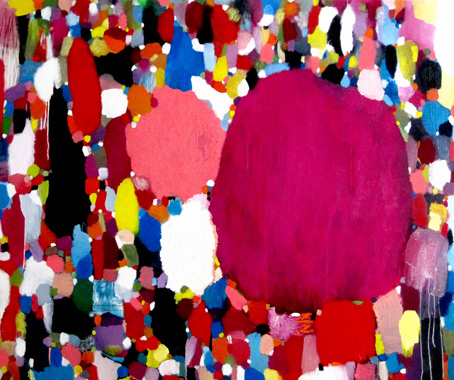
“Issues of femininity, biology and identity are explored, combined with this ’melting pot’ of ideas and influences from Berlin,” she explains, adding that she finds inspiration in the city’s history and its haunting sadness, the eclecticism of the people, the city’s changing landscape and “the sense of both freedom and struggle.”

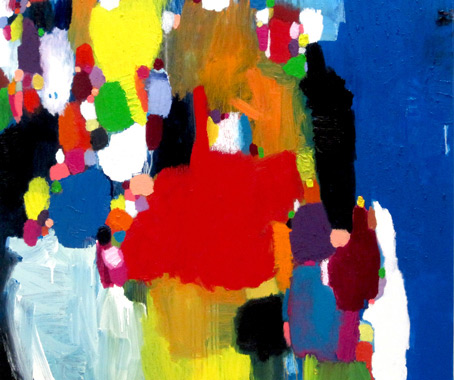
“I think these things are all taking effect and showing in the outcome of my new work, combined with the influence of strong ideas that underpin my ongoing practice,” Coulter says.
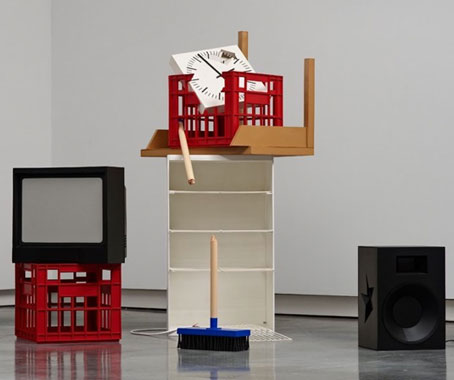
Sculptural installation artist Carly Fischer divides her time between Melbourne and Berlin, exploring ideas of gentrification and globalisation in her work.

“I’m very interested in the strange relationship in Berlin between its violent history and resultant gritty/derelict space and the fetishisation of this as an aesthetic to be commodified through tourism and gentrification,” Fischer says.
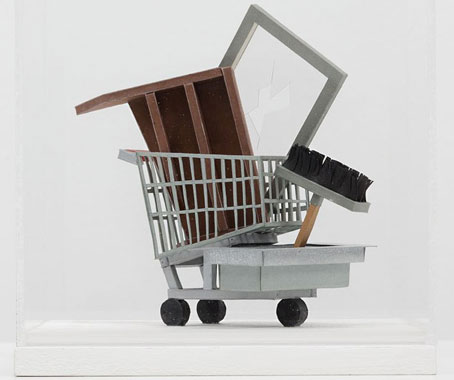
“I actually started working with gentrification in Melbourne, in reference to the transition of the inner city at that time. I was interested in this shift in the politics of space and the fabrication of history.
“Gentrification is international, but in Berlin it currently has a potent political relevance, so being surrounded by such an intensity was important for the development of my work,” she explains.
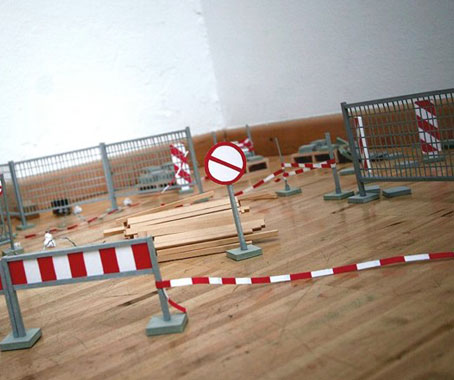
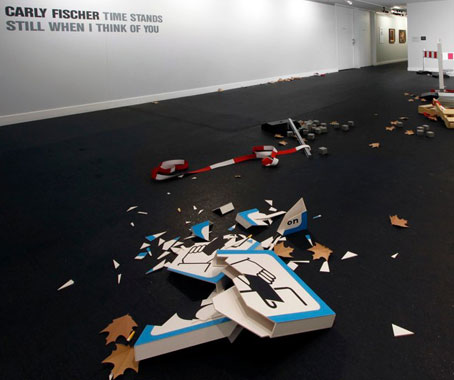
The city has informed the content of Fischer’s work, and changed the way she works, providing “a fantastic opportunity to play with different contexts: abandoned spaces, project spaces, galleries, parties, the street.”
“I think it has afforded my practice a lot of freedom to experiment that has shifted the way I approach space and sculptural installation,” Fischer says.
Photographer Megan Cullen has also changed her approach to her work since moving to Berlin.
“Moving to Berlin has informed, inspired and revolutionised my work and, more importantly, my way of thinking,” Cullen says.
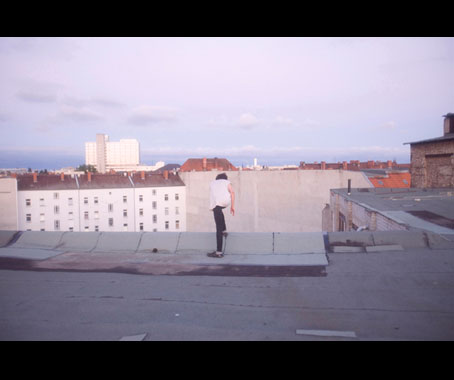
“In Australia I was caught up in the rat race, too busy thinking about clients’ deadlines and needs rather than my own. My personal work was put on the shelf and I felt like I was losing my vision. As it is relatively cheap to live in Berlin, it affords you the time to just focus on what you want to create and say through your work… I really feel like I have found my voice more than ever since coming to Berlin.”
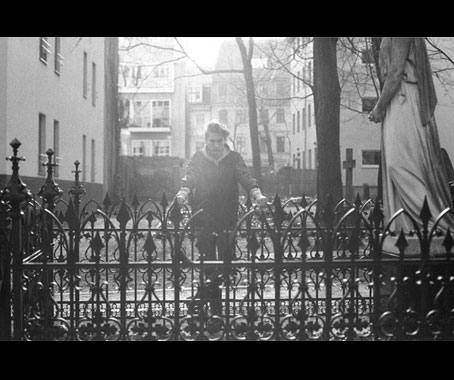
Previously focusing on documentary, Cullen’s work now “blurs the line between documentary, fashion and art photography.”

“I don’t feel limited to one genre anymore,” she explains. “I have also begun to experiment with film, which is something I never considered before moving away.”
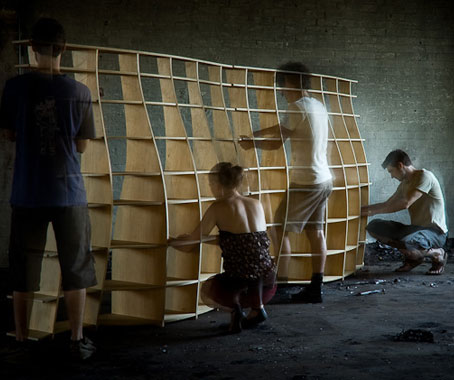
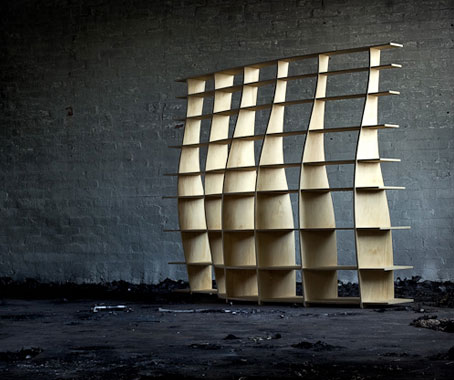
Oliver Field, who previously designed for Schiavello and now works as a freelance design consultant as well as co-director of design studio Pseudo Republik, also identifies a shift in his approach since basing himself in Berlin.
“My time in Berlin has provided me with courage to really push my work in the direction that I feel is the right direction for me,” he explains. “Berlin seems to provide the feeling of acceptance and allows me to process my thoughts and work without feeling the pressure of external influences.”

One of the main reasons for the city’s appeal is its central location. “This is ideal for me because I am an industrial designer who specialises in furniture design,” Field says.
“Having access to the work and the people in these countries enables me to strengthen my relationships with industry leaders, see current works and build new relationships much easier compared to living in Australia.”
“Australia has a great art scene,” says Fischer, “but it is very far and expensive to be able to be involved in projects internationally. I wouldn’t say that there is better art, a better art scene or better opportunities outside Australia, but the art scene is international and if it’s hard to work internationally that definitely hinders creative practice.”
“While the internet affords a lot of opportunities, there is nothing like being physically grounded in a place and making ’real’ connections,” Coulter agrees.
Artists also find that they receive more visibility in Berlin. “There are so many galleries and vacant spaces that it is very easy to exhibit your work often,” Cullen says. “People go to galleries here as often as they do the beach in Australia, so it’s a great city to get your work seen by a wide and diverse audience.”
So what can we in Australia learn from Berlin in how it fosters creativity?
“I don’t think that there is any right ’formula’ for the fostering of creativity,” says Coulter. “However, the affordability of a city, and the amount of real opportunities to get your work out to a wider audience are big factors.”
“I think Australian attitudes towards the importance of art and artists are changing rapidly but it would be nice to see things change a little more,” says Cullen.
“I would like to see art moving outside of the art scene more and more in Australia, collaborating with other areas,” Fischer adds.
Considering the profound effect that Berlin has had on the work of these 4 artists and designers, it is evident that affording opportunities for Australian artists and designers to live and work internationally is vital to our creative industry. Government funding for grants and residencies is key.
“I feel these programs are important and will continue to positively enrich the Australian creative industry once these people return to Australia,” Field says.
It’s also important not to underestimate what Australian artists and designers can offer the international art and design scene.
As Carly Fischer muses, “Berlin could learn from Australia that interesting and very globally relevant ideas and practices are happening in places supposedly disconnected from the international art scene.”
INDESIGN is on instagram
Follow @indesignlive
A searchable and comprehensive guide for specifying leading products and their suppliers
Keep up to date with the latest and greatest from our industry BFF's!
Football enthusiasts won’t have to go to Brazil to be part of the 2014 World Cup – they can recreate the vibe right here in The Rocks by playing foosball on unique tables housed in six giant timber towers. The popular tabletop game of soccer will be part of Arena Calcetto, a unique and live […]
The internet never sleeps! Here's the stuff you might have missed