In an unassuming concrete fortress situated in the rural town of Tetta in Japan’s Okayama prefecture lies one of the region’s most contemporary new buildings. It’s hard not to miss. The structure certainly stands out – a rectangular, solid mass in a provincial landscape – yet Domaine Tetta is a progressive sign of modernity for Japan’s growing wine industry.
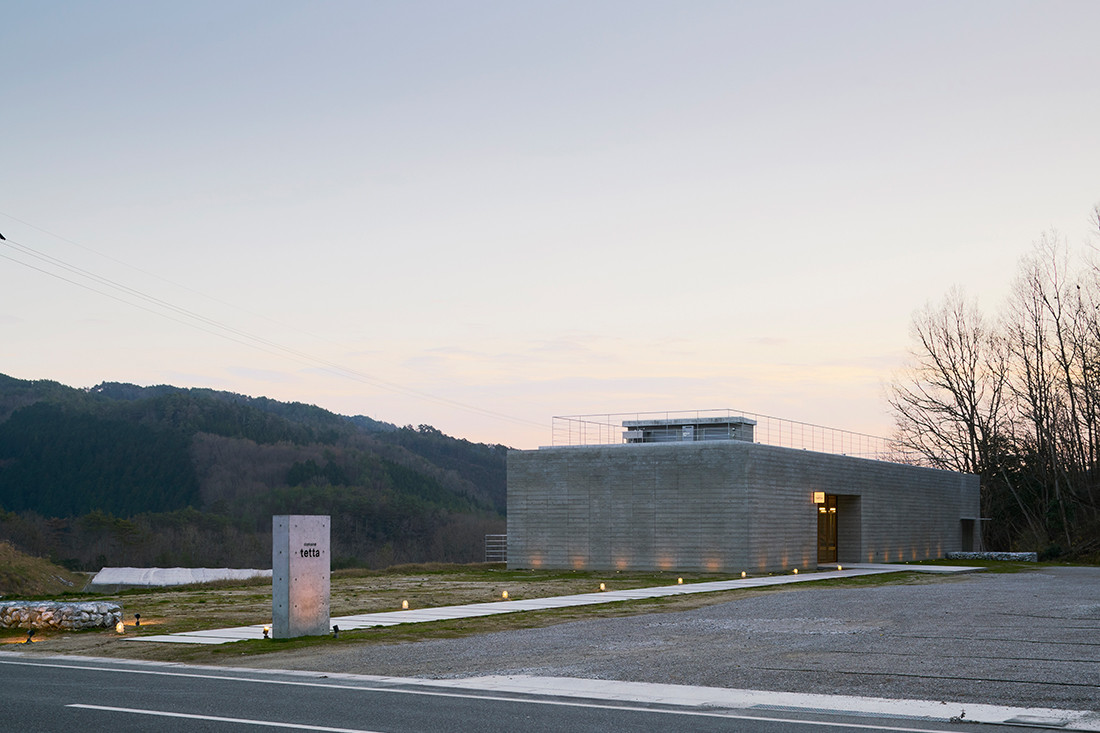
Designed by Tokyo-based design firm Wonderwall, led by Masamichi Katayama, the form came as a result of placing the entire winery’s production at the centre of the design concept, consolidating spaces and presenting a transparency and particular attention to the journey of a grape in the wine-making process.

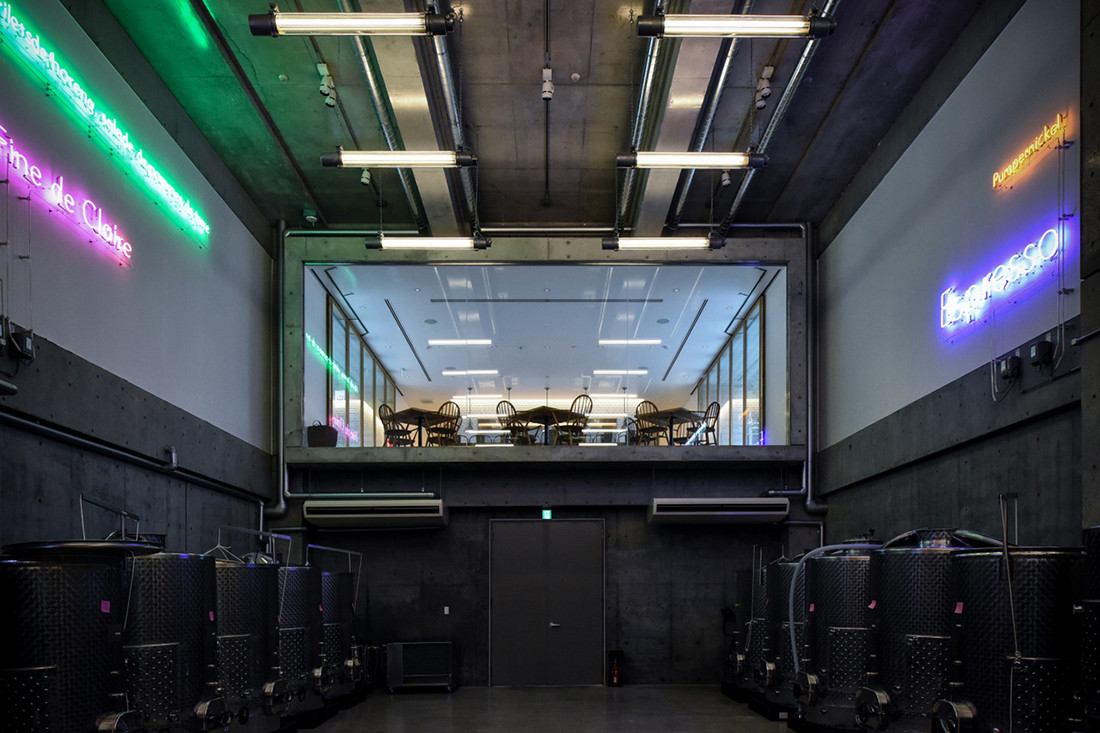
The building’s interior configuration streamlines the gravity-flow of production, furthermore optimising its process. The assembly journey begins at the highest point of the building, implementing a natural downward force that leads the grapes to lower levels. Usually, this process is created over three levels, but Wonderwall has developed a time and cost-efficient technique by implementing a forklift, ultimately reducing the system to two floors.

Katayama explains: “The first floor is designed to receive/unload the grapes and facilitate initial production stages. Wine then flows down to the underground levels for fermentation and ageing, and the finished bottles ultimately depart from the shipping zone. This entire flow of production, which can be viewed from the first-floor cellar door and café has been designed to function with the utmost efficiency.”
Due to the region’s calcareous soil, the concrete was locally sourced and features a woodgrain-like texture on the building’s exterior. The grain was created from a cedar mould with the surface later additionally abraded to maximise grain visibility. Avoiding decorative materials, there was a key focus on pragmatism and functionality for the design. Essentially a “concrete box”, Wonderwall stripped back any complexities to lead with the “playfulness in minimalism” of concrete, glass, wood and simple paint.
.
“I absolutely eliminated my ego as a designer for this project. I designed what is rational and practical for the wine production and this particular site.” – Masamichi Katayama
.
Domaine Tetta’s founder Ryuta Takahashi first approached Katayama for the project as both are from the Okayama region. With no specific design brief, the narrative was driven by the rationale behind Takashi’s winery foundations in Tetta. Formerly an abandoned winery, the site was scheduled to become an industrial disposal site. Growing up in the same area, Takahashi felt impassioned to save the site and to start his winery to protect the land. Although being both the client and the designer had never undertaken a winery project before, through extensive research they determined an empirical approach.

Katayama shares: “I absolutely eliminated my ego as a designer for this project. I designed what is rational and practical for the wine production and this particular site.”
As a minimalist concrete bunker situated in the abundant countryside greenery, the structure still manages to compliment the landscape. Windowless, it retains one key opening – an extended outdoor balcony patio that overlooks the adjacent winery. Katayama explains the winery’s key aperture: We opened up this part of the building so that visitors can enjoy the view of the beautiful vineyard and witness how it is produced.”

Photography courtesy Wonderwall.
We think you’ll like this story about Japanese design. And join our mailing list for all the latest design inspiration here.