The home of architecture and design in the Asia-Pacific
Get the latest design news direct to your inbox!

Get the latest design news direct to your inbox!
This London project represents pure industrial comfort. Elana Castle reports.
September 16th, 2009
When Australian industrial designer and entrepreneur Adam White walked into a trio of abandoned Victorian buildings in Bermondsey, an industrial neighbourhood in London’s “East End”, he knew he’d just happened upon the location for his latest gastronomic venture.
Fresh off the success of ’The Garrison Public House’, his first gastropub and a popular eatery conveniently located a few blocks away, White wanted to create another restaurant with local flavour but one that would also become a “destination”, attracting people from all over the city.
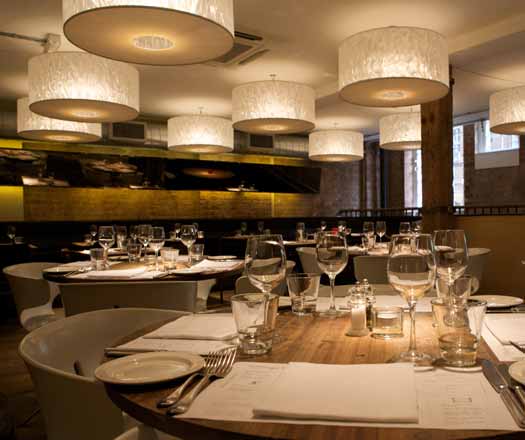
Not fooled by the dilapidated nature of the buildings and the maze of interconnected spaces, White stripped back the layers of plasterboard to reveal rugged brick and concrete that immediately set the tone for his design. ’¨
Aptly named Village East, the idea was to create a restaurant with a strong industrial theme, yet without compromising on comfort and practicality. ’¨
“I wanted to create a large, impressive environment in which you would find a collection of smaller spaces of varying atmospheres, uses and moods. It was also important that all the spaces flowed and interacted so that you could feel both the excitement of the scale but could also enjoy the intimacy of the smaller areas.”
Restricted by a tight budget, White decided to use his own creative skills and design as many of the fittings and fixtures as possible. Inspired by the modernist era and Danish design, “raw, purposeful and utilitarian”, White ensured that there was a logic and integrity behind every decision. ’¨
The bar was moulded out of strong and durable fire clay slabs that sit in solid concrete. Elements like the warehouse style light fittings, well worn leather sofas and weathered timber floors serve to reinforce the concept and the mood. ’¨
White explains, “I was inspired by the saying ‘like a beautiful woman without makeup’. That was my motto for the creation of Village East.”
Words: Elana Castle
INDESIGN is on instagram
Follow @indesignlive
A searchable and comprehensive guide for specifying leading products and their suppliers
Keep up to date with the latest and greatest from our industry BFF's!
The teams are ready to get debating in the latest in the series hosted by design firm, Geyer. Topic: Gen Y Rocks! When: 6pm, Thursday, May 1st. Where: The Mint, 10 Marquarie Street, Sydney. See you all there. www.geyer.com
The internet never sleeps! Here's the stuff you might have missed