A $12 million dollar design by Cox Rayner scores an eagle in Queensland.
March 3rd, 2010
A championship golf course at Sanctuary Cove on Australia’s Gold Coast, has just unveiled an unlikely architectural addition to its grounds.
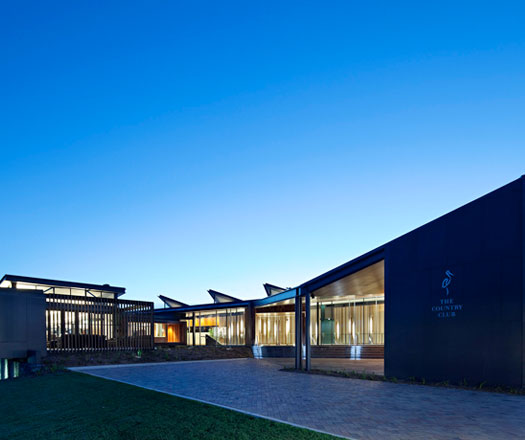
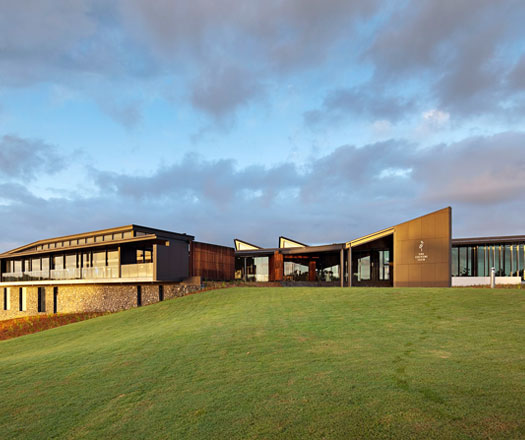
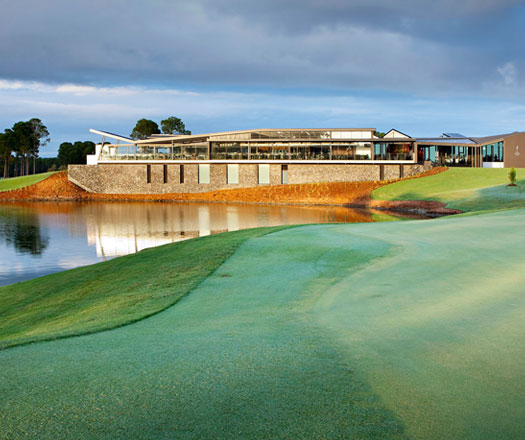
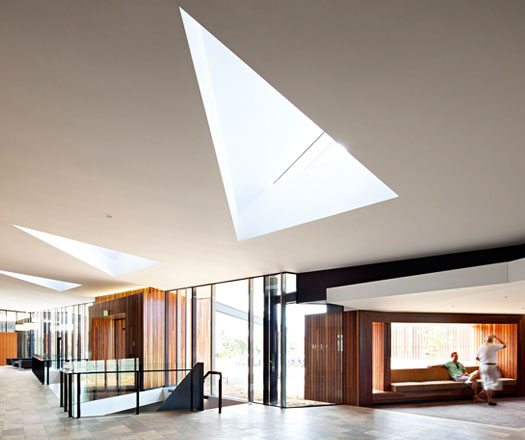
Designed by Cox Rayner Architects, the state-of-the-art clubhouse is set on the waterfront position looking out over one of the country’s finest courses and is far cry from the conventional look of its golf club counterparts.
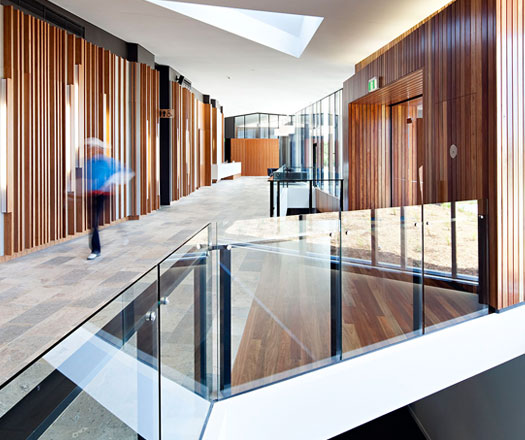
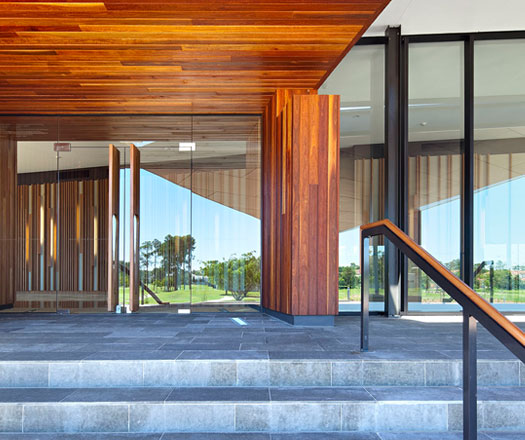
With full height glass walls looking out over the landscape and a roof that opens up to offer uninterrupted views, the design makes the most of the picturesque setting by optimising the interaction between the interior and the exterior.
“The principle of the design was to create a building that becomes an extension of the surrounding environment and a place that highlights the course’s effortless beauty and unique attributes,” said Jayson Blight, a Brisbane based director with national firm Cox Rayner Architects.
The undulating roof form mimics the smooth undulations of the terrain, whilst the geometric angles neatly parallel the pristinely kept fairways and greens.
“It was of key importance that the clubhouse integrated and enhanced the site’s natural beauty,” said Blight.
Internally the clubhouse comprises two levels, with the upper floor containing lobby, registration/reception, and administration area.
The 19th hole features the Spike Bar, with a capacity for 150 guests, a 120-seat restaurant, terrace, restrooms and kitchen.
Cox Rayner Architects
cox.com.au
All photography by Christopher Frederick Jones
INDESIGN is on instagram
Follow @indesignlive
A searchable and comprehensive guide for specifying leading products and their suppliers
Keep up to date with the latest and greatest from our industry BFF's!
Natural stone shapes the interiors of Billyard Avenue, a luxury apartment development in Sydney’s Elizabeth Bay designed by architecture and design practice SJB. Here, a curated selection of stone from Anterior XL sets the backdrop for the project’s material language.
In the last instalment of our three-part performance seating series, Alex Bain from Architectus explains why sitting well shouldn’t feel like sitting at all and explores an unexpected success metric of the hybrid workplace: the grounding power of emotional support.
The Geelong College’s Sport and Wellbeing Centre ‘Belerren’ designed by Wardle is designed around bringing in natural light. But Shade Factor’s job was to help modulate and precisely control it for the most important competitive moments.
In the first instalment of our three-part series exploring what it means to sit your best, we pose the question to Gray Puksand’s Dale O’Brien, who discusses the importance of ease and majority rule when it comes to sitting and reveals why specifying a task chair is not unlike choosing a Volvo.
As breakthroughs in medical science transform the future of patient care, so too does architecture, writes Tara Veldman of BLP.
A new tool developed by the digital innovation team at Arup explores the urban fabric through shared stories and ideas from the community.
The internet never sleeps! Here's the stuff you might have missed
Drawing at a young age gave Angelene Chan an appreciation for architecture and provided the impetus to propel her to the top of her profession.
Curator, writer and educator Kate Goodwin was in town for Melbourne Design Week. Here, she reflects on how light-touch organising and designer-led spaces created some of the most impactful, distinctive exhibitions.