At 55 square metres, Naim is a small Middle Eastern café in Brisbane, but its cultural impact is hoped to be far bigger than its diminutive size. The owners engaged Hana Hakim, founder of The Stella Collective, to design the café, as they both share Syrian heritage. “Food and design to me are the greatest cultural bridges,” says Hana. “I wanted to create a space that gives a peek into Syrian and Islamic architecture, and to bring a very special message about Syria into the light.”

The brief was to celebrate Middle Eastern design with a modern take. Hana drew inspiration from cherished memories with her family in Aleppo, Syria, remembering the ancient city’s internal courtyards, bountiful oasis, elaborate geometric tiling and hole-in-the-wall tea houses.
“This concept was very personal to me. Aleppo was so beautiful and one of the places left in the world where the spirit and generosity of the people were truly arresting,” Hana explains. “Naim is designed with love for Syria. It is an interior tinged with nostalgia and hope.”
.
“Food and design to me are the greatest cultural bridges.” – Hana Hakim
.
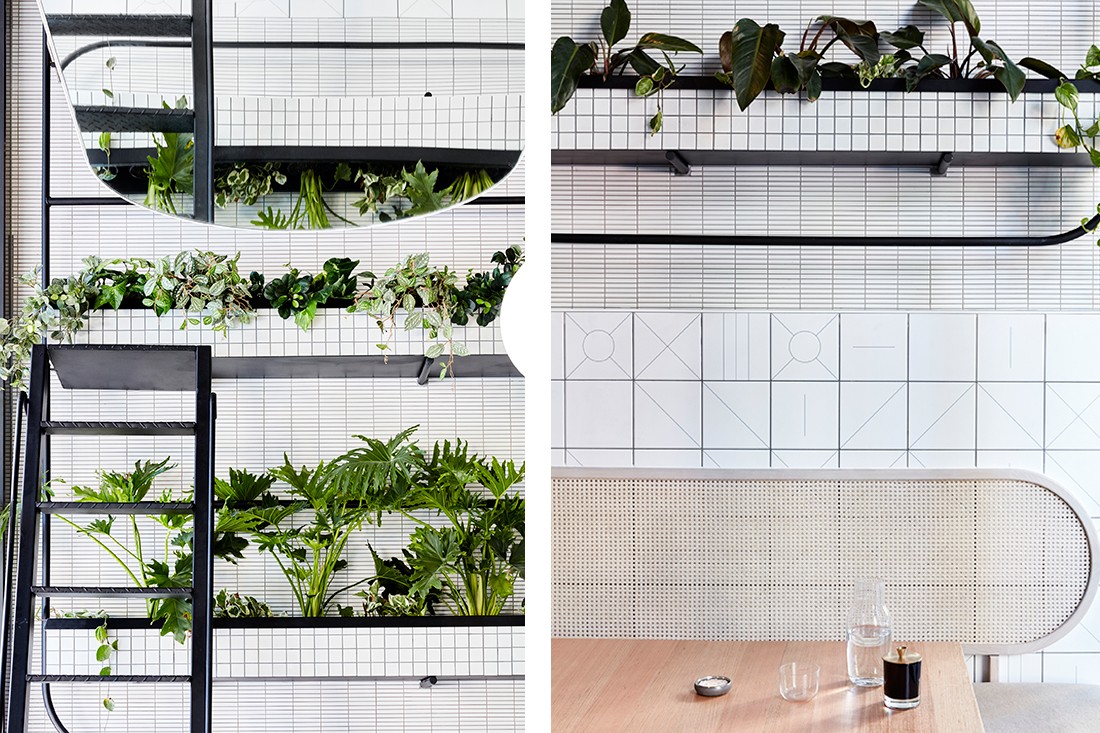
All elements fit neatly within the small footprint of the café to maximise natural light and space. The serving area is just wide enough for benchtop display and food storage, and to allow space for banquette seating along the opposite wall and next to the windows. The light-coloured palette also enhances and reflects natural light. “The palette was derived through soft texture and symmetry, which are the backbone of Syrian architecture,” says Hana.
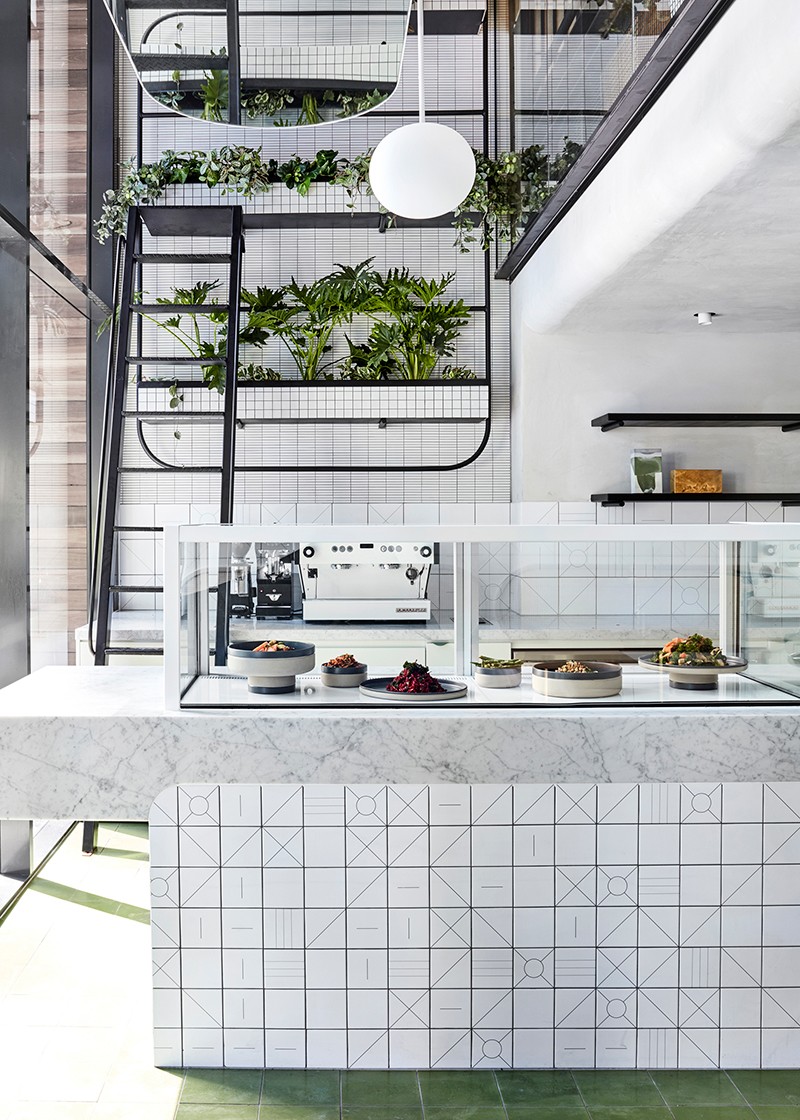
Custom tiles with refined geometric patterning are a modern interpretation of arabesque tiles. The traditional geometric designs combine repeated squares and circles in intricate and complex patterns, which Hana has pared back into a subtle, randomised display.
.
“Naim is designed with love for Syria. It is an interior tinged with nostalgia and hope.” – Hana Hakim
.
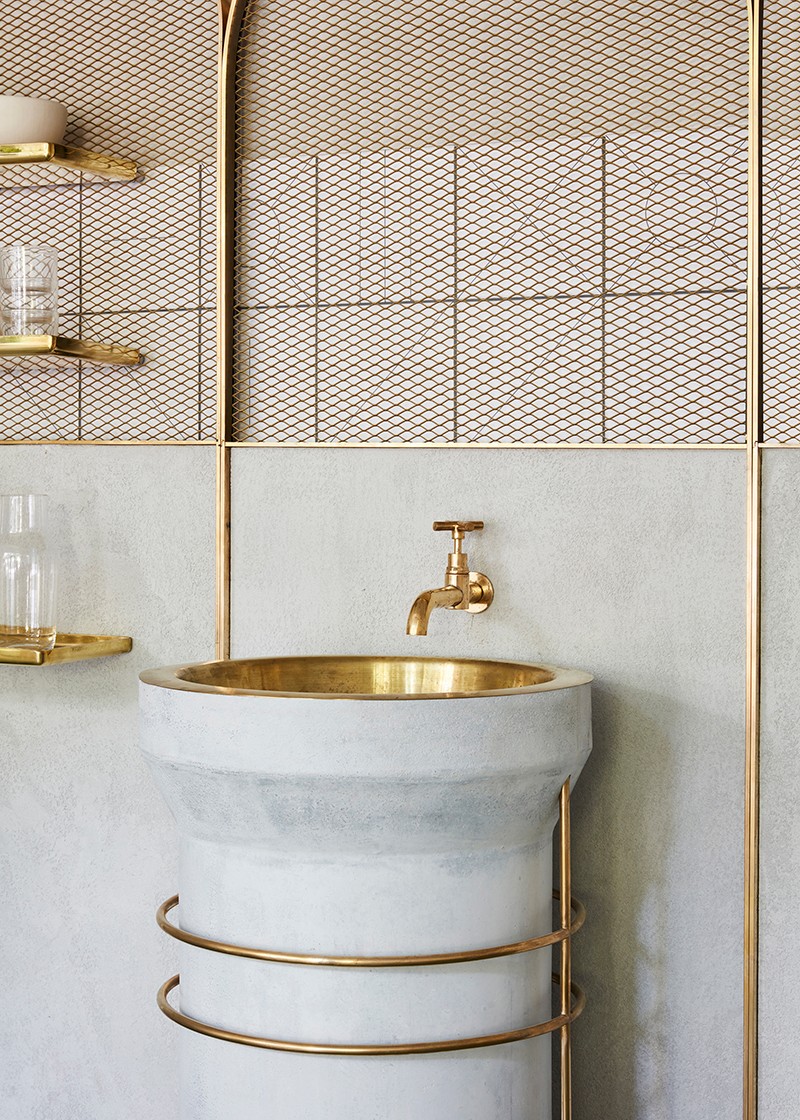
Tadelakt, a plaster technique, meaning to “rub in” in Berber, brings a sense of depth and texture to the walls, as do the rattan backrests. And the green-tiled floor and plants evoke the bountiful oasis, while mirrors reflect natural light and blackened steel features contrast with the Tadelakt and tiles, adding definition.

“As designers, we need to design like we give a damn. I truly believe design can bring people together and help communities on a global scale,” says Hana.
“The more the Western world gets to experience the Middle East’s food and culture, the more curious they will be about it and maybe they will start to raise questions about what is happening to people over there and how they can help.”
Photography by Sean Fennessy.
See other projects by The Stella Collective here. This project speaks to the themes explored in Indesign magazine #74, the ‘Design Relish’ issue.
–
Get inspired by design every week. Sign up for our newsletter.