The home of architecture and design in the Asia-Pacific
Get the latest design news direct to your inbox!

Get the latest design news direct to your inbox!
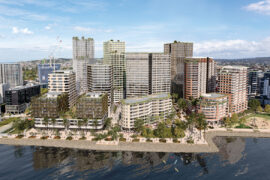
Vertical cities in the sky, deconstructed boxes and ample greening – six widely varying designs with similar themes have been revealed in the Southbank by Beulah competition.

MAD Architects x Elenberg Fraser's Urban Tree
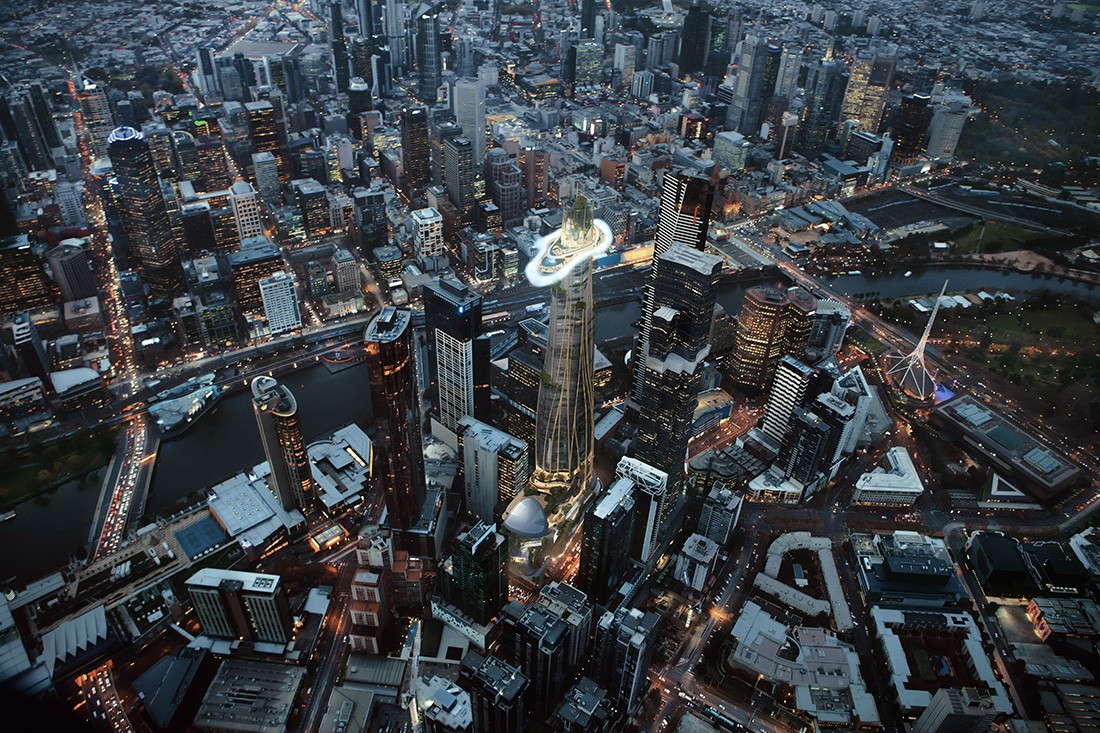
MAD Architects x Elenberg Fraser's Urban Tree

UNStudio x Cox Architecture's Green Spine

UNStudio x Cox Architecture's Green Spine
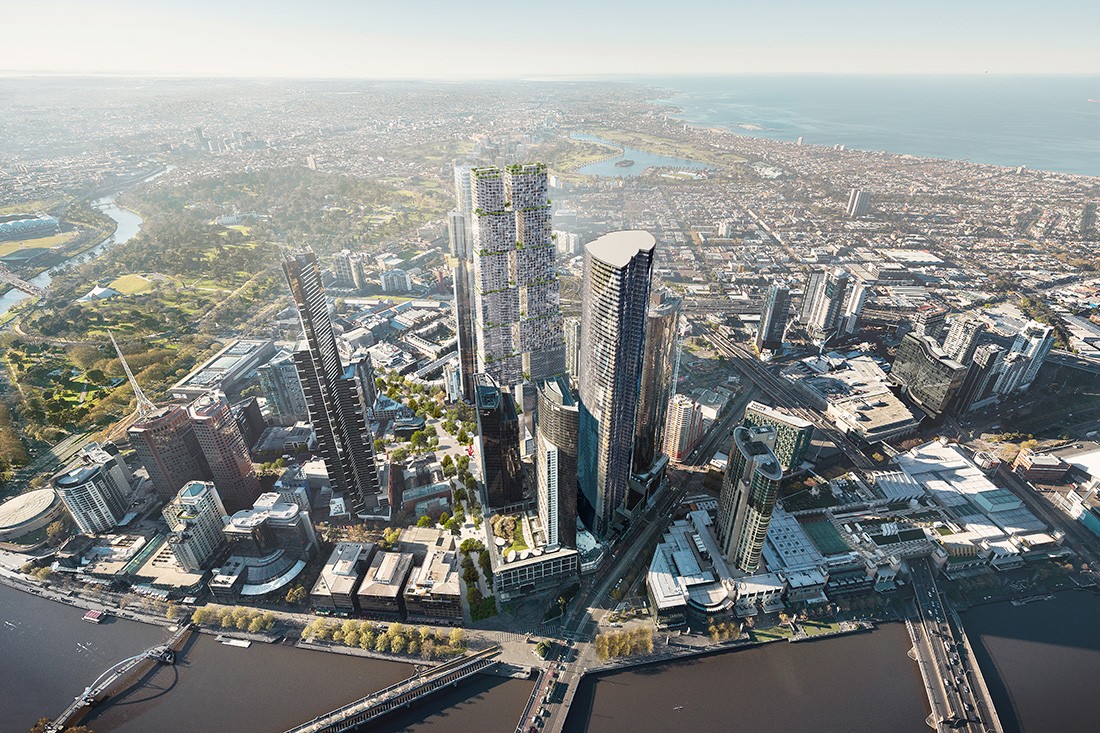
Bjarke Ingels Group (BIG) x Fender Katsalidis' The Lanescraper

Bjarke Ingels Group (BIG) x Fender Katsalidis' The Lanescraper
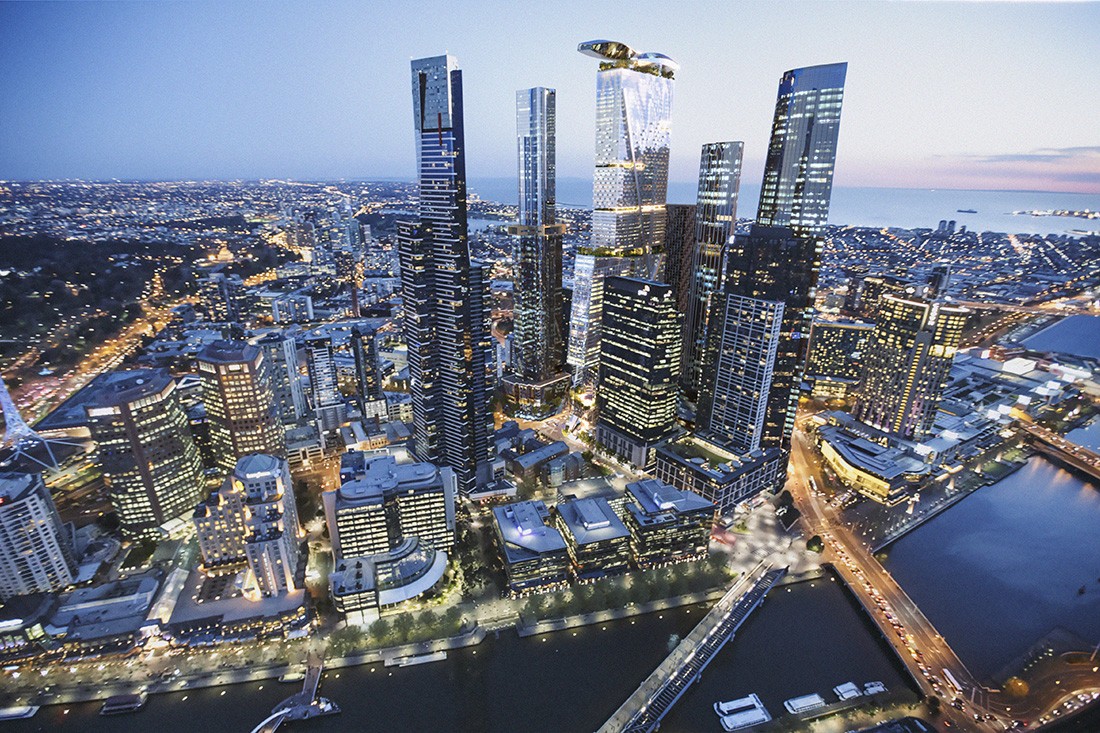
Coop Himmelb(l)au x Architectus' The Propeller City

Coop Himmelb(l)au x Architectus' The Propeller City
MVRDV x Woods Bagot's The Stack

MVRDV x Woods Bagot's The Stack

MVRDV x Woods Bagot's The Stack

OMA x Conrad Gargett

OMA x Conrad Gargett

OMA x Conrad Gargett
Six designs have been released for the Southbank by Beulah competition, which invited a selection of international practices to design a 360-metre tower for the Southbank site alongside a local practice.
Situated on the BMW Southbank site, Australian property developers Beulah International announced plans to transform the site through an international design competition late last year.
The precinct will overhaul the Southbank Boulevard area with a proposed $2-billion project.
Six international architectural practices, together with six local practices presented the designs during a unique symposium. Opening up the pitching process to the wider community, Beulah International put on the Future Cities Symposium held on Friday 27 July.
The vision for the site is to create an entire lifestyle precinct of international standard, including retail, hotel, residential, commercial and public spaces into one compact district.


Taking inspiration from the nearby Botanic Gardens, Urban Tree proposes to plant a tree-trunk-like tower onto the site. Breaking up the scale, the ground level amenities appear as a ‘mountain village’ and will house amenities such as a playground, retail and a water feature.
The standout features of the proposed design are The Cloud, which will perch at the very top, coupled with timber supporting structures. The timber bones of the building add to the tree-like effect.
–
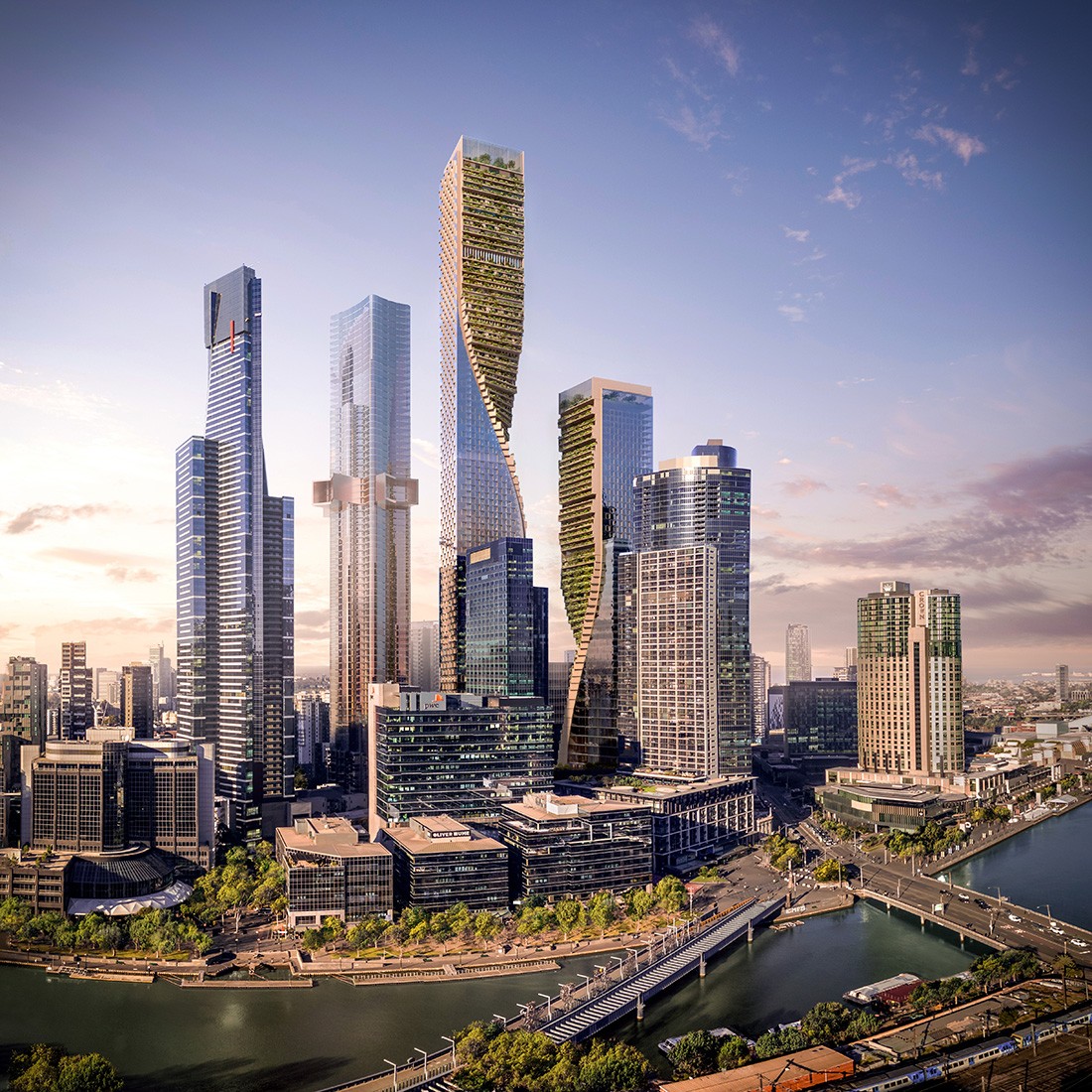

Two twisting towers of greened terraces and glass façades dominate the proposed design of Green Spine. Wanting to give back to the community, the ground level features a series of stepped terraces, which lead people up the stairs into the retail precinct.
The angles of the twisting towers themselves ensure optimum natural light while maintaining necessary privacy for both residents and hotel guests.
–
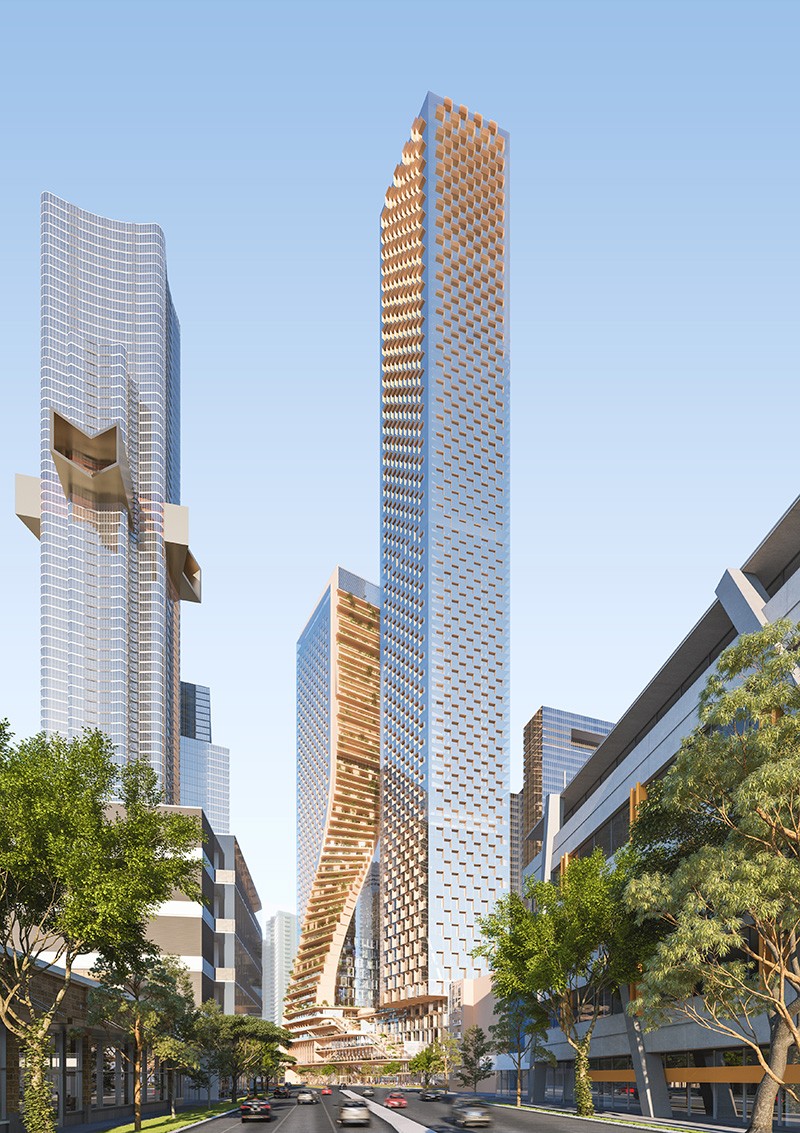
Inspired by massing and verticality, The Lanescraper’s form is derived from the allowed envelope of the site, with periodic six per cent step backs as it ascends. A ‘laneway’ is then carved out in-between at varying levels, which aids in wind reduction while referencing Melbourne’s own iconic laneways, except this time being in the sky.
At each level of the stepped back tower, different facades have been proposed, both to offer a sense of variety and for the potential to leverage more appropriate materials and technology dependant on the needs – for example, solar glass for the residences.
–


A distinct vertical city in its massing, The Propeller City breaks up each function of the tower and gives it its own building. This deconstructed approach is not surprising for the masters of deconstruction, but what is unique about this design is the ‘propeller’, which will sit atop the structure.
Being a tall but narrow structure, each side is structurally cross-braced, which takes inspiration from SOM’s Hancock Tower in Chicago.
–
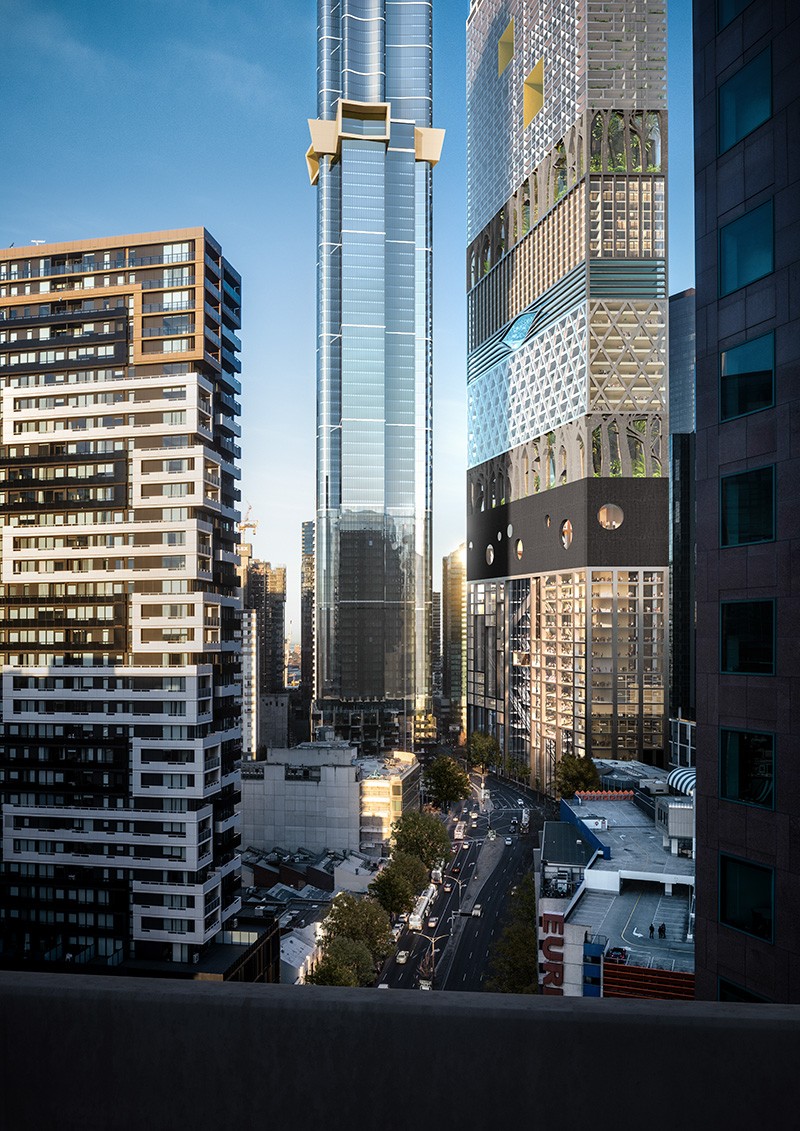
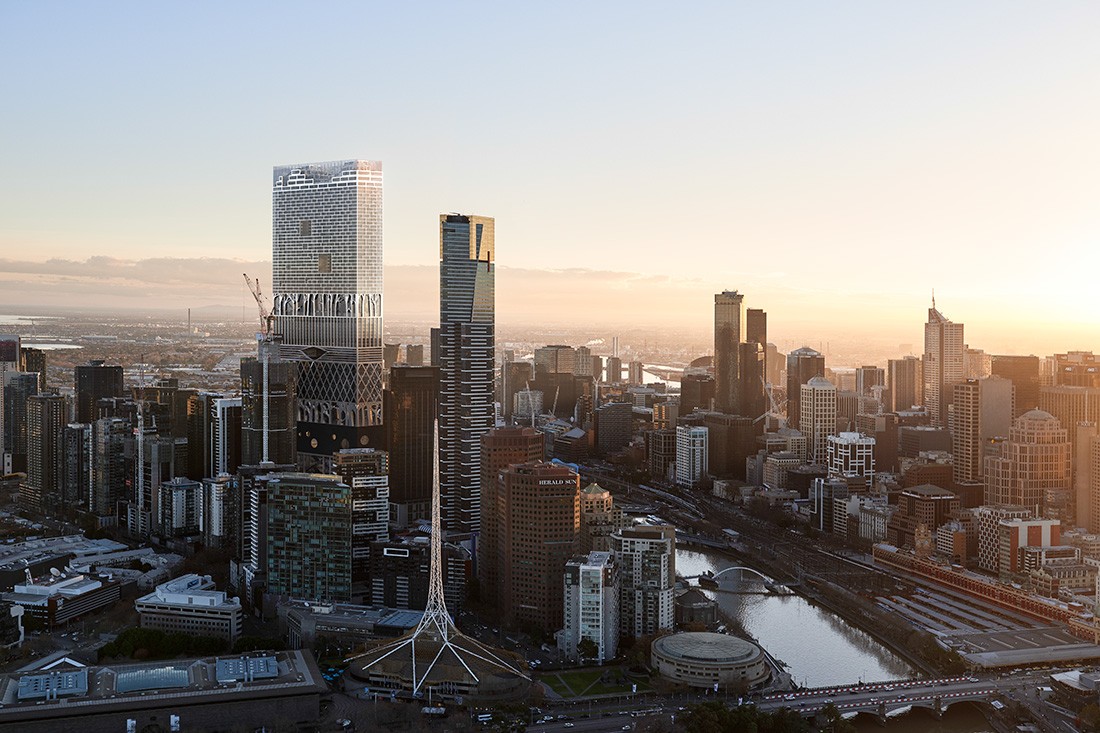
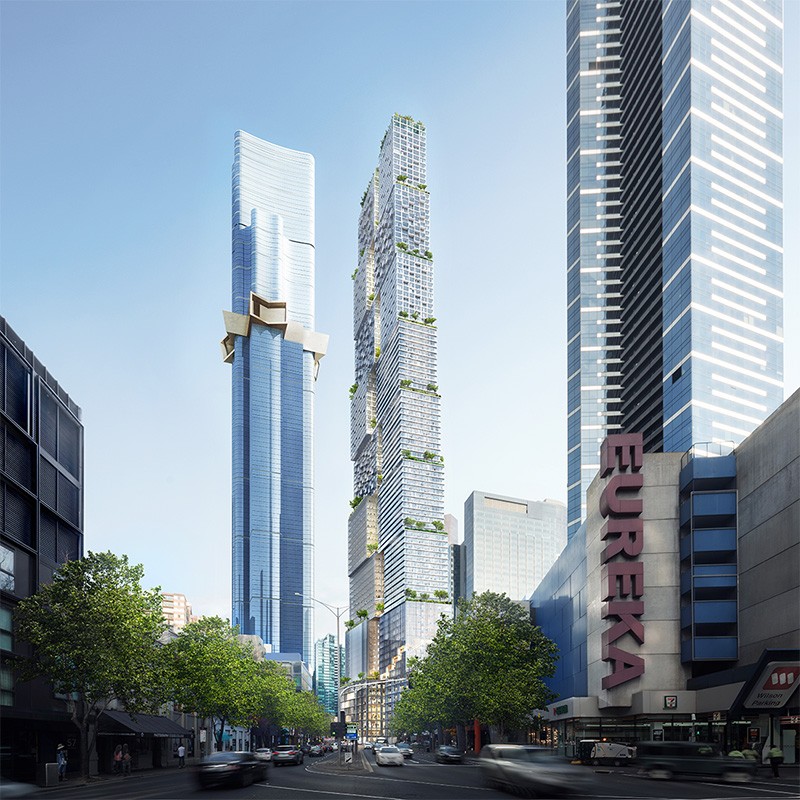
The Stack is all about creating a vertical neighbourhood in the sky. Envisaged as buildings stacked upon each other, every ‘neighbourhood’ is accessible and interconnected through a series of meandering stairs or more efficient lifts.
Each of the individual buildings within the stack is then reflected through a unique façade design, inspired by the activities that will take place on the inside.
–

Traditionally, the world’s tallest buildings have put preference on the ‘crown’ or the top of the structure. Wanting to democratise the top, OMA and Conrad Gargett’s design puts the amenities of the ‘crown’ at the bottom. This base area then becomes an open and public zone of arcades – inspired by the very laneways and arcades that Melbourne is renowned for.
As the tower reaches up vertically, each function of the building twists subtly to capitalise on views and daylight making for a more fluid skyscraper.
–
Despite each proposed design looking different with varying points of departure, there are many similarities that can be drawn out. Vertical villages with ample greening, stepped walkways and cascading stairs, façade variety and engagement with the public at ground level were all themes that repeated in several of the projects.
The winner will be announced shortly and is expected to gain international attention.
INDESIGN is on instagram
Follow @indesignlive
A searchable and comprehensive guide for specifying leading products and their suppliers
Keep up to date with the latest and greatest from our industry BFF's!
The internet never sleeps! Here's the stuff you might have missed