Mercedes Benz is recognised as one of the top luxury vehicles in the motor industry, with a legacy that dates back to the late nineteenth century. In 1885 Carl Benz built the Benz Patent-Motorwagen, which may be regarded as the world’s first production automobile, propelled by an internal combustion engine, rather than being based on a converted horse carriage.
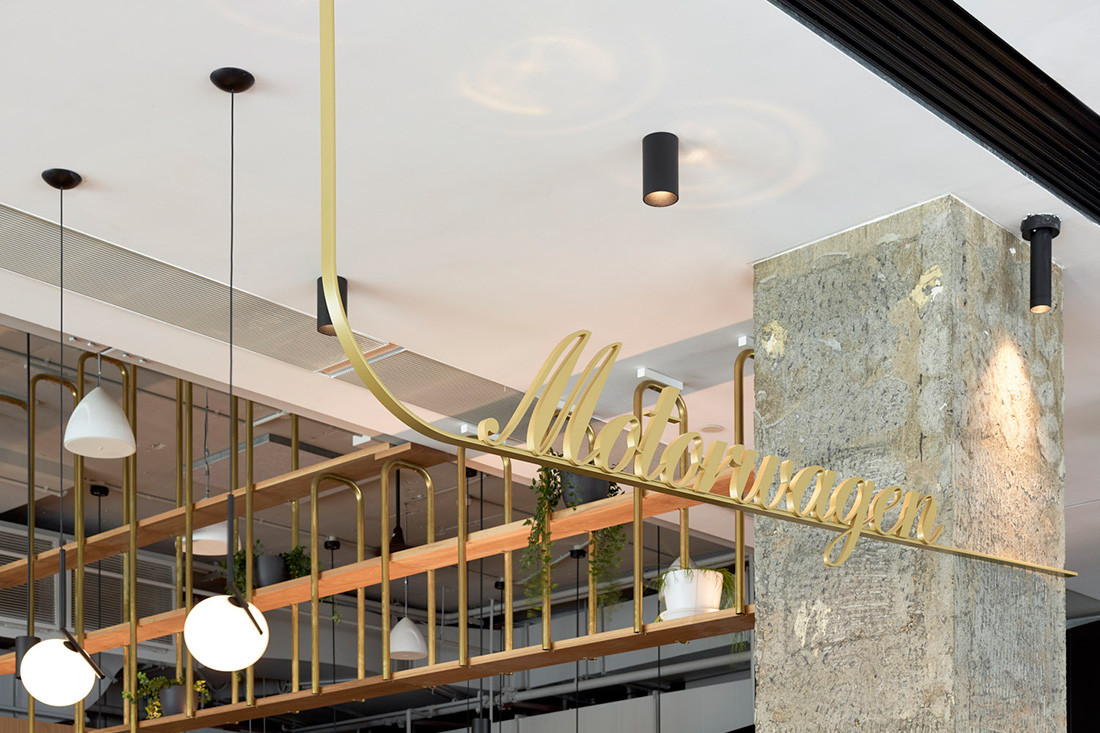
Motorwagen now gives its name to a new restaurant and bar located in the Mercedes Benz-Brisbane showroom. Designed by KP Architects, the venue is as finely tuned as a Mercedes Benz with materials, craftsmanship and detailing that pay homage to the coveted car.

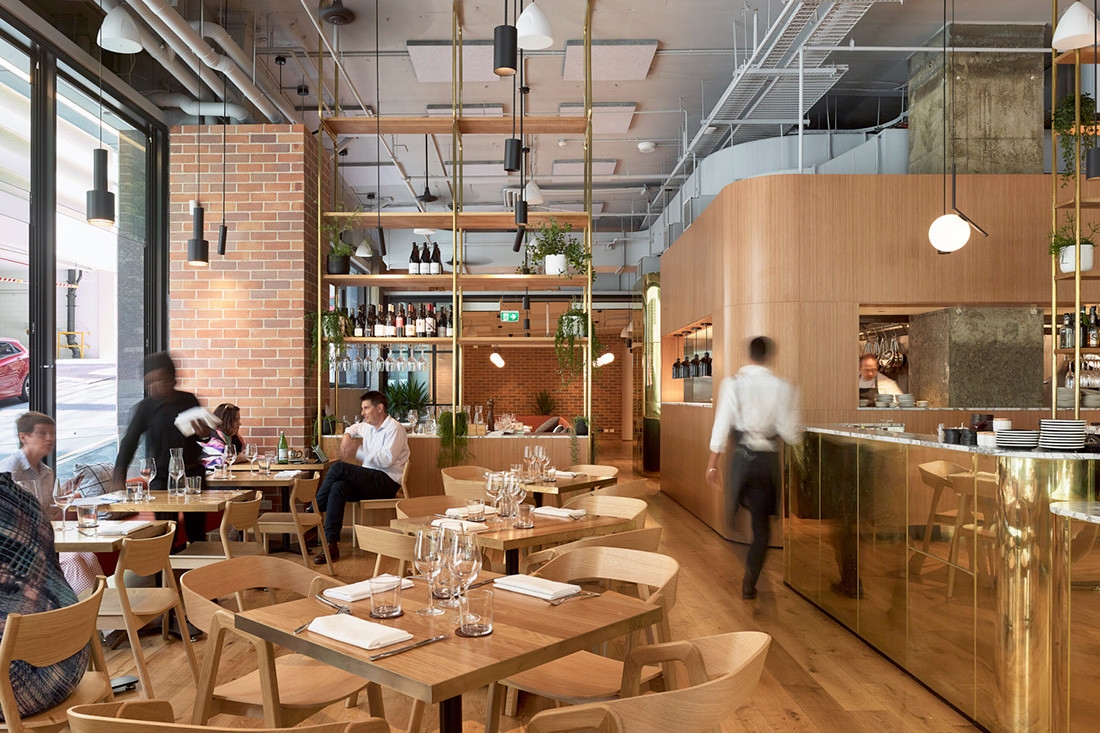
The project entailed a restaurant, bar and boutique store. “As the venue was a collaboration between Mercedes Benz-Brisbane and hospitality operator Sam Pask, the two spaces needed to have a strong connection visually and aesthetically,” says Kon Panagopoulos, director of KP Architects. “The design of the restaurant indirectly pays homage to the brand by referencing the curves and material palette, such as leathers, steel, and veneers, found in the car designs.”
.
“The materials chosen are generally natural finishes that age gracefully.” – Kon Panagopoulos
.
The space is divided into three pods that house the kitchen, bar and boutique. The pods are visually cohesive for their sculptural forms, yet distinct for their different material palette – powder-coated steel (retail), brass (bar) and timber veneer panelling (kitchen). Each pod has rounded corners that soften the rawness of the space – including exposed concrete ceiling, columns and services, which are a nod to the internal mechanics of a car.
.
“The design of the restaurant indirectly pays homage to the brand.” – Kon Panagopoulos
.
The material palette is similarly inspired by the Mercedes Benz. “The materials chosen are generally natural finishes that age gracefully, but also reflect the richness of materials found in the interiors of Mercedes Benz cars – stitched leather bench seats, curved timber veneer panelling, polished metal, and 2-pac steel panels,” Kon explains.

The bar and kitchen provide separation to the space, with the dining area and leather banquette seats around the perimeter of the building where large windows offer views and natural light. Sliding metal doors separate a private function room in the rear of the dining area, which sits below a concrete sloping slab roof – the ramp to the carpark above. “Another subtle reference to the venue’s connection to cars,” says Kon.

The references continue with the Motorwagen sign that appears to float at the front of the venue. Its stylised lettering recalls the nameplate on vintage Mercedes Benz cars, while the posters in the private dining area – hand painted on to the wall by a student artist – also reference the vintage imagery of the Benz brand and history.

Photography by Scott Burrows.
–
Mercedes Benz has another experimental project that bridges retail and hospitality – take a look at Mercedes Me Melbourne, designed by JCB Architects. Get more design inspiration, join our mailing list.