The home of architecture and design in the Asia-Pacific
Get the latest design news direct to your inbox!

Get the latest design news direct to your inbox!
Situated in the Victorian town of Delacombe, this stadium by Kosloff Architecture brings a civic quality to its locale with its concertinaed walls.

October 31st, 2022
Architecture doesn’t have to be exclusive to capital cities. It can also be integral to smaller regional towns, such as Ballarat, a couple of hours drive from Melbourne.
So, when Kosloff Architecture was commissioned to design a new sporting stadium at Delacombe on the outskirts of Ballarat, in what was formerly a light industrial area, there was an opportunity to create civic architecture as well as a much-needed facility for the primary school students attending Delacombe Primary School.

Previously, students used the Doug Dean Stadium, a nearby public facility and a remnant of the 1970s. “It’s little more than a tin shed, extremely cold in winter and hot in summer,” says architect Lance van Maanen, a senior associate who worked closely with architect Julian Kosloff, a co-director of the practice.
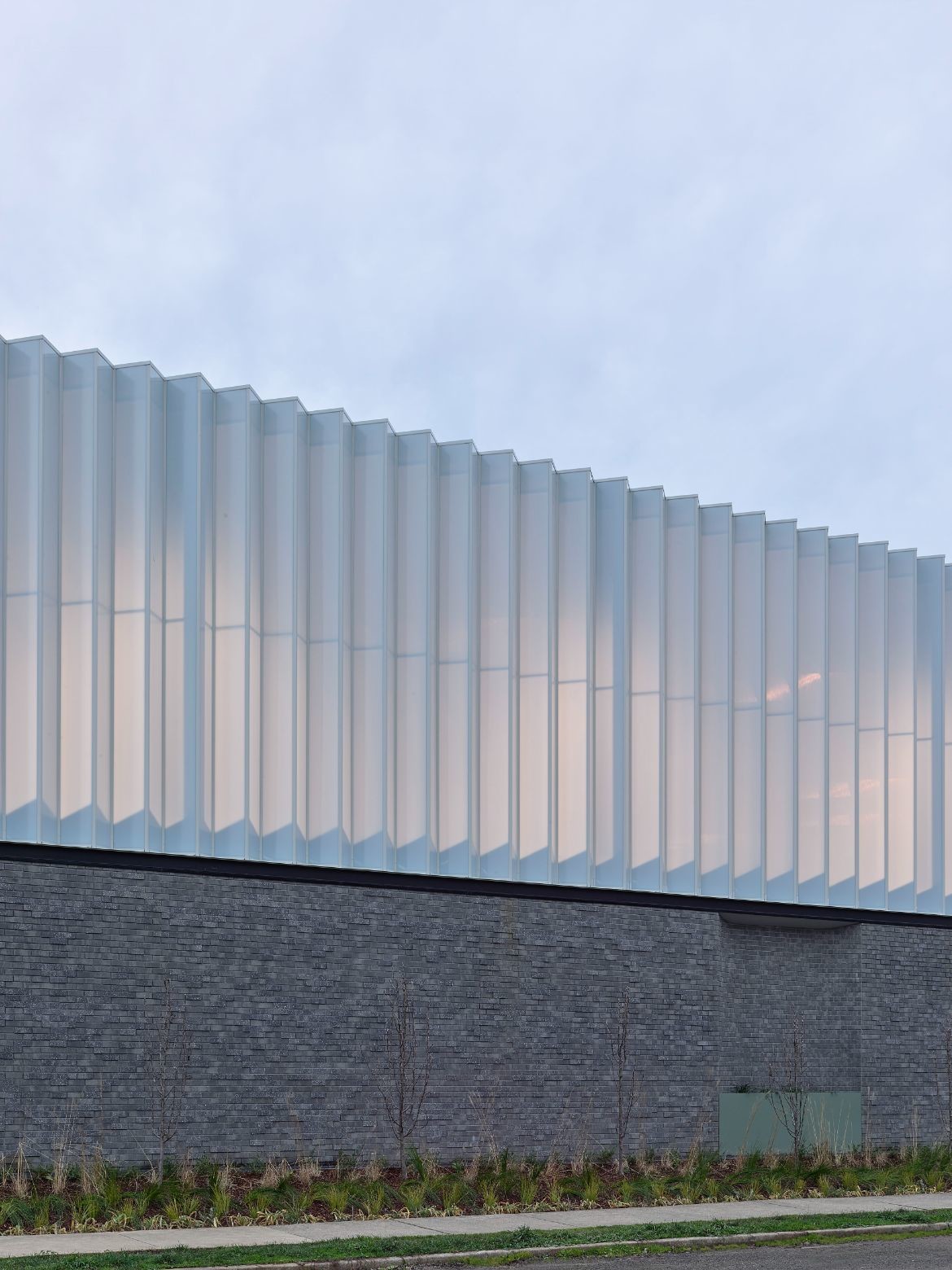
Occupying what was previously vacant land and abutting a main street, there’s now a striking building that has a civic quality. Constructed in concrete bricks, with the upper level either translucent polycarbonate or metal concertinaed walls, the Delacombe Stadium acts as a beacon for the local community as much as for the students.
“Our brief was to create a sporting facility that could used for a number of events, including assemblies and community gatherings,” says Kosloff, who worked with a number of stakeholders and the Victorian School Building Authority (VSBA).

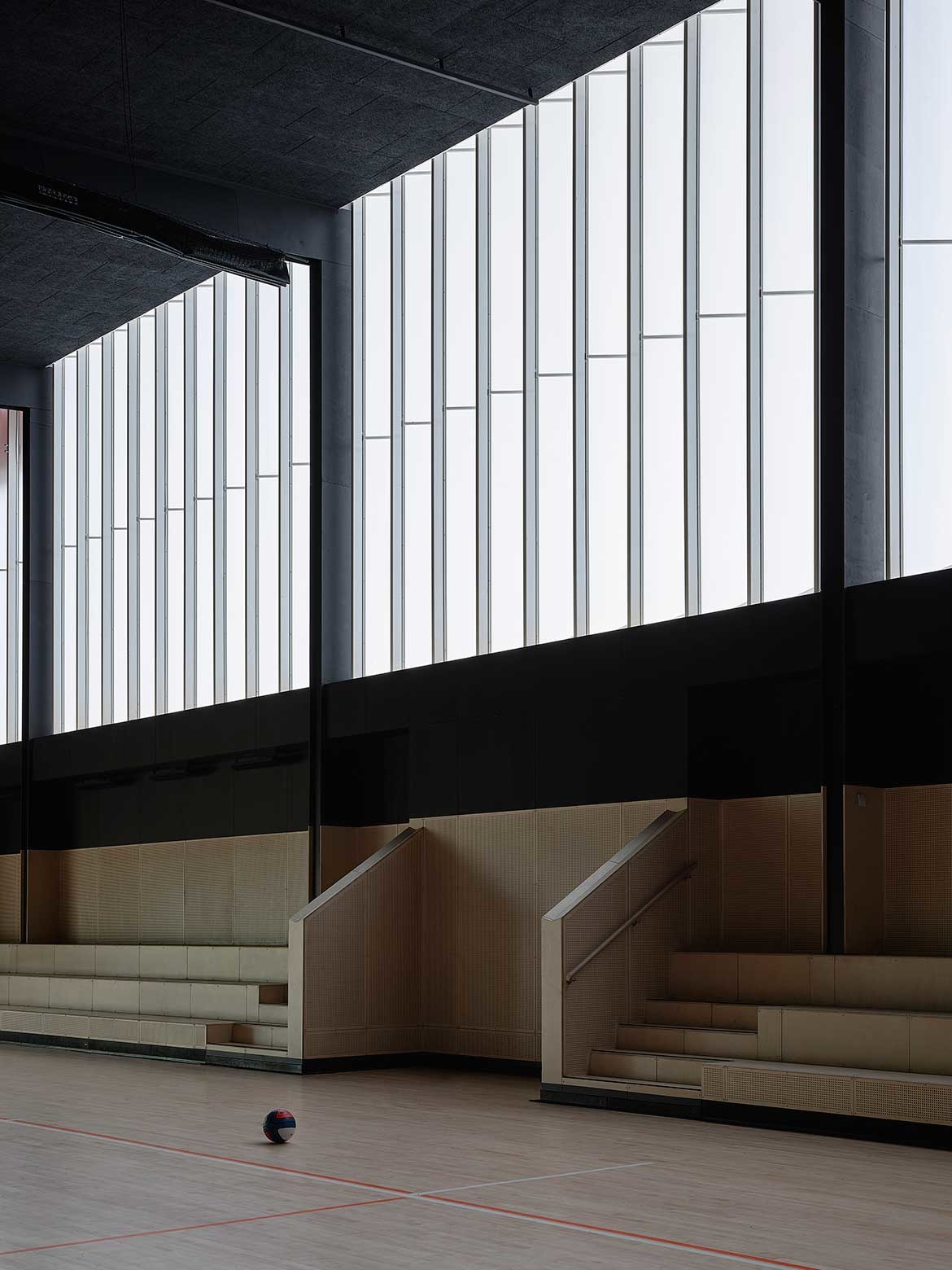
Given there was a need to create an even quality of light, the stadium’s front elevation is orientated to the south and features the translucent concertinaed window wall. The other elevations are literally blacked out, with the interior walls framing the championship-size basketball court, clad in Troldtekt, a fibrous woollen material that is ideal for acoustic control.
“There’s a certain softness to this material,” says van Maanen, who also included perforated plywood on the lower walls, below what’s referred to as the datum line.
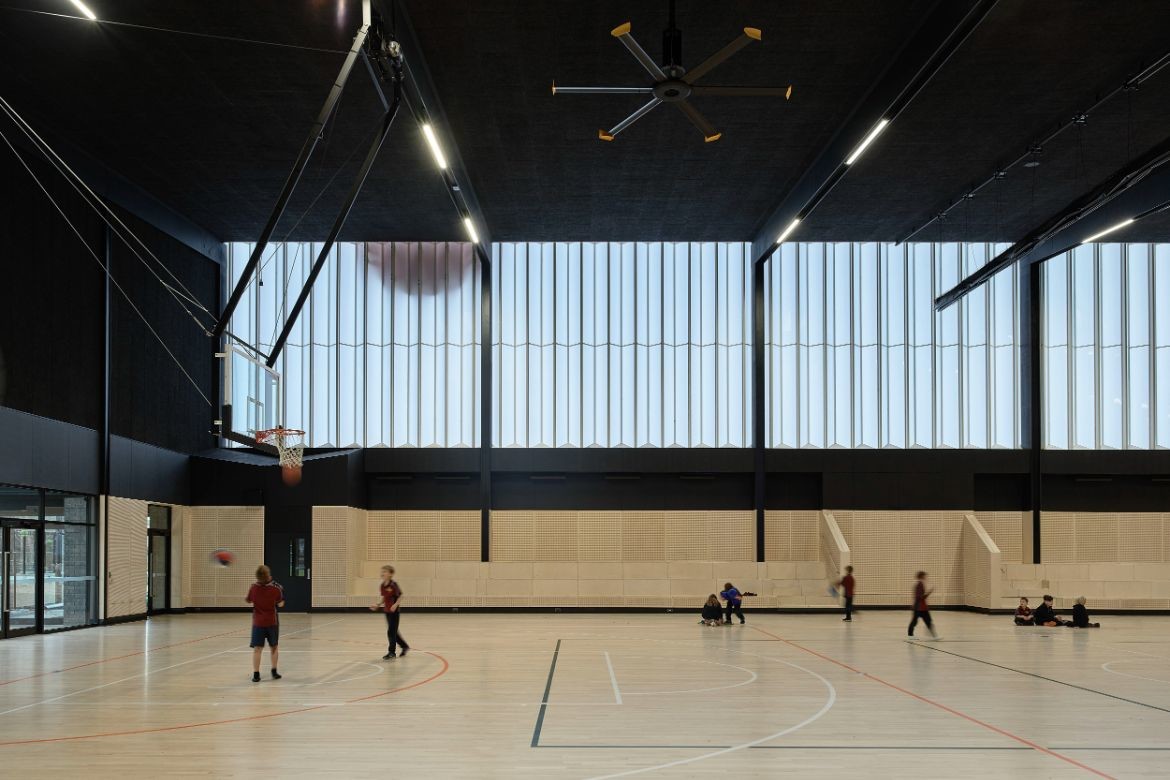
The bleachers framing the court are also made of plywood and create a softness to the edges of this space. Flexibility was also paramount – so, the basketball hoops can be easily retracted with a flick of a switch and a large LED screen can be brought down for events such as trivia nights.
Approximately 1300 square metres in area, there are changing facilities, a multi-purpose teaching and learning space, together with a kitchen and catering facilities, and staff offices and storage areas for sporting equipment. And rather than treat areas such as bathrooms as simply utilitarian, there’s a level of sophistication such as the different coloured tiles following a similar datum line as found with the basketball court.
“Change areas are often quite prosaic but that doesn’t mean they have to be bland and uninspiring,” says Kosloff.
Using three simple materials – concrete bricks, metal and polycarbonate – has certainly created a simple and civic gesture to the streetscape, with considered planting and thought given by landscape architects Glas Urban, who ditched the high brick fence that normally encloses a school.
There are other moments around the edge of the building, such as the indented seating and drinks fountain that make the architecture more than just a thing of beauty for those driving past – appearing like a lantern at night.
And while the front facade has a civic quality, the rear elevation is single-storey rather than a double-height space and connects the children to the playground.
Kosloff Architecture
kosloffarchitecture.com
Photography
Courtesy of Kosloff Architecture


We think you might like this article about the aesthetics and functionality of tensile mesh barriers and facades.
INDESIGN is on instagram
Follow @indesignlive
A searchable and comprehensive guide for specifying leading products and their suppliers
Keep up to date with the latest and greatest from our industry BFF's!
The internet never sleeps! Here's the stuff you might have missed