The full text of this article appears in Issue 38 of Indesign Magazine, out now. Click here to find your nearest stockist, or here to subscribe.
words Paul McGillick, photography Earl Carter
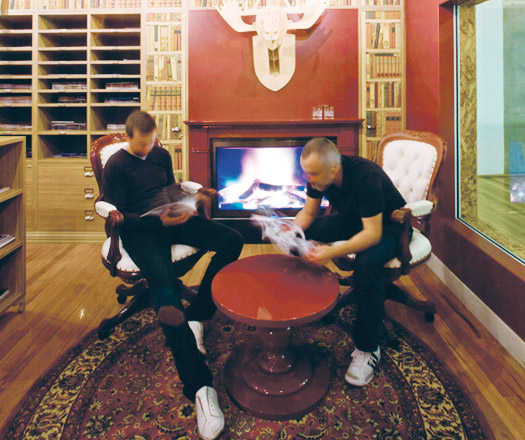
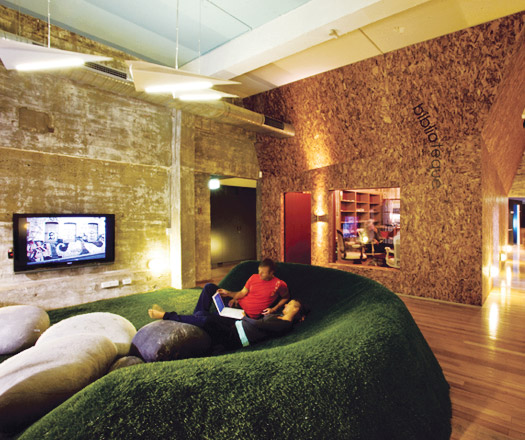
When Red Bull needed a creative and vibrant interior designer to transform an old linseed silo into their Sydney headquarters, they appointed Matthew Sheargold. Sheargold had only just finished working for Geyer and decided to go solo, opening his studio Sheargold Design, when he was approached to put in a proposal.
“Basically, all they did was ask the question: Why are you the best designer for Red Bull?” explains Sheargold. “If I’d still been in my previous job I would have put together an EOI (expression of interest) with examples of our work – all very corporate and predictable. But I thought ‘no I’m not going to do that’.”
Instead, Sheargold decided to think outside the box. He realised that Red Bull is a brand about youth, vibrancy, high energy and about experiences, and presented the client with a series of cards and a gold-plated can of Red Bull – a play on the ‘gold’ in his name. The last card says ‘Sometimes the best ideas come when you join together’.
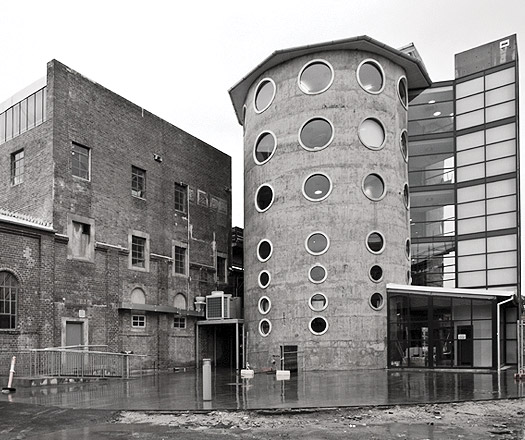
It worked. Sheargold got the job and, using the same approach, set about creating an office environment to match, calling on his long-time colleague and friend Sally Hieatt as Project Leader. One of the first challenges was what to do with the two silos. The base building architects had already put in round windows, but at the ground floor of the silo, the concrete of the building was still built up at the sides, forming a funnel, through which the linseed was fed. ’¨’¨
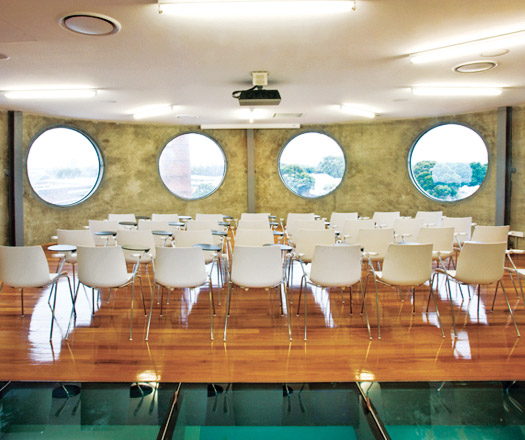
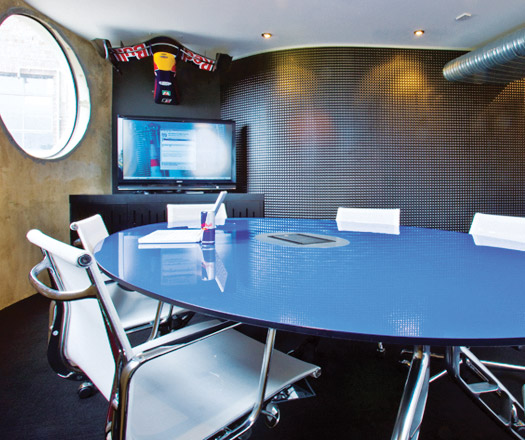
To make the ground floor useable, this concrete – which reached up to head height around the sides of the cylinder, had to be jackhammered out. And, because the silos are only so big, the building next door was also used for the office, meeting and break-out spaces, linked via a staircase and an upstairs deck.
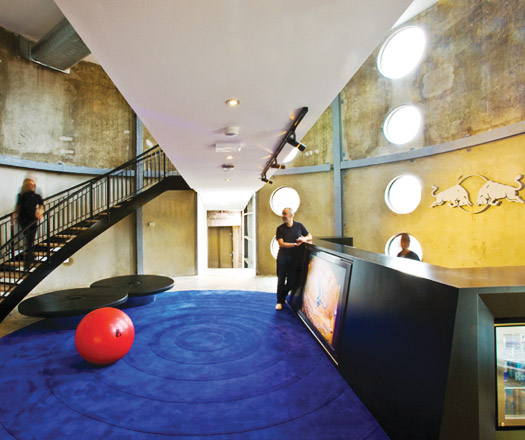
The left silo on the ground floor was transformed into an exhibition space where Red Bull presents the work of artists, such as skateboard or street artists. The right silo was transformed into a double height reception with a walkway above…
Read the rest of this article in Issue #38 of Indesign magazine – out now. Click here to find your nearest stockist, or here to subscribe.