Put simply, Missing Middle Housing typologies refer to a range of multi-unit or clustered housing types that are able to meet the growing demand for walkable urban living. ‘Missing’ because these types of houses have not previously been allowed to exist under regulations, and ‘Middle’ because the typology sits between detached single-family homes in the outer urban areas and mid-to-high-rise apartments in the city.
Today, this is more relevant than ever. The main idea is to create liveable neighbourhoods for diverse demographics, multi-generational living and flexible working behaviours. For urban planners and architects and even the government, this means finding the right balance between density, affordability and community living in suburban locations.
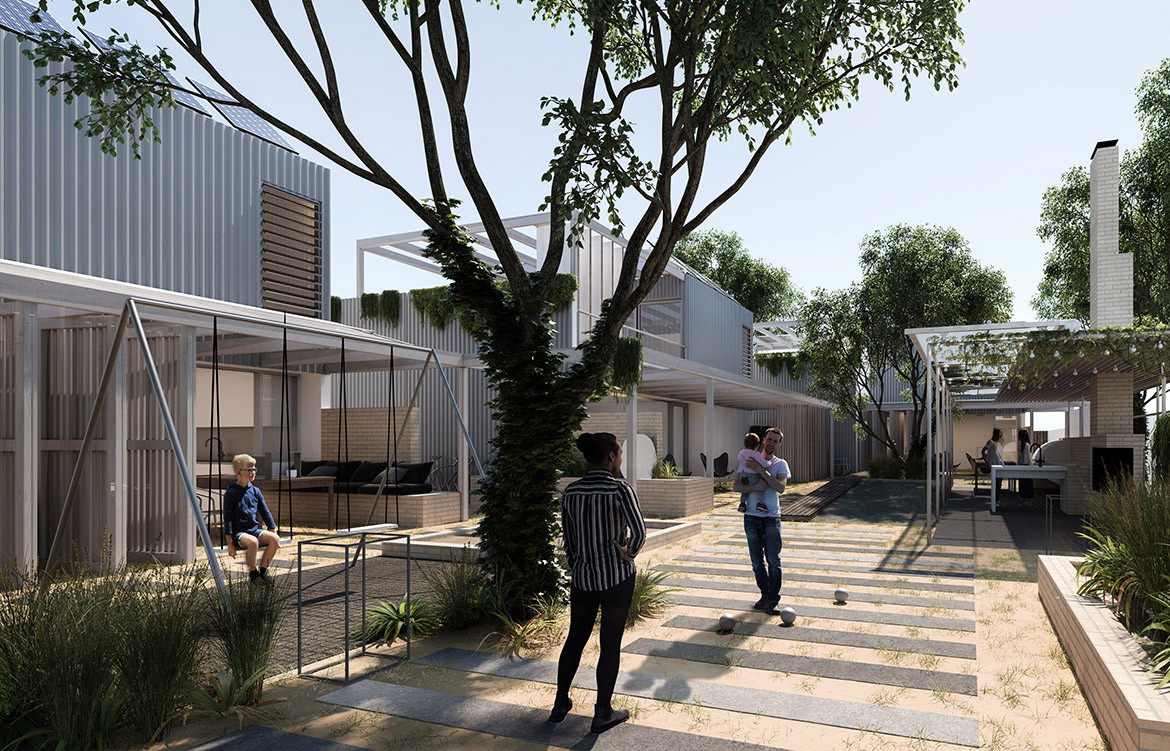
Understanding the significance and new potential for suburban living across Australia, Perth-based architecture studio, Philip Stejskal Architecture (PSA), has explored what the Local Planning Scheme by the City of Fremantle titled ‘The Freo Alternative – Big Thinking about Small Housing’ policy means for the residential suburbs with missing middle housing typologies.
Made possible because of HouseLab’s new digital platform, ConceptSpaces, PSA has generated a vision for the future of urban housing and community living. The theoretical 750 square-metre blocks include three stand-alone dwellings of 120 square-metres each and also incorporates more than 70 per cent of luscious greenery. The three dwellings are organised based around a centralised and easily accessible communal space, with a private garden, first-floor terrace and car park. Considering that space is continuously scarce, this is a rare combination.
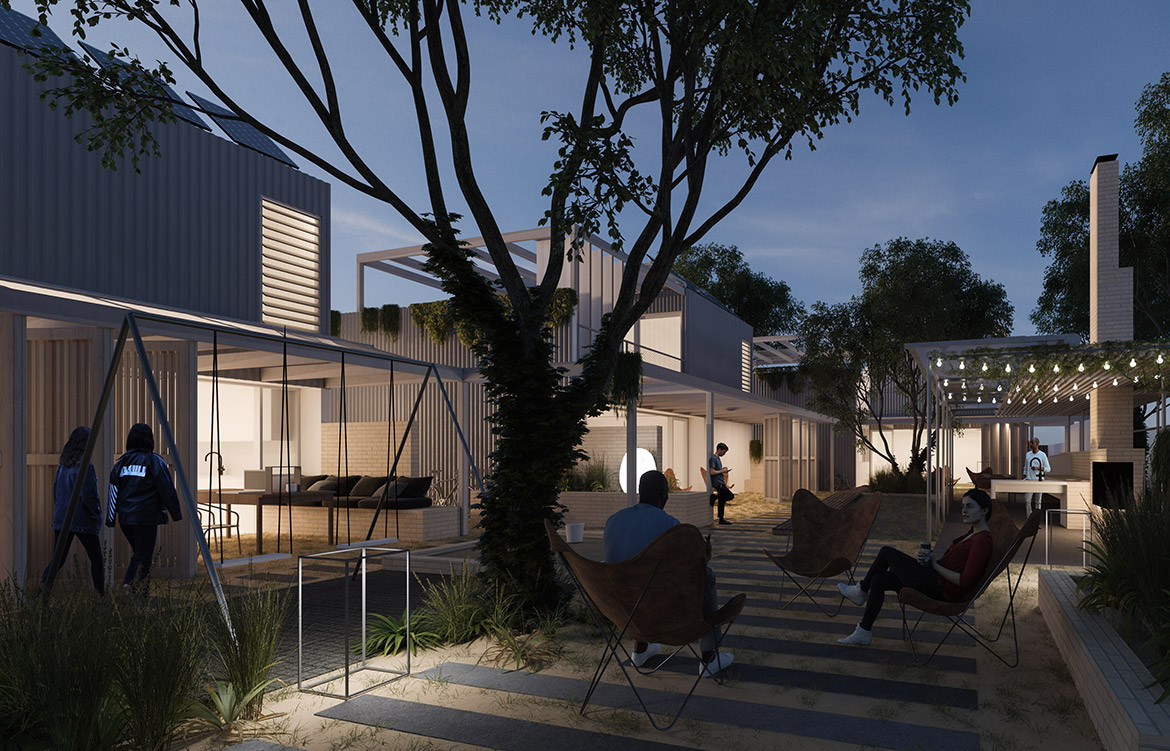
In reference to the Freo Alternative policy, Philip Stejskal, director of his eponymous studio, discusses how offering people choice is a way of introducing them to denser living. This means the consideration of privacy and security, which are both common concerns in traditional apartment living. By addressing these concerns, the hypothetical concept offers residents the feeling of a safe haven.
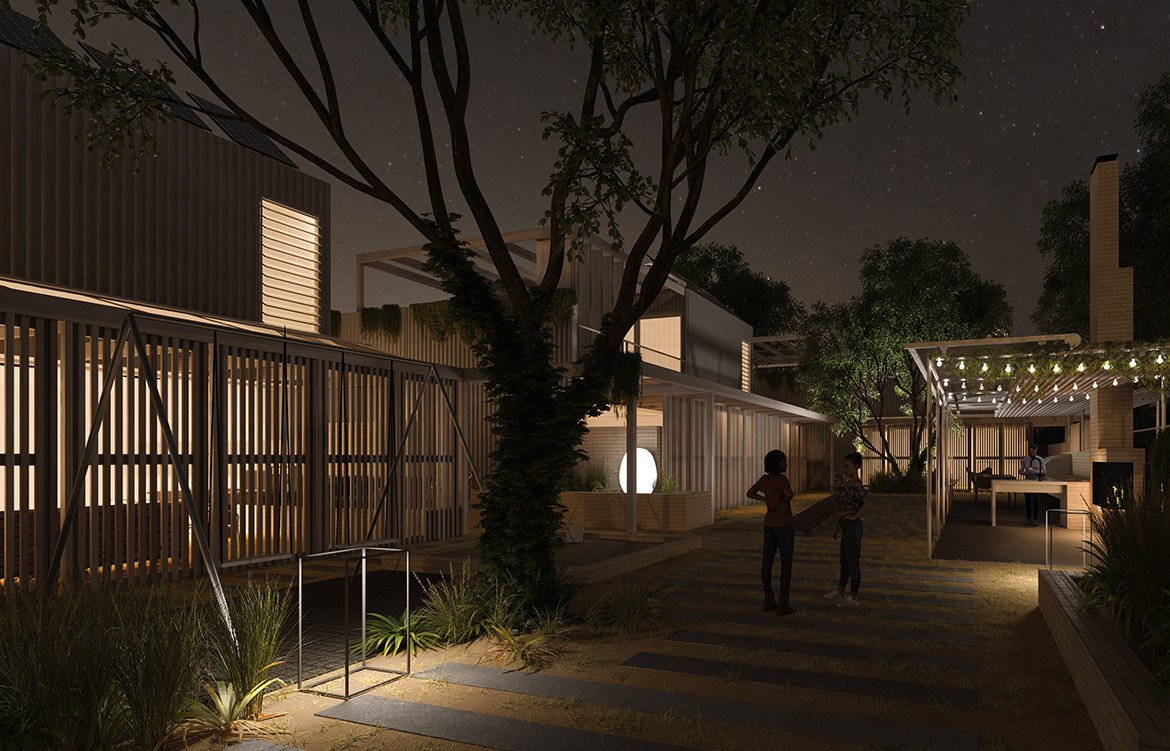
HouseLab co-founder, Marcus Piper explains, “ConceptSpace was created to explore how architectural thinking can inspire other creatives, builders and developers. Especially as governments look for new ways to tackle housing accessibility and urban densification.” Shown through multiple hyper-realistic renders, also inclusive of a three-dimensional fly-through video, the concept emphasises how designing micro-communities can provide the infrastructure necessary for communities to flourish – in a way that still engages the residents own terms.
Find out more about multi-residential design initiatives here. And for more design inspo, sign up for our weekly newsletter.