The home of architecture and design in the Asia-Pacific
Get the latest design news direct to your inbox!

Get the latest design news direct to your inbox!
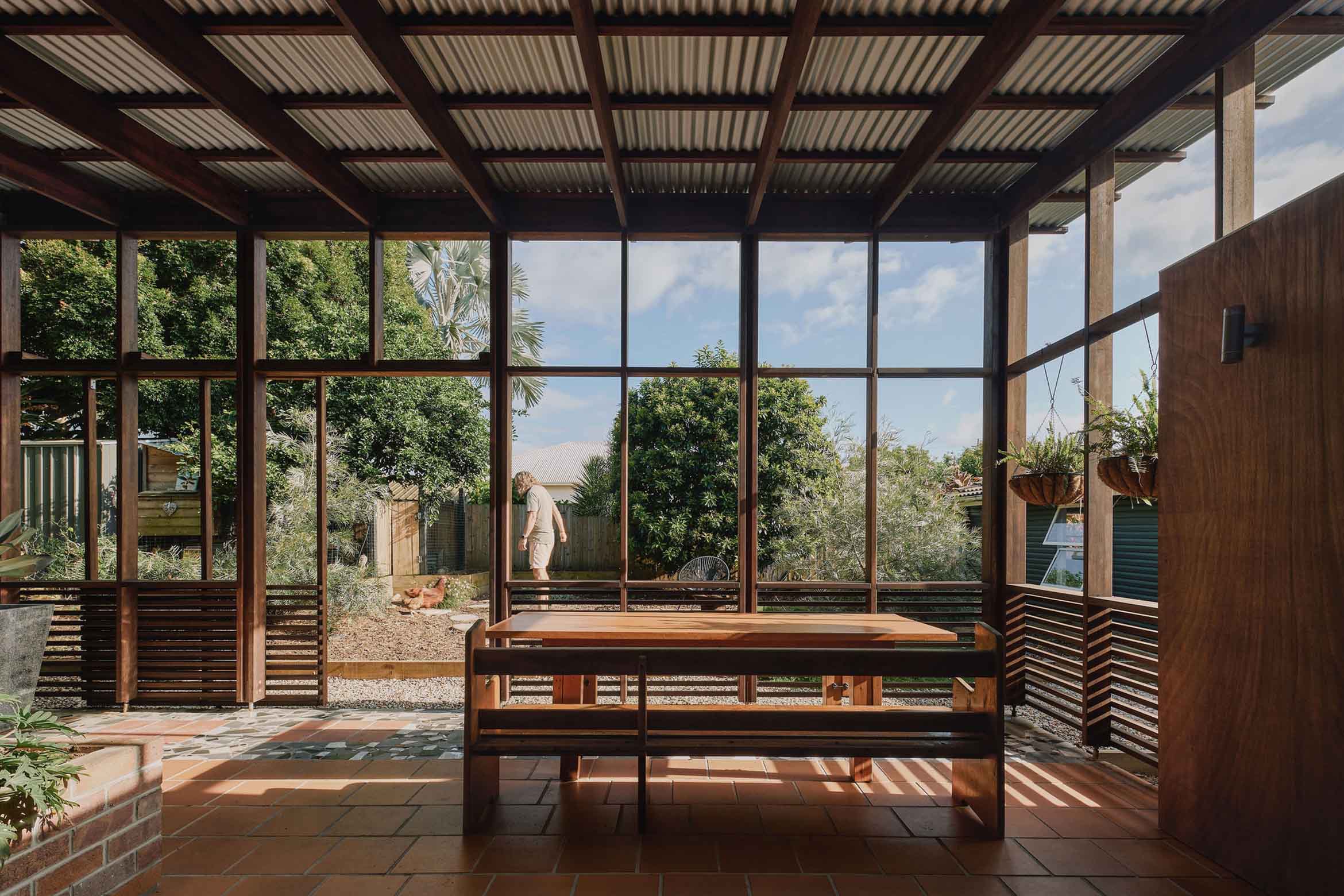
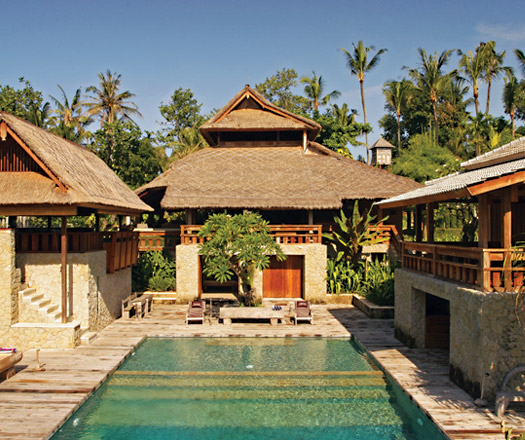
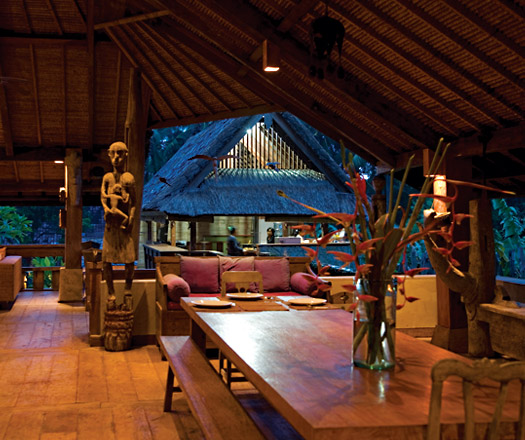
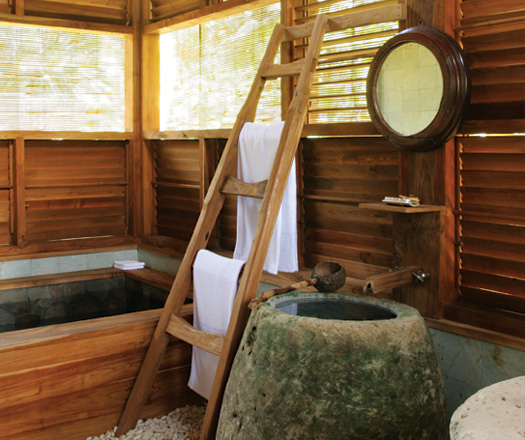
Dare Jennings, founder of surf clothing label, Mambo, loves his traditional Balinese property called Puri Angsa (literally ’house of geese’), a series of pavilions designed by architect, Robert Weir.
November 3rd, 2008
The following is an excerpt from Habitus – living in design. Design hunters can grab a copy from newsagents and bookstores, or you can subscribe online here.
When a friend suggested Dare Jennings see an unusual property for sale in Bali, the founder of the witty surfing accessory label, Mambo, didn’t take long to buy, name and set about re-inventing it as a home for his family. Jane Burton Taylor spoke to him and architect, Robert Weir, about the experience.
Photography by Carby Tuckwell
Jennings, who sold the mega-successful Mambo in 2000 and recently co-founded serious motorcycle shop, Deus Ex Machina, is well-accustomed to a challenge. In fact, given his track record, he seems to thrive on one, particularly when it is hooked up with one of his idiosyncratic passions.
His most recent venture in Bali has been just such an undertaking. It didn’t involve surfing or motorcycles directly. But it was sparked by the same kind of playful conviction he has about these two pastimes.
Sitting in his warehouse-style cafe in Sydney’s Inner West, bounded by glamorous prototypes of motorbikes, Jennings talks about how he was smitten by the Balinese property and spent the next couple of years making it his own.
He was visiting Bali, where he co-owned a house, when a friend suggested he should go and see a place that was for sale just back from the coast, in Pantai Brawa. It was a very unusual proposition.
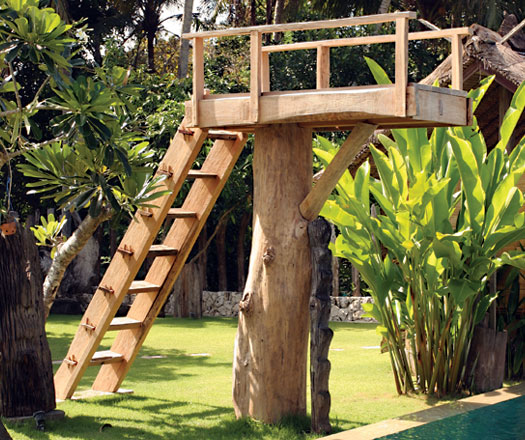
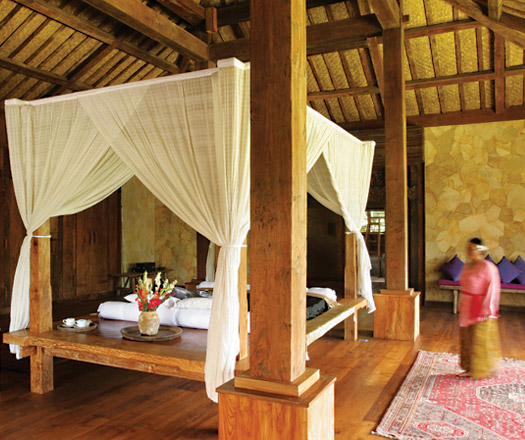
“It was this most beautiful old teak house and the owner had this great sort of art style in the way he built things,” Jennings says. “I thought this is a chance to own a real wood house, made in the traditional way.”
Curiously, it wasn’t just one house that Jennings was buying, but rather a group of them…

INDESIGN is on instagram
Follow @indesignlive
A searchable and comprehensive guide for specifying leading products and their suppliers
Keep up to date with the latest and greatest from our industry BFF's!
The internet never sleeps! Here's the stuff you might have missed