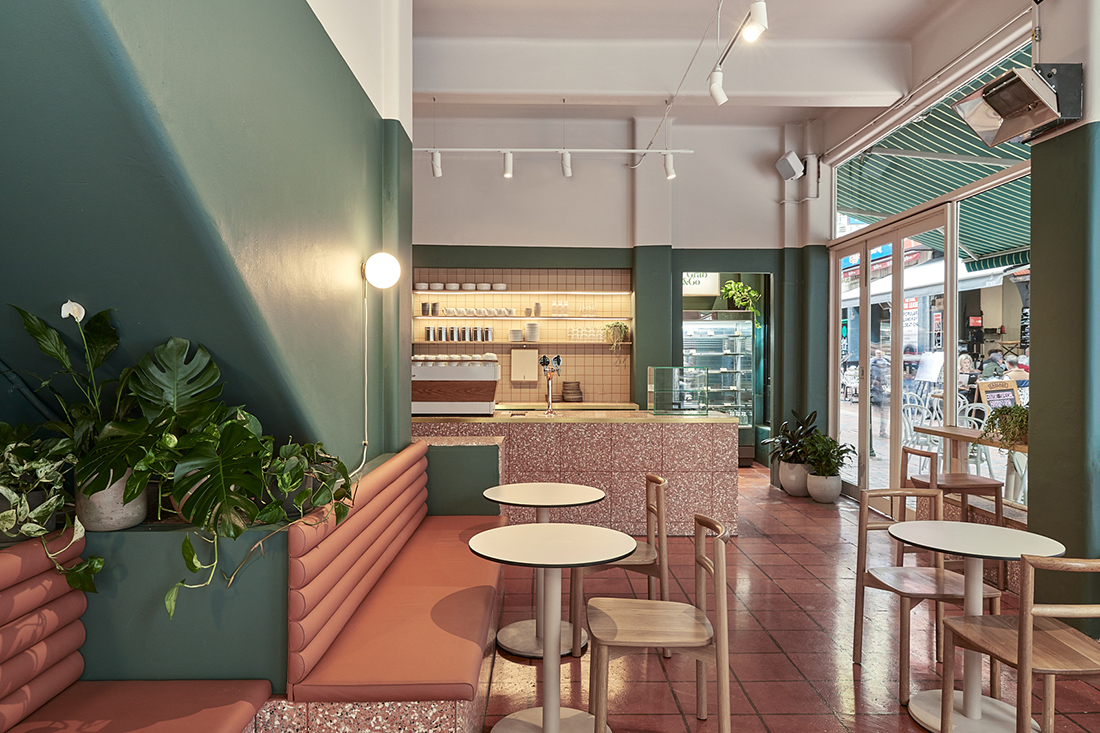
From the founder of Tulip Coffee in Degraves Street, Melbourne, Florence Coffee, designed by CoLAB Design Studio, looks as good as the coffee tastes.
Located on the corner of well-known Hardware Lane in Melbourne’s laneway district, Florence brings its special blends of coffee and a smart, easy menu to an area that is known as a mecca for eating and drinking. Pairing Tulip’s delectable coffee blends with a fresh grab and go menu, Florence is all about finding the simple pleasures amidst the city bustle.


Brought to life by the talented team at Melbourne-based interior design practice, CoLAB Design Studio, Florence Coffee’s interiors are an elegant interpretation of the client’s brand, transposed into the medium of space. The result is a new destination for Melbourne’s caffeine loving community that evokes a fresh take on the city’s vibrant café scene.
The interior palette was conceived during demolition, when the original terracotta paved floor from the 1920s Farrant’s Saddlery store was revealed. This was the inspiration for the interior colours cheme. Florence Coffee presents as a delightful mix of frothy pink leather banquet seating, salmon pink terrazzo floors, cool teal green painted walls, caramel tiled benches and furniture from Australian product designer Ross Didier.
It’s not Florence Italy, it’s better; it’s home-grown Florence Melbourne and it serves excellent coffee.
Photography by Hannah Caldwell


INDESIGN is on instagram
Follow @indesignlive
A searchable and comprehensive guide for specifying leading products and their suppliers
Keep up to date with the latest and greatest from our industry BFF's!
As Woven Image celebrates 40 years, it introduces a new collection developed in collaboration with Australian artist Ben Goss, inspired by his original artwork Where the Kookaburra Sits into a vibrant collection of digitally printed EchoPanel® murals and patterns.
In the second instalment of our performance seating three-parter, we turn to DKO’s Michael Drescher and Jacob Olsen to peek behind Sayl’s confident architectural form and explore the ideas of inclusivity, adaptability and freedom to move as hallmarks of what sitting your best actually means.
Aeron Chair’s new shades, Nightfall and Jasper, arrive with a sense of quiet cohesion – no bells and whistles, no loud technicolour; just two timeless, perfectly versatile near-neutrals. But the new hues aren’t just about colour – and their significance is much more profound than their surface-level subtlety might suggest.
In the last instalment of our three-part performance seating series, Alex Bain from Architectus explains why sitting well shouldn’t feel like sitting at all and explores an unexpected success metric of the hybrid workplace: the grounding power of emotional support.
Suzhou MixC World draws on the city’s historic streets and gardens to create a retail precinct that feels less like a shopping centre and more like an extension of the public realm.
Bean Buro discusses the design of Palatino Hospitality’s Hong Kong workplace, where biophilic design, warm materiality and hospitality principles combine to create a calm retreat within the city.
The internet never sleeps! Here's the stuff you might have missed
Spaceagency Architects complete executive offices for the Prendiville Group through the restoration and conversion of the State Heritage-listed former Fremantle Technical School Annex.
TURNER’s first major UK project brings together more than 400 apartments, retail and communal spaces in a Brentford precinct shaped by view corridors and infrastructure.