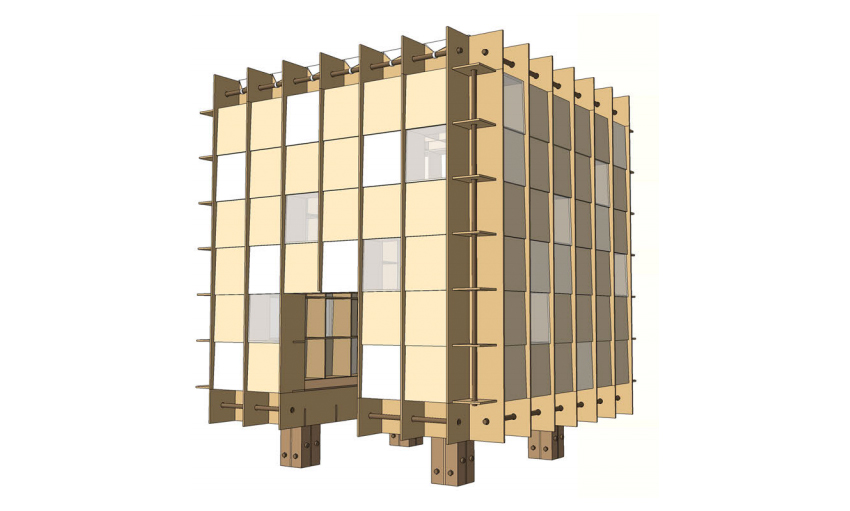
The Emergency Shelter Exhibition, spearheaded by architect Jun Sakaguchi and the Arc Agency, is a charitable initiative which explores architectural solutions to emergency shelters in global disaster-affected locations. Architectural firms BVN Donovan Hill, Geyer, Cox, Conrad Gargett Riddel, Latitude Architects, Nettleton Tribe, SJB, Visionary Design Development, Woods Bagot and Techne Architects will be participating in the exhibition, constructing their own emergency shelters on allocated 5-10 square metre sites at Federation Square.
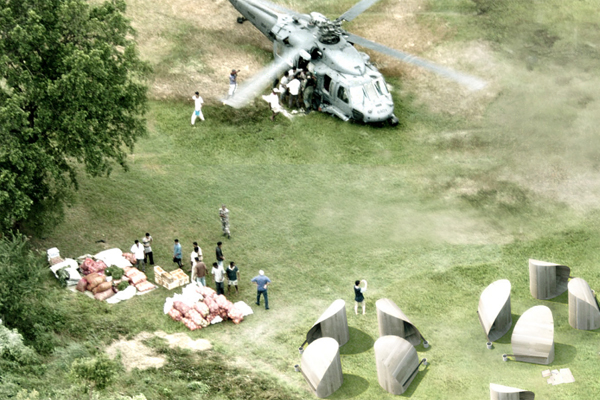
Cox
“We were excited by the opportunity to contribute our professional skills and creativity to this issue,” says Justin Northrop from Techne Architects. “During the process, we became interested in the after effects of a natural disaster and as this exhibition is in Melbourne we considered the nature of a disaster that could occur here. Melbourne can experience minor earthquakes which can lead to a tsunami. Through the effects of climate change, we may also be subject to the effects of rising oceans – or flooding from our river systems – as has occurred throughout regional Victoria recently.”
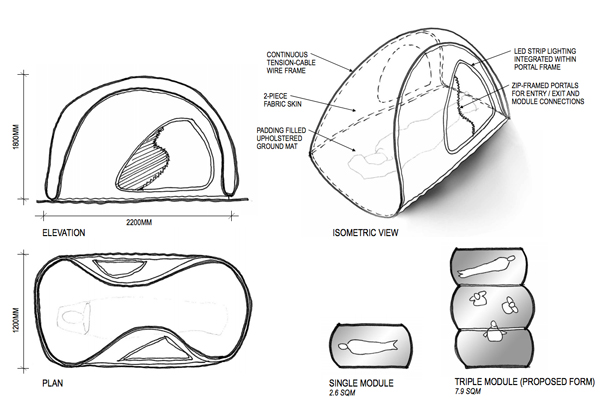
Geyer
The team looked through images of the aftermath of a natural disaster, in particular the Tsunami events of Japan & Indonesia to look at the layers of debris consistently evident in these events. “The available materials – plastic bags, plastic bottles, mattresses, roof sheeting, cardboard, tree branches and significant amounts of dirt moved around – can be really devastating to people & infrastructure,” adds Northrop. “We considered how we could then turn this waste & destruction into a building block that is simple, versatile and doesn’t need to be over-thought.”
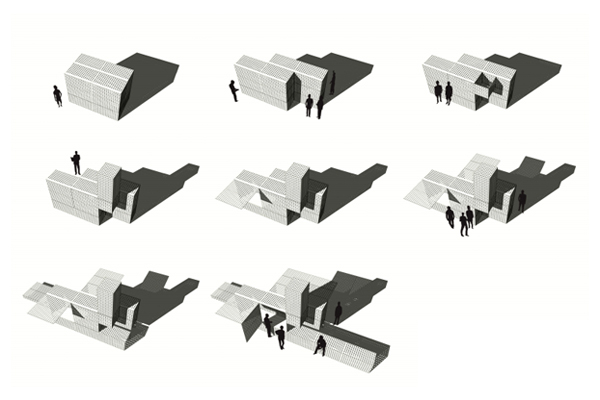
SJB
The team had already been researching ‘earth-bag’ houses as a cost effective, low-embodied energy response to constructing dwellings. “Typically, sandbags are used to keep flooding at bay and we looked at the option of using the plastic bag waste and filling them up with sand or dirt to become a building block for walls,” explains Northrop. “The dirt will compact well, provide good thermal mass, and could also facilitate growing plants, in particular crop plants. The plastic bags provide waterproofing for both the walls and the roof structure and contain the dirt as a modular block. With this low tech solution, anyone can build a shelter without the need for specialist tools or knowledge.”
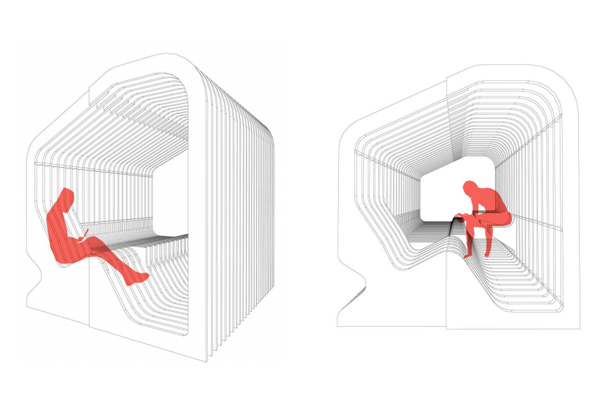
BVN Donovan Hill
As a result Techne’s Dirtbag has been envisioned as a building block for creating a neighbourhood of shelters. “While the shelter is capable of standing alone, when joined together with other shelters it opens up possibilities for communal courtyards and transitions between public and private spaces, creating a sense of community and a modest and temporary shelter from the elements,” he adds.
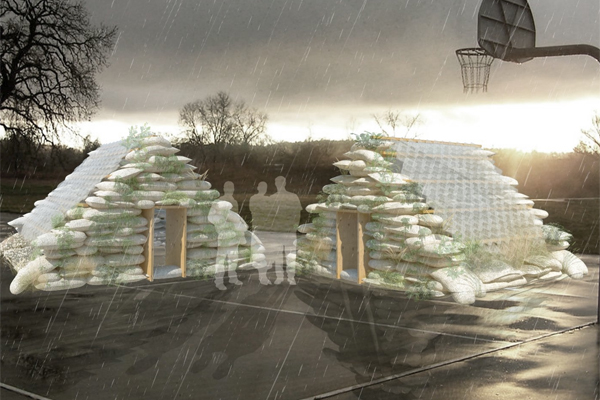
Techne
Visit Federation Square on the 1st of May to see construction of the shelters and between 2-5 May to view the complete structures.
Emergency Shelter Australia
Hero Image: Conrad Gargett Riddel
Copyright: Design features and intellectual property from all submissions will belong to each participant. Jun Sakaguchi and The Arc Agency have the right to publish the exhibition.