Almost any Melburnian, probably dressed head-to-toe in black, would attest to their hometown being the nation’s true fashion capital. The city’s sartorial cred’ boomed late last year, when historically fashion-forward retailer David Jones farewelled its Sydney offices to join Country Road Group in a new shared working environment, developed by Gray Puksand.
“For us, it was really quite an exciting opportunity to create a new culture for six brands that needed to come together and cohabit, as well as take a fresh look at what a contemporary Australian retail headquarters might be,” says Heidi Smith, partner and national interior design lead at Gray Puksand in Melbourne.
As part of their project research, the design team went abroad, gaining valuable insight on world-class fashion houses across Europe. Of particular note were the head offices of Scotch & Soda and G-Star in Amsterdam, where a singular vision for each brand’s clothing and retail stores influenced the way their workspace was expressed. “You can really trace the brand DNA from the product in store, right through to the look and feel of their office, and it’s something that builds solidarity,” says Smith. “We brought all of those learnings back to this project, to see how we might create a design story that could unite them.”
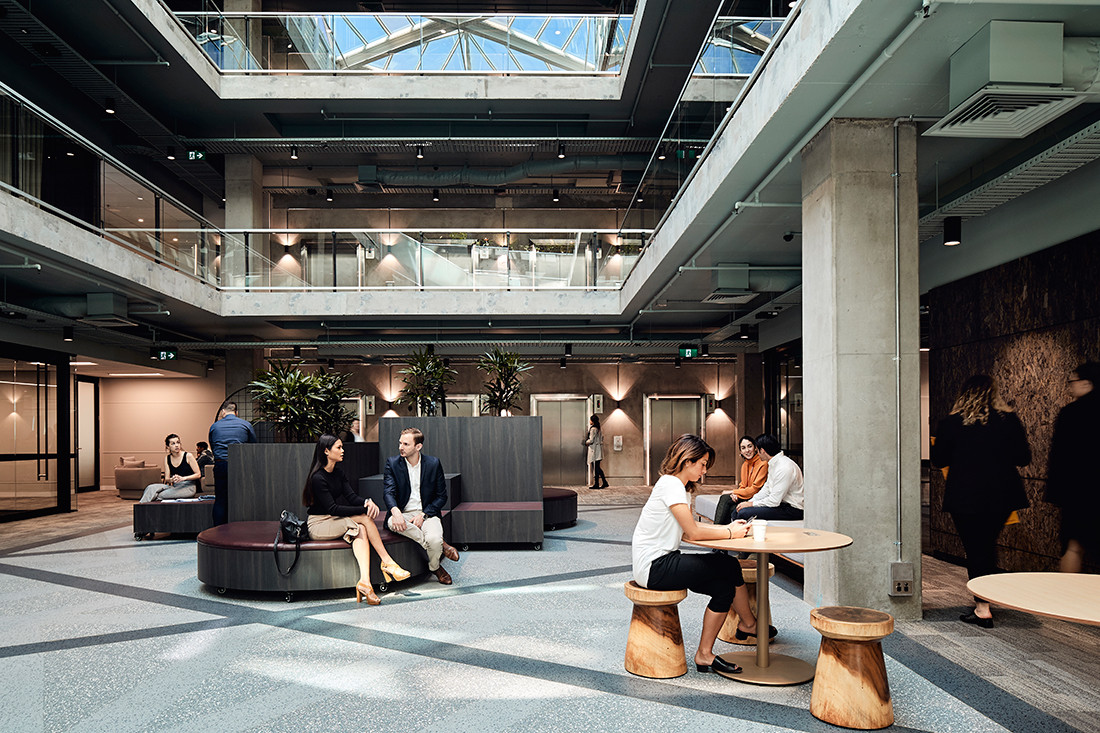
Photo by Peter Bennetts.
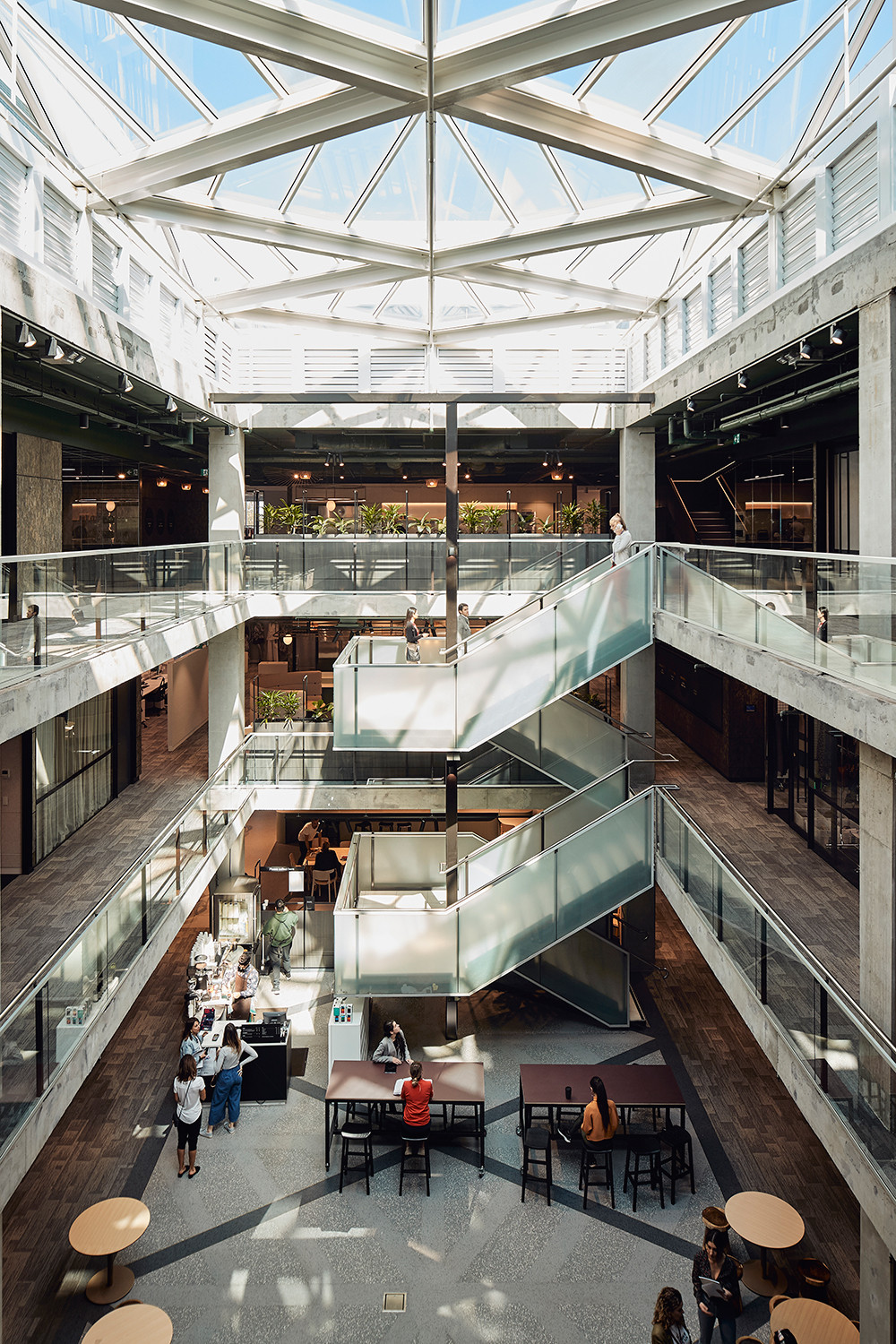
And so, ‘the home of Australian icons’ was conceived. Spanning two buildings and 25,000 square metres, the brief required private quarters for each brand. With six distinct groups to accommodate – David Jones, Country Road, Mimco, Politix, Trenery and Witchery – division was crucial in protecting IP, but it was equally important to have public areas where they could put their work on show once ready. Gray Puksand addressed this with conventions native to the retail experience including signage, flexible display platforms, and hanging space. Light-filled atriums, which form the heart and hub of each of the two buildings, also provide ample space for exhibitions at the ground floor.

Photo by Peter Bennetts.
“All the furniture there is moveable, so they can hold presentations, test visual merchandising for the department stores, or even run a catwalk,” says Smith. Here, staff line the multi-level balconies for a view to the dynamic space below. “It’s a cool way for each brand to show off their latest ideas and get broader feedback from people in other departments.”
.
“For us, it was really quite an exciting opportunity to create a new culture for six brands that needed to come together and cohabit.” – Heidi Smith
.
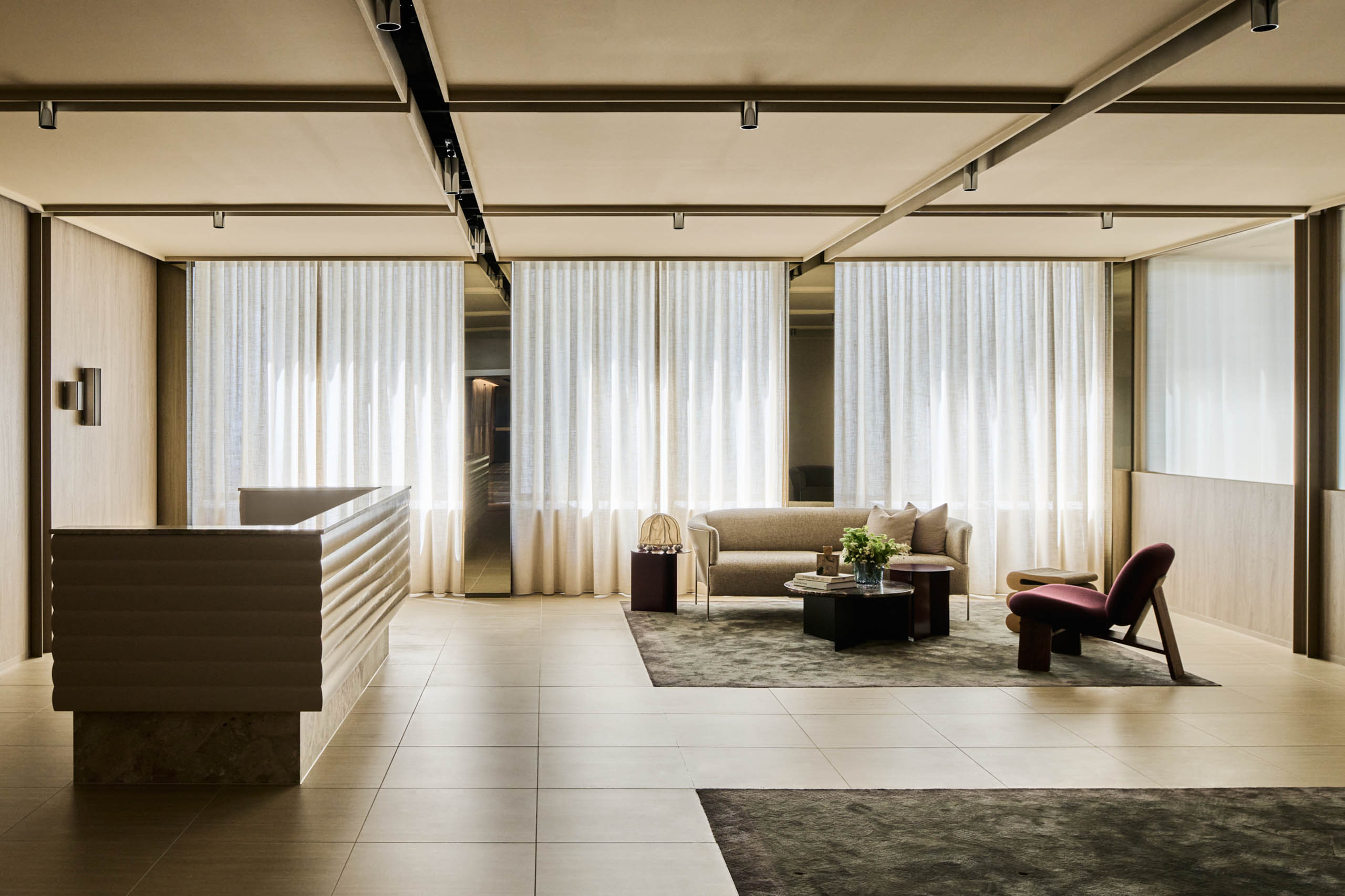
Gray Puksand also drew inspiration from the communal hospitality focus that they had witnessed in effect at the Scotch & Soda and G-Star offices, where staff are encouraged to eat lunch together, and inviting social spaces enable communities to form organically. Lounge areas exude the casual glamour of a hotel lobby, while sophisticated breakout spaces are inspired by bars and restaurants in Melbourne. Of course, a home for Australian icons must be furnished with local product, and the fit-out is peppered with key pieces by Australian designers Adam Goodrum, Tom Fereday, and Sydney-based furniture group, Project 82.

Photo by Tatjana Plitt.
Given David Jones’ gourmet providore status, carefully considered food and beverage outlets at the core of each atrium form an integral part of the design. One hosts a coffee cart service, a little café where informal meetings take place, and the other replicates the beloved David Jones Food Hall, where staff can buy pre-prepared meals and groceries. “One of the most iconic elements of ‘DJs’ is its fantastic food hall, so we took elements of that and brought it right into the office,” says Smith. “We wanted to build a place where anyone could connect over food and drink, and become part of the community. They’re like proper town squares – a mini hospitality and retail precinct.”

Photo by Peter Bennetts.
David Jones’ culinary centre is situated here too, where a test kitchen develops new food for tastings, so staff can have their say on new products destined for public sale. Beyond the obvious social benefits, this intentional integration of hospitality and retail throughout the workspace encourages desk-based staff to keep the end user’s shopping and dining experience front of mind, helping to inform strategies implemented in-store.
“Having a village of brands all together may have been a bit of a mindset change, but now that they’ve settled in, it’s been really successful,” says Smith. “Each group feels at home in their own brand neighbourhood, and people naturally intersect outside of that as well. Across the board, it’s a totally activated community.”
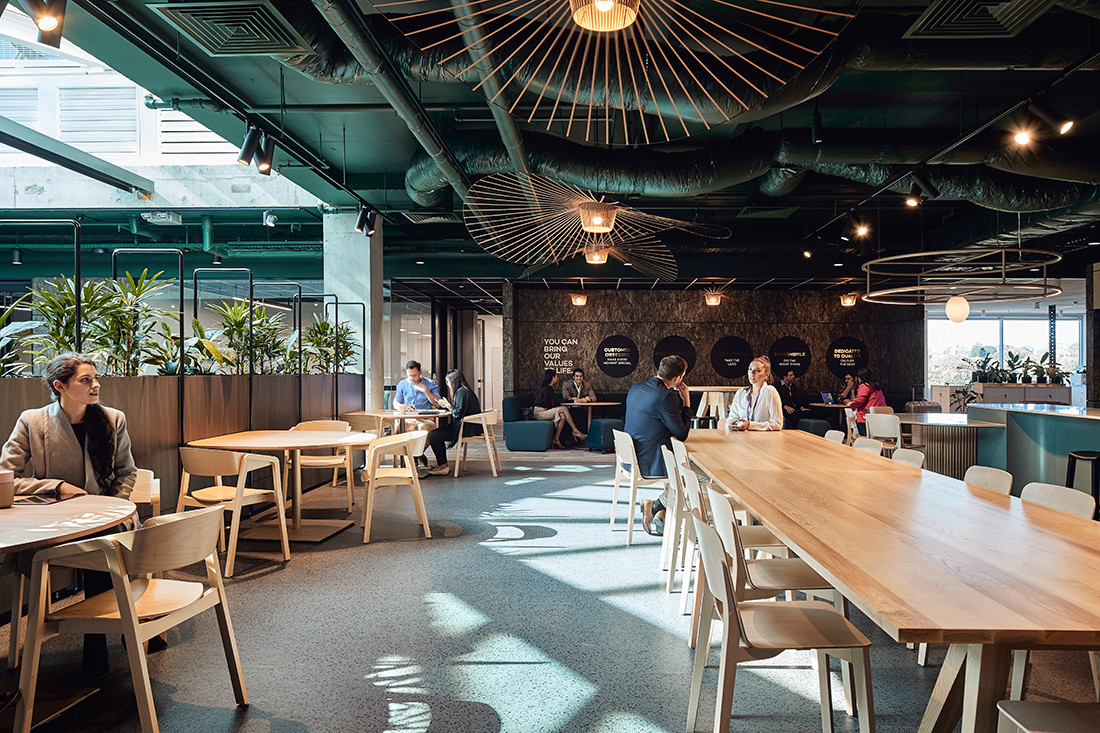
Photo by Peter Bennetts.


Photography by Peter Bennetts and Tatjana Plitt.
David Jones and Country Road Group was Shortlisted for the 2019 INDE.Awards’ The Work Space category, proudly partnered by Colebrook Bosson Saunders, and originally appeared in issue #78 of Indesign magazine – the ‘Customer Experience’ issue.