The home of architecture and design in the Asia-Pacific
Get the latest design news direct to your inbox!

Get the latest design news direct to your inbox!
Transcending the boundaries of the physical world, the global furniture manufacturer’s Virtual Showroom takes clients and designers on a journey through the ‘ideal workspace’.

The world is a different place than it was at the start of 2020. Pandemic-related lockdowns and social distancing rules have forced manufacturers to adapt to a totally online world. Without the benefit of traditional brick and mortar showrooms, new challenges have arisen in trying to have meaningful conversations between clients and designers to understand their needs and desires, especially in the ever-evolving field of workplace design.
With their Virtual Showroom, office furniture giant Haworth have created a digital ecosystem in which they can continue to engage with and inspire clients and designers at large. Comprising two virtual destinations – the first a virtual showroom, which includes 116 work settings representing a variety of workstyles, and the second a virtual product gallery – the Virtual Showroom brings the ideal workplace to life, even if you are not physically located in the space.
Designed at over 5,000m2 above a ground floor and two mezzanines, Haworth’s Virtual Showroom showcases workplace settings and furniture solutions that would not typically be possible to put in a physical location. Presented as the ‘ideal’ office chosen for its natural light, high ceilings, optimal views and overall sense of wellbeing, the Virtual Showroom is organised around the settings and workstyles defined in the University of Michigan’s Ross School of Business’ Competing Values Framework, which can be categorised into four categories: Create, Compete, Control and Collaborate.
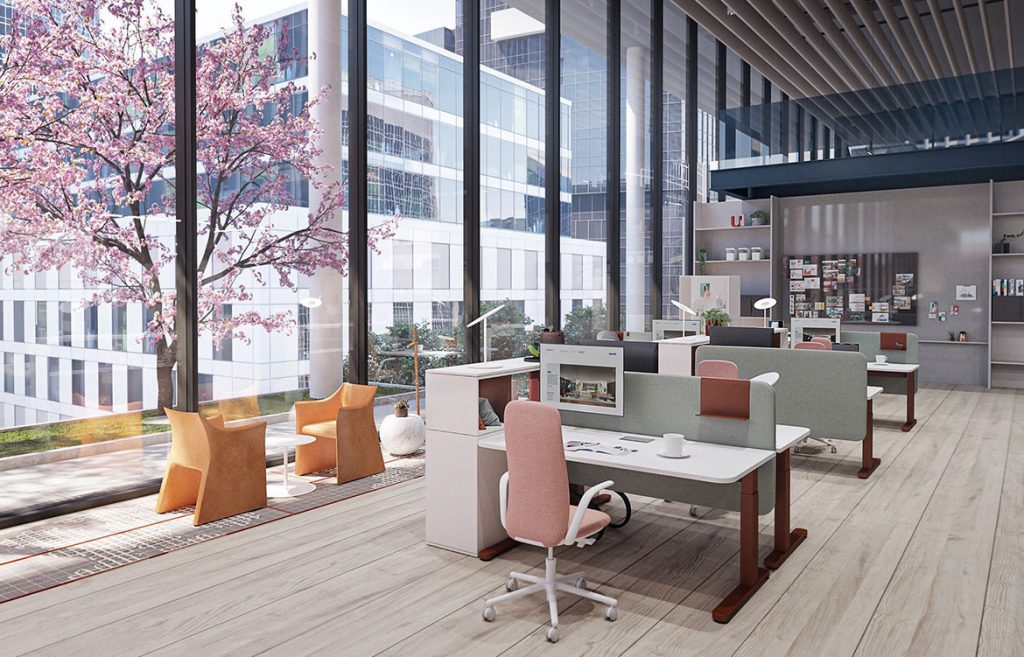
The Competing Values Framework informs Haworth’s overarching goal to align people, workstyles and space for optimal performance, within the constraints of safety in a post-pandemic world. This philosophy permeates the Virtual Showroom’s hypothetical workspace in which visitors can walk through separate areas that promote collaboration, focus and reflection including meeting rooms, lounges, and restorative spaces, all incorporating Haworth’s award-winning furniture collection.
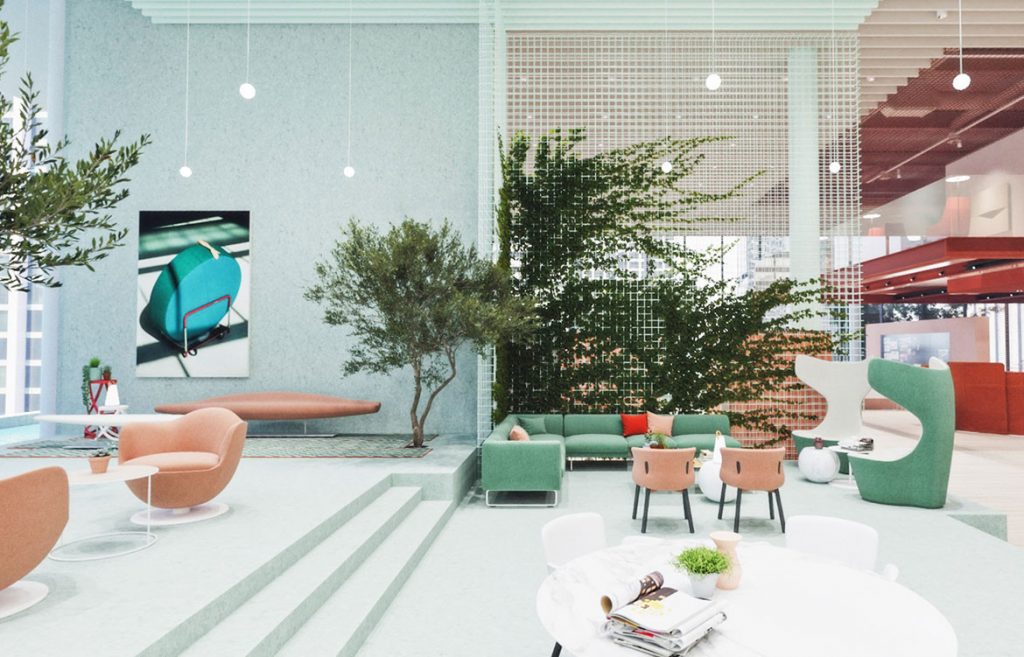
After grabbing a virtual coffee in the cafe complete with Jasper Morrison’s Tate chairs and Patricia Urquiola’s Immerse table, designers can explore an array of pieces in the virtual showroom. For an even more immersive experience, designers are able to browse the virtual product gallery at their desired pace, pick an item and configure it to their liking. Featuring the company’s most popular offerings from Asia Pacific and Europe, the design of the gallery includes a choice of products, colours and layouts that reflect the overall market. After customising the products, designers can easily download the working files from the product gallery in multiple formats.

Together with Haworth Collection partners, the Virtual Showroom illustrates functionality, adaptability, materiality and sustainability, enabling clients to evaluate options suited to their own projects. Virtualisation is not a new concept for Haworth, a company known for leveraging technology with its design teams across the globe, but also a concept it is now fully embracing.
What began as a reaction to the limited access to physical environments, the Virtual Showroom is now pushing workplace design into a new era. While virtual design has been available for a long time as a tool to help clients visualise and select concepts before heading into full production, the pandemic has highlighted the value of a unique digital experience that bridges the gap between the synthetic and reality.
Visitors can explore Haworth’s Virtual Showroom on their own, or book a guided tour.
INDESIGN is on instagram
Follow @indesignlive
A searchable and comprehensive guide for specifying leading products and their suppliers
Keep up to date with the latest and greatest from our industry BFF's!
The internet never sleeps! Here's the stuff you might have missed