The home of architecture and design in the Asia-Pacific
Get the latest design news direct to your inbox!

Get the latest design news direct to your inbox!
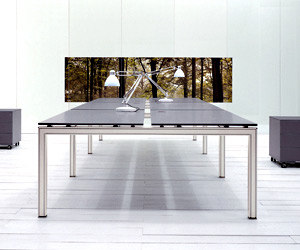
Operating throughout Australia and the South Pacific, Australian company Bevisco is best known for its workstation systems and complete office solutions.
November 21st, 2008
Established over 15 years ago, the company offers a comprehensive package of services from design through to manufacturing, including the installation of workstations, office furniture, storage systems and custom joinery. The Bevisco collection is available in a range of ergonomic styles and options which are designed and manufactured locally. Bevisco Commercial Interiors has held consecutive NSW State Government Contracts since the early 1990’s, with 6 of its products listed on the current NSW State Contract. The company is a Federally Endorsed Supplier and all systems are AFRDI approved.
Product Range
System furniture, executive furniture, loose furniture, meeting and conference furniture, storage and accessories.
Major Brands
FreeWay linear system, Exe panel system, Plus 3 post and rail system, Ozone desking system and Metzo height adjustable system.
Application
Commercial.
Sustainability
Bevisco Commercial Interiors operates under an Environmental Management System. BCI’s main motivation in the development of its policy comes from the desire to play a part in reducing global resource consumption, pollution and wastage. It is Bevisco Commercial Interior’s aim to not only comply with environmental guidelines but to continually strive to do more. Being an end-to-end manufacturer, Bevisco is committed to sourcing materials that minimise environmental impact at all levels. The company also actively promotes environmentally friendly upholstery fabrics and timber products.
Major Projects
Perpetual Trustees, NSW; Google Australia, NSW; and Allianz, Australia wide.
Specialised Services
Bevisco Commercial Interiors provides in-house design, engineering and custom joinery services.
Lead Time
4–6 weeks.

INDESIGN is on instagram
Follow @indesignlive
A searchable and comprehensive guide for specifying leading products and their suppliers
Keep up to date with the latest and greatest from our industry BFF's!
DECORATION + DESIGN Sydney is an exclusive Trade Fair for the Australian soft furnishing and interior products industries.
The internet never sleeps! Here's the stuff you might have missed