The home of architecture and design in the Asia-Pacific
Get the latest design news direct to your inbox!

Get the latest design news direct to your inbox!
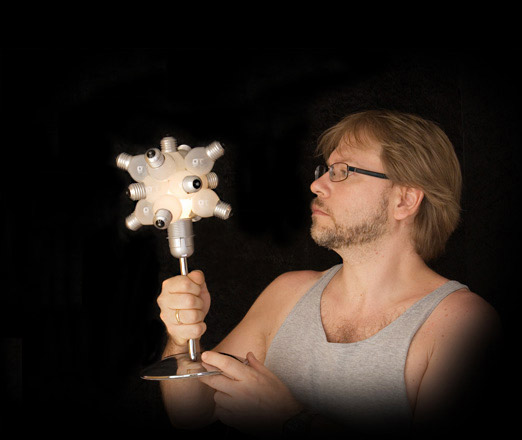
Walter Rauchenwald is a trained cabinetmaker, but has taken an eclectic career path to the design profession.
September 10th, 2009
Austrian-born Walter Rauchenwald began his professional life as a cheese maker after completing a cheese and butter making apprenticeship. From there he (naturally) took on a job as a car detailer, followed closely by a hot dog vendor, a surgical assistant in a hospital, before finally training as a cabinetmaker at the SFZ Fohnsdorf Education Centre in Austria.
However, when he decided to pack his bags and immigrate to Australia in 2002, he decided it was time to chase his passion for furniture design. Rauchenwald’s designs are much like his career path – varied and interesting.
“Some of my products are small series, some of them are one offs… style-wise I’m not really sure where I should put myself,” he says.
With designs ranging from contemporary tables and chairs to sideboards with gothic detailing, it is difficult define or categorise his designs. Rauchenwald represents design by compulsion, he designs what pops into his head, knowing full well that many of his designs will never leave his own home.
“At the end of the day, first I design for myself,” he explains. “I want to be approachable, I want to be there when people see my stuff… it just gives me the most satisfaction in the world to be honest.”
Rauchenwald was last year part of the Springboard Young Entrepreneurship program – involving a series of workshops and one-on-one mentoring aimed at developing business strategies for young designers – and was part of SPACE Furniture Brisbane’s ‘One’ Exhibition.
“There’s a great range of support out there. It’s unbelievable. Of course you have to walk half way, but I think there’s even more support here than in Europe.”
Rauchenwald makes a living from his interior design practice, Roomdesign Rauchenwald, but has a deep passion for furniture design.
“I’m just trying so hard to go an unusual way, I don’t want to be the same as everyone, I want to walk a new track and be followed… I’ve learnt to think big, live big and do it big!”
INDESIGN is on instagram
Follow @indesignlive
A searchable and comprehensive guide for specifying leading products and their suppliers
Keep up to date with the latest and greatest from our industry BFF's!
The internet never sleeps! Here's the stuff you might have missed