The home of architecture and design in the Asia-Pacific
Get the latest design news direct to your inbox!

Get the latest design news direct to your inbox!
Adelaide-based design duo Daniel Emma took out the top prize at the Bombay Sapphire Design Discovery Awards on Wednesday 15 December.

December 16th, 2010
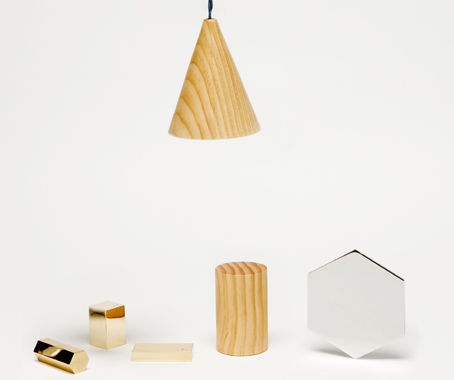
Daniel To and Emma Aiston, who entered the competition with their Basics Collection of paperweight, pendant light, paperclip holder and mirror, will receive a $30 000 cash prize and a trip to Milan to attend the Salone del Mobile international design fair in 2011.
Judges commended the duo for being the “complete package – displaying the proactive independence of spirit, brand awareness, great interaction with end user and reliance on local production.”
The Basics Collection arose out of a collection of resin desk objects, called Solids, which the duo made last year.
“When it came to designing this year’s range, we looked at designing around production rather than designing a prototype that will never become something,” said Aiston.
The collection is full of beautifully crafted pieces made of solid materials that can be repolished, reworked and kept forever.
To describes their creations as objects that are “just nice – simple, well thought-out everyday things with a little surprise.”
Importantly, Daniel Emma products are all manufactured locally in South Australia.

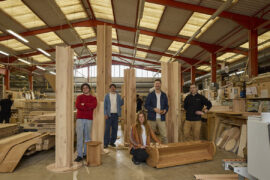
Daniel To and Emma Aiston with competition judge Neale Whitaker
Next year will see more big things for Daniel Emma, with exciting new projects on the cards including work with an Australian collective group called The Other Hemisphere.
The duo also hopes to collaborate with Adelaide’s Jam Factory, a key Australian manufacturer of Australian design.
“It will be nice to be able to make something with a reputable Adelaide studio,” says Aiston. “We hope to work with them in some shape or form to create some new things.”
Daniel Emma
daniel-emma.com
INDESIGN is on instagram
Follow @indesignlive
A searchable and comprehensive guide for specifying leading products and their suppliers
Keep up to date with the latest and greatest from our industry BFF's!
The internet never sleeps! Here's the stuff you might have missed