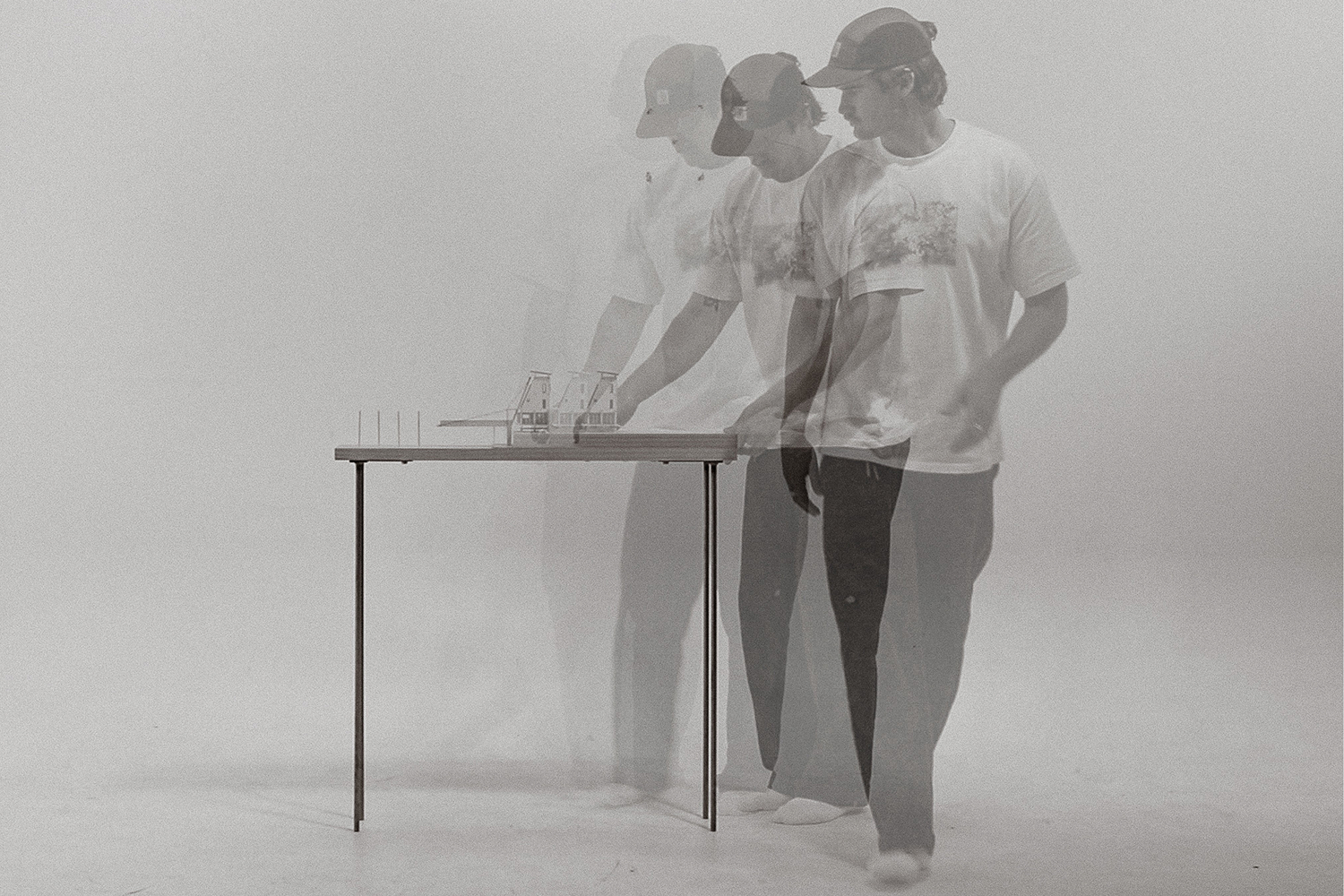
“We started working together because we were friends. Fifteen years later we are still friends – this is our greatest achievement,” this statement nicely sums up the humility of the sentiment behind BIG-GAME.
Elric Petit, Grégoire Jeanmonod, and Augustin Scott de Martinville may hail from diverse walks in life (Elric is Belgian; Grégoire, Swiss; and Augustin, French-Swiss raised in Beijing, Hong Kong and Paris) but eventually – by fate or chance – a shared design pursuit merged their paths into one. The trio met while studying industrial design at Écal (a.k.a. University of Art and Design Lausanne, Switzerland) – where they now each entertain teaching gigs on the side – and clearly, they hit it off. Classmates became friends; friends became collaborators; collaborators became co-founders.

From the get-go, BIG-GAME’s intention has been clear-cut: to design simple, practical, and affordable objects for everyday life. But in order to get into the design for everyday use game, the trio focussed first on conquering the exhibition space. Using Salone del Mobile as a springboard, BIG-GAME’s first products were designed for the purpose of capturing the attention of those who could materialise their vision.
The strategy paid off. BIG-GAME quickly earned itself a name, not to mention a prized place in the Museum of Modern Art’s permanent collection, thanks to early pieces such as the BOLD chair designed for Moustache. The real win however was the relationships with some of the most important producers in the international design scene including the likes of Ikea, Hay and Muuto.

Since its inception in 2004, BIG-GAME has worked with household product labels at every scale. “We have designed cups and glasses for Nespresso, flatware for Alessi, cooking knives for Opinel, shelving for Ikea, tables and chairs for Karimoku,” BIG-GAME shares, dropping just a few of the big names. Under no such pretence that bigger equals better, the studio’s portfolio is not without its fair share of collaborations with more discreet brand names.
Namely, there’s the porcelain coffee makers, pots and kettles designed for 2016/ Arita and the bath toys made from recycled cork designed for Amorium – that’s just to mention the objects meant for use in the kitchen or bathroom.
When it comes to designing such products, two considerations are front of mind for BIG-GAME: firstly, that the design respects the DNA of the brand it belongs to; and secondly, comfort is key. “From sitting on a chair to holding a cooking knife or putting a spoon in the mouth, our goal is to design products that are as comfortable as possible,” says the trio.

Above and beyond the intricacies of the interface between person and product, BIG-GAME believes that the real challenge faced by designers today lives in the relationship between planet, production, and product.
“It is an exciting time for designers,” the studio references the collective conscience’s growing sense of responsibility toward the environment as an ever-present, all-powerful force. “All the projects we work on at the moment bear an aspect of improving our carbon footprint… There is more interest in transparency; how things are made; what impact they have when they are used; when they are produced,” Elric, Grégoire, and Augustin stress the need for designers to take more responsibility for the environmental impact of production and consumerism overall.
This sense of responsibility to the environment plays a big part in BIG-GAME’s game plan, at least for the foreseeable future, with the studio focusing its efforts on finding ways to embellish the everyday lives of people, while minimising the impact on the planet.