The home of architecture and design in the Asia-Pacific
Get the latest design news direct to your inbox!

Get the latest design news direct to your inbox!
Two Australian architecture firms awarded at the World Architecture Festival.
November 11th, 2009
A disappearing sports centre and a Klein Bottle-inspired beach house have been named as award winners at the prestigious World Architecture Festival Awards this year.
Making this year’s awards more memorable than ever were the Australian architects who designed the two entries, Allan Jack + Cottier and McBride Charles Ryan.
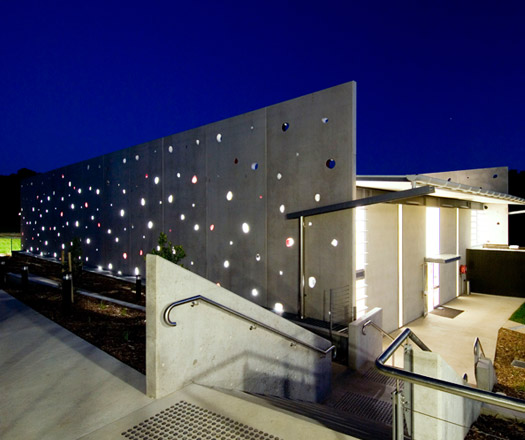
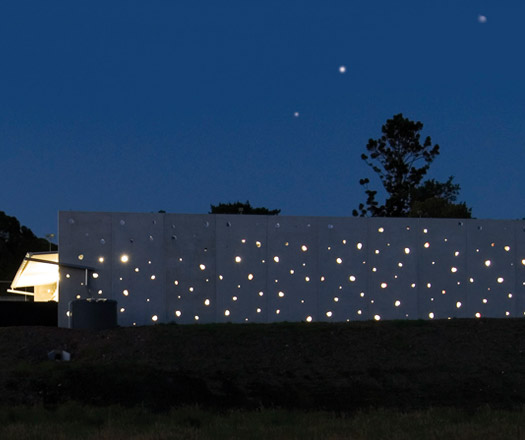
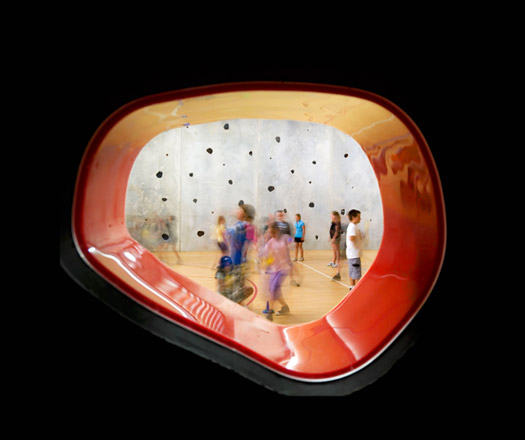
The Berry Sports Hall (pictured here), designed by Allan Jack + Cottier, is a sustainable multi-purpose hall for children’s sports activities, combining simplicity with delightful creative flare.
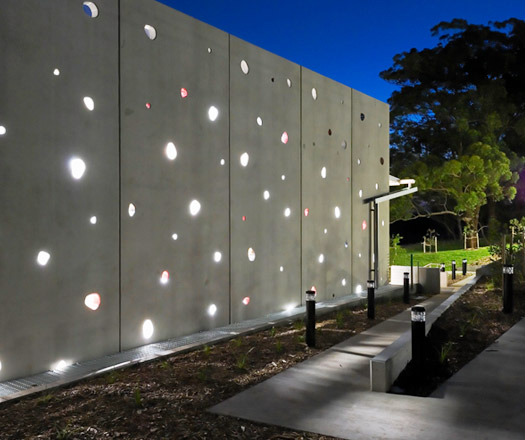
The hall is designed with two long sides of pre-cast concrete panels, each pierced by 500 shards of glass in amoeba-shaped windows.
This allows natural light to flood inside during the day and interior lights to shine out at night, an effect which simulates a starry night sky, so that the building effectively disappears at night.
Inspired by the long-stretching Australian sky, the hall tapped in to the theme of this year’s festival which was “less is more”, urging designers to get more creative alongside the costs.
Designed by McBride Charles Ryan, the Klein Bottle House is a distorted shape encompassing many edges and entry points.
The designers were attracted to the idea of the origami version of the Klein Bottle (a mathematical object), and created an inspired design out of concrete sheet and metal frame.
The floor, wall and ceiling are merged from the inside and outside by complex surfaces, making the building a unique rendition and reflection of our technological age.
The World Architecture Festival was held in Barcelona, Spain, 4 – 6 November, with 11 Australians shortlisted for the Festival Awards, out of 800 entrants from 63 countries.
World Architecture Festival
worldarchitecturefestival.com
Allan Jack + Cottier
architectsajc.com
McBride Charles Ryan
mcbridecharlesryan.com.au


INDESIGN is on instagram
Follow @indesignlive
A searchable and comprehensive guide for specifying leading products and their suppliers
Keep up to date with the latest and greatest from our industry BFF's!
The internet never sleeps! Here's the stuff you might have missed