The home of architecture and design in the Asia-Pacific
Get the latest design news direct to your inbox!

Get the latest design news direct to your inbox!
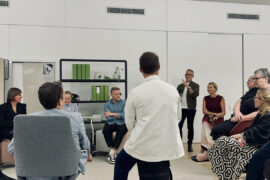
Recorded during FRONT, this seminar brings together a band of experts to discuss the ways in which workplace strategy, and its consultants, can and should work more closely with clients and designers – all for a better outcome for the end user.
All throughout FRONT, which took place at Carriageworks in August, we opened up the conversation around the big changes happening right across the commercial design sectors.
For this seminar focused on strategy a diverse panel came together including Karen Primmer of Calder Consultants, Kirsten Brown of Herman Miller, Richard Francis-Jones of fjmt and James Calder of Calder Consultant moderated and led the session.
It was a fascinating insight into the how projects need to be results-driven and how design and strategy can achieve that together. Don’t have time to listen in for an hour?
Here are the main points in a nutshell…

(L-R) Karen Primmer, Richard Francis-Jones, Kristen Brown and James Calder.
WeWork is now the largest lessor of space and its flexibility is what makes it so viable. As corporations seek flexibility, they are opting for alternative models that don’t require them to take out long-term, fixed leases.
How can design help workplaces be more flexible in increasingly inventive ways – furniture that can be demounted and taken to a new site? Could furniture be leased? How can the shells of buildings be configured in a way to allow all kinds of work?
Examples from other sectors are the fact that Qantas leases its planes and engines, Uber drivers lease their cars – how can workplaces leverage the sharing economy in the future for more streamlined and efficient business outcomes.
Another point that came up was the increasing use of data in projects. Is it good or does it go too far sometimes? When asked from the crowd about data being used to sell in a project, Francis-Jones shared that designers and architects need to connect with their clients through the heart so that their projects have value beyond statistics.
The FRONT Seminar Series was proudly presented by Gaggenau.
Catch another session recorded during FRONT – Design Entrepreneur.
INDESIGN is on instagram
Follow @indesignlive
A searchable and comprehensive guide for specifying leading products and their suppliers
Keep up to date with the latest and greatest from our industry BFF's!
The internet never sleeps! Here's the stuff you might have missed