The home of architecture and design in the Asia-Pacific
Get the latest design news direct to your inbox!

Get the latest design news direct to your inbox!
Swiss artists find inspiration in the darkest corners of the natural and built environments.
January 30th, 2009
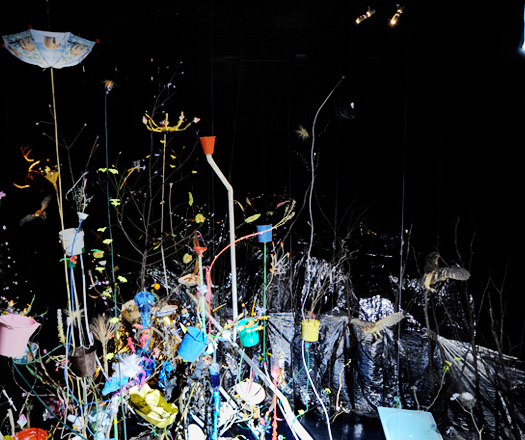
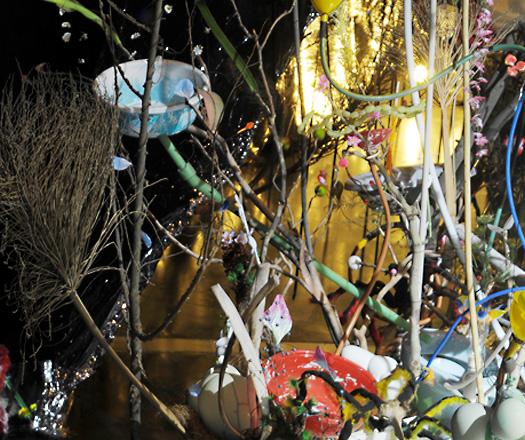
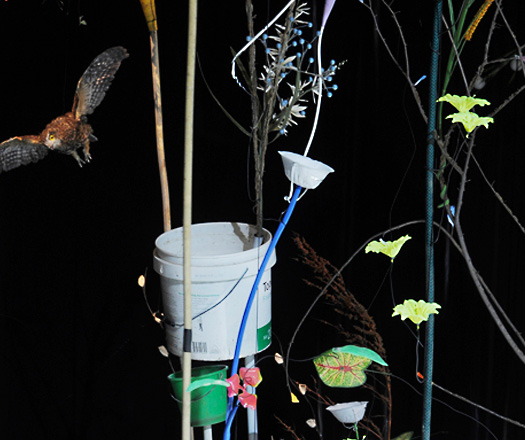
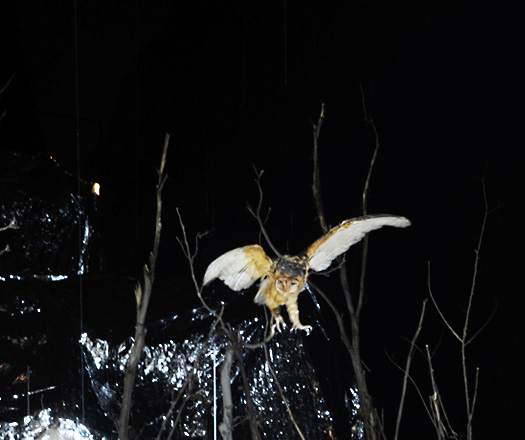
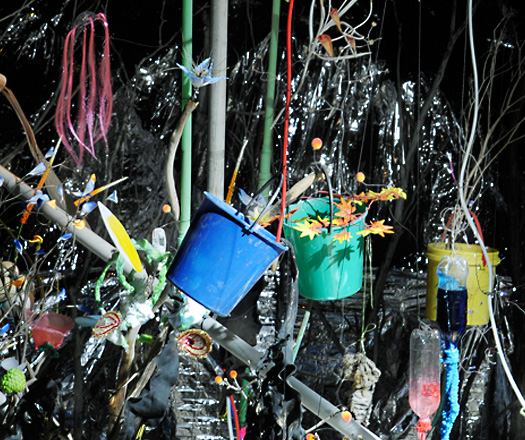
Gerda Steiner and Jörg Lenzlinger’s current exhibition, The Water Hole, at the Australian Centre for Contemporary Art in Melbourne explores life and death, peril and beauty, light and dark.
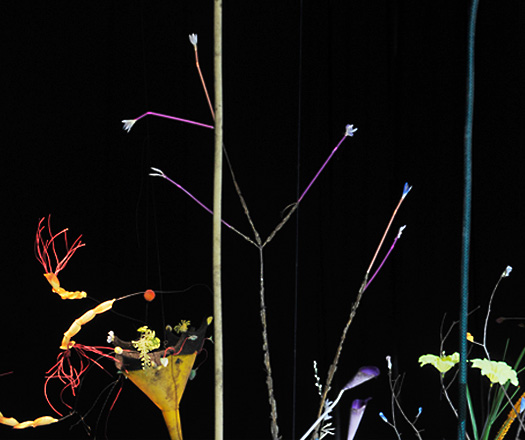
The installation utilizes found and made objects to create an “artificial landscape of ‘little miracles’” – combining ‘taxidermed’ wildlife and industrial waste products with found objects from the natural world like branches and plant materials.
“There is a marvelous exuberance in the works of Gerda and Jörg that enables the viewer to enter into a fantastic, environmental reverie,” says Juliana Engberg – ACCA’s Artistic Director.
Their fantastical works are about creating interactive environments that highlight dichotomies of life and death, organic and inorganic, good and evil – a synthesis of the natural and man-made worlds.
Living and working in Uster, near Zurich, Steiner and Lenzlinger have exhibited around the world from Europe to Japan and Dubai. The artists employ strong and contrasting colours in their works.
“Gerda and Jörg encourage, through their works, the spirit of discovery and attention to the small and wonderful in the context of the bigger cosmos,” says Engberg.
“Their works reference the environment and its fragile eco-system and will lead us to consider what might be a paradise lost amidst the found discarded objects of waste and excess.”
The Water Hole exhibition will run at the ACCA until 1 March 2009.
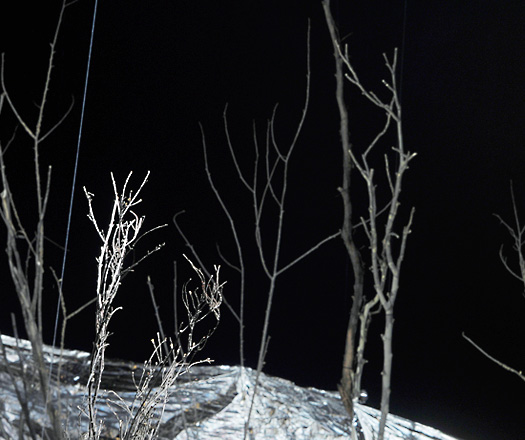
Australian Centre for Contemporary Art, 111 Sturt Street, Southbank.
Gallery hours: Tuesday-Friday 10am-5pm, Weekends and Public Holidays 11am–6pm. Mondays by appointment.
Tel: +61 3 9697 9999.
Admission: Free.
INDESIGN is on instagram
Follow @indesignlive
A searchable and comprehensive guide for specifying leading products and their suppliers
Keep up to date with the latest and greatest from our industry BFF's!
The internet never sleeps! Here's the stuff you might have missed